Asturias · Vuelta a España · The last 6 km at 13%
Conquer the Angliru: 12.5 km at 10% with 23.5% Ramps Above La Vega de Riosa
The Angliru is not the longest or the highest climb you will ever ride, but it may be the steepest: 12.5 km at an average of 10.1%, with the final six kilometres at about 13% and a ramp of 23.5% at Cueña les Cabres. Since 1999 it has been the Vuelta a España's answer to Alpe d'Huez and the Mortirolo.
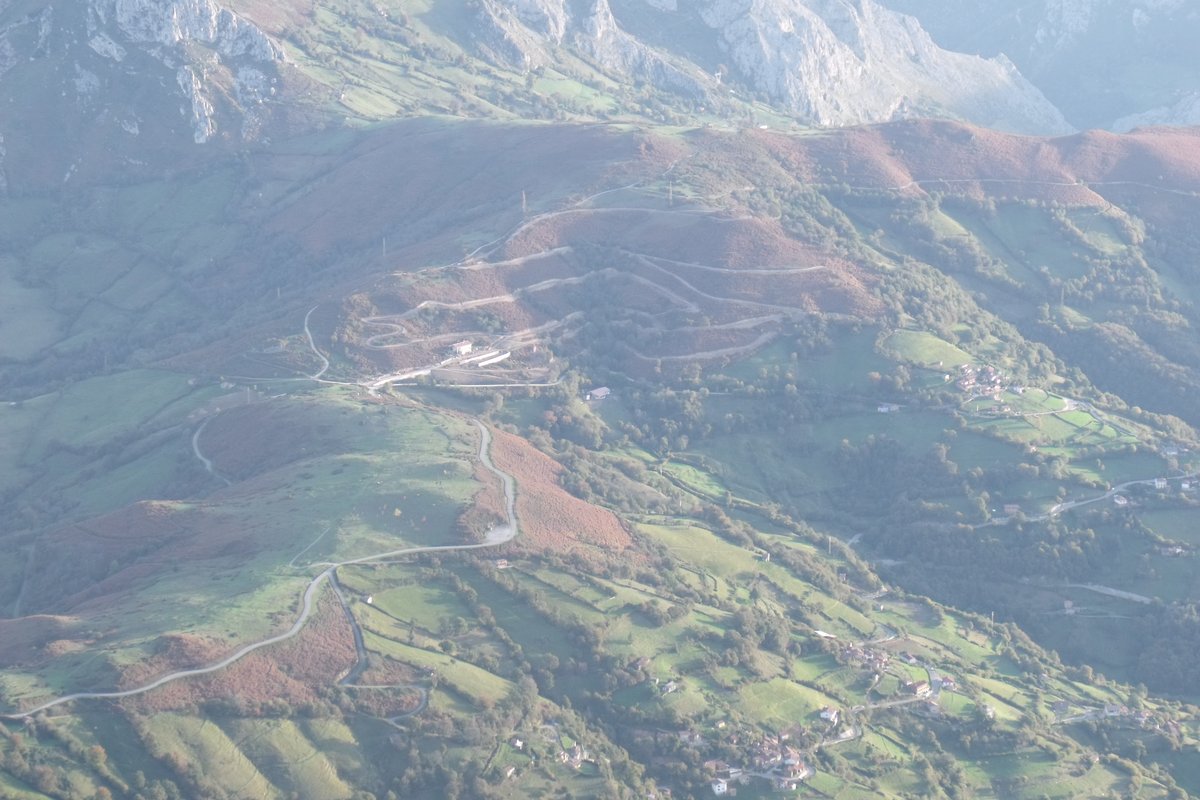
Quick facts
- Distance
- 12.5 km
- Average grade
- 10.1%
- Max grade
- 23.5%
- Elevation gain
- 1,266 m
- Summit
- 1,573 m
The experience
From La Vega de Riosa, about 20 km south of Oviedo, the Angliru climbs 1,266 m in 12.5 km to 1,573 m. The first 6.5 km are a normal mountain road at around 7.6%, ending with a flat breather at the Viapará rest area.
The sections above Viapará: Les Cabanes (≈ km 7), a 400 m chicane up to 22%; Llagos to Cobayos, three km at 12–14%; the Cueña les Cabres, about 1 km at 17% with a max of 23.5%; El Aviru and Les Piedrusines, two more walls of about 20%; then the last 500 m, almost flat. The top six kilometres average about 13%.
Vuelta history: first finish in 1999, when José María Jiménez caught Pavel Tonkov near the line. Winners since: Gilberto Simoni (2000), Roberto Heras (2002), Alberto Contador (2008 and 2017), Wout Poels (2011, after Juan José Cobo was disqualified), Kenny Elissonde (2013), Hugh Carthy (2020), Primož Roglič (2023) and João Almeida (2025, ahead of race leader Jonas Vingegaard). Petra Stiasny won the first women's Vuelta finish in May 2026.
Our gearing maths (own calculation, 80 kg rider and bike, 700×28c tyres, cadence in pedal turns per minute). At 13% and 180 W (6.1 km/h): 40 rpm on 34×28, 48 on 34×34, ~55 on 30×34 or 32×36. At 17% and 180 W (4.8 km/h): 31, 38 and ~43 rpm. At 22% and 180 W (3.8 km/h): 24, 30 and ~34 rpm. At 22% and 250 W (5.2 km/h): 34, 41 and ~47 rpm. In short, 34×28 is not enough for most riders; a gear smaller than one-to-one is what we would choose.
By the same calculation the rider needs roughly an hour and a half from La Vega to the top at 180 watts, and around 70 minutes at 250 watts, with almost two-thirds of the time on the top six kilometres. 23.5% is about 13 degrees, steep enough that your weight pulls you backwards and the front wheel wants to lift.
Should you ride it? We would want a yes to most of these: you can ride a sustained 8–9% climb of 10 km or more with gears to spare (for example Col de Joux Plane or Alpe d'Huez); you have ridden a few hundred metres above 15% without stopping; your bike has a gear smaller than one-to-one, or at least 34×34; and you can ride slowly in a straight line and restart on a steep slope. If not, the lower half to Viapará is a fine ride on its own.
If you have to stop, do it on a bend where the outside is flatter, or turn the bike across the road to restart, only if nothing is coming. Choose a dry day: on wet tarmac the rear wheel slips, and the steep, narrow descent becomes dangerous.
Pro tips
- Mistake: riding the first half too hard: At 7–8% it feels manageable, but everything that matters happens after Viapará.
- Mistake: bringing Alpine gears: A 34×28 or even 34×30 that is fine on the Galibier is not enough here for most riders.
- Mistake: forgetting the last two ramps: El Aviru and Les Piedrusines come after the Cueña les Cabres, when you think you are done.
- Mistake: treating the descent as easy: Brakes heat up and hands tire; brake early and often, and stop to rest if needed.
- Refill at Viapará: There is water in La Vega, Porció and at Viapará, nothing reliable above, and no café at the top.
- Practise slow riding and hill starts: On the steepest street you can find at home.
- Carry a windproof layer: The finish is almost 1,300 m above the start and often in cloud.
Record times
- 41:55 – Roberto Heras, Vuelta a España 2000 (CyclingFlash). Eurosport España gives 41:56 for the same ride. Sources: CyclingFlash, Eurosport ES
- 41:55 or 41:57 – João Almeida and Jonas Vingegaard, Vuelta 2025, stage 13. CyclingFlash says they equalled Heras, while Eurosport España says they were one second slower (41:57). The timings are unofficial, over about 12.8 km from La Vega.
- 42:27 (CyclingFlash) / 42:29 (Eurosport) – Primož Roglič and Jonas Vingegaard, Vuelta 2023.
Context: Heras tested positive for EPO at the 2005 Vuelta and lost that title. Spanish courts later annulled the sanction on procedural grounds, and the Supreme Court confirmed this in 2012 (Cyclingnews). The Vuelta didn't climb the Angliru in 2026, so these times still stand.
Strava segment: Alto de l'Angliru on Strava
Estimate your time up Alto de l'Angliru
By our model, a 72 kg rider on an 8 kg bike holding 216 W (3 W/kg) needs about 1:21 for the 12.5 km and 1,266 m of Alto de l'Angliru. Enter your weight, your bike's weight and the power you can hold for about an hour of climbing.
Estimated time: 1:21:28
More about the climb time calculator ·
Steady power, no wind, no stops, and the average grade of the whole climb. Steep ramps, flat sections and descents are only evened out roughly, so irregular climbs will be less accurate. Your values are saved only in this browser.
How do you compare with the record?
Enter your time from the bottom to the top (12.5 km).
Race times are unofficial and measured on slightly different routes and segments, so use this for fun, not as an exact comparison.
More climbs to compare
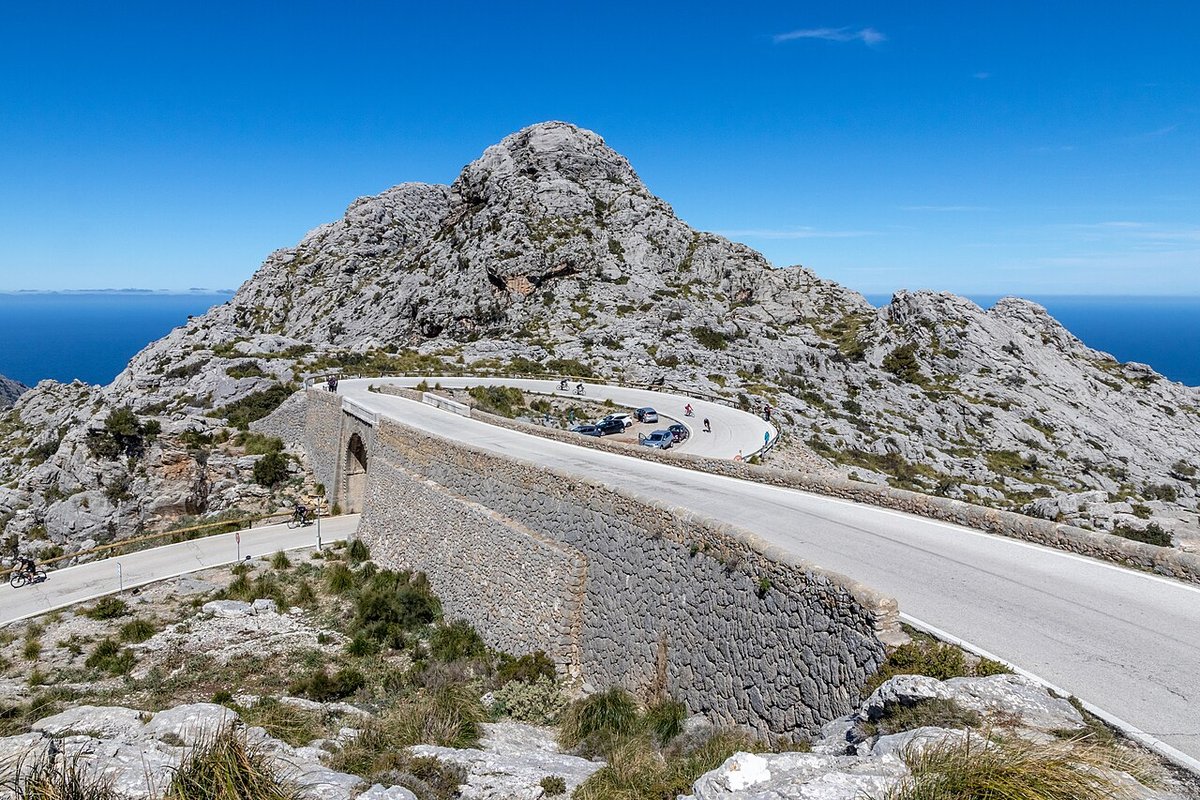
Sa Calobra
Mallorca's tie-knot climb — 9.4 km · 7% avg
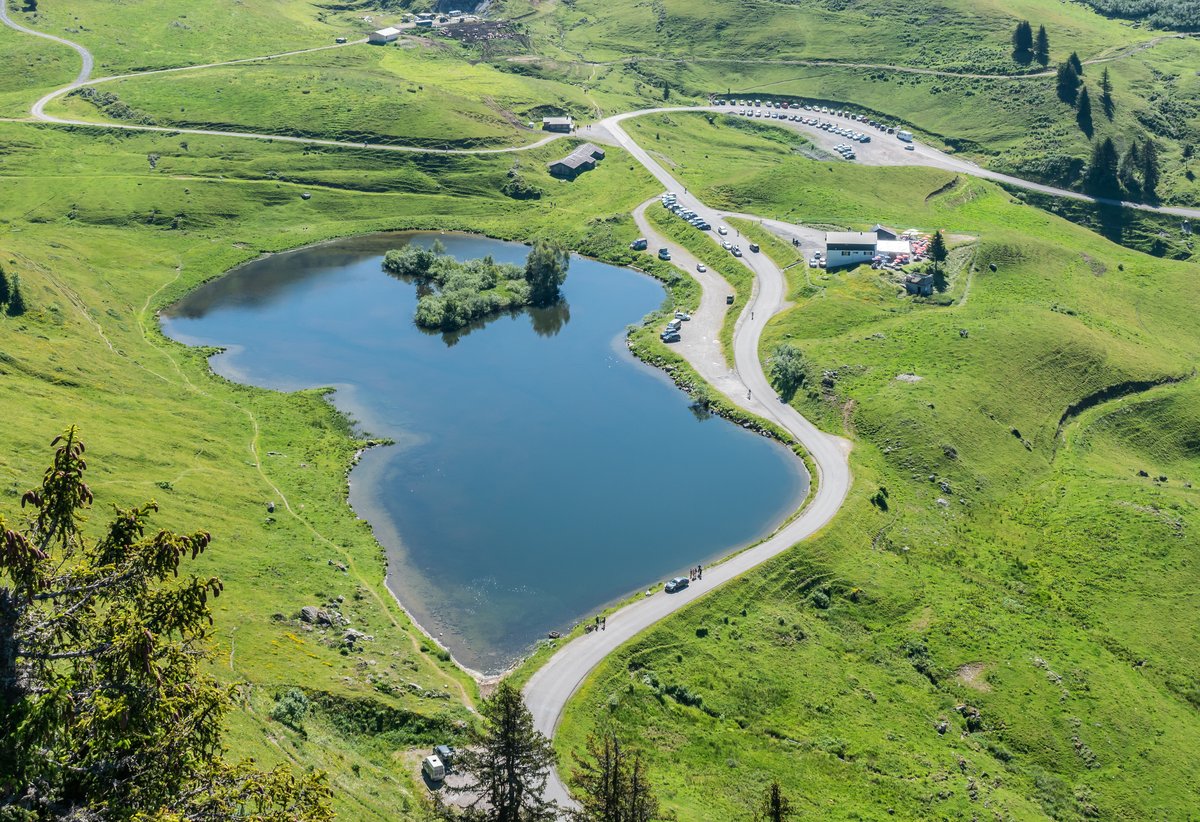
Col de Joux Plane
The Relentless Wall Above Samoëns — 11.6 km · 8.5% avg
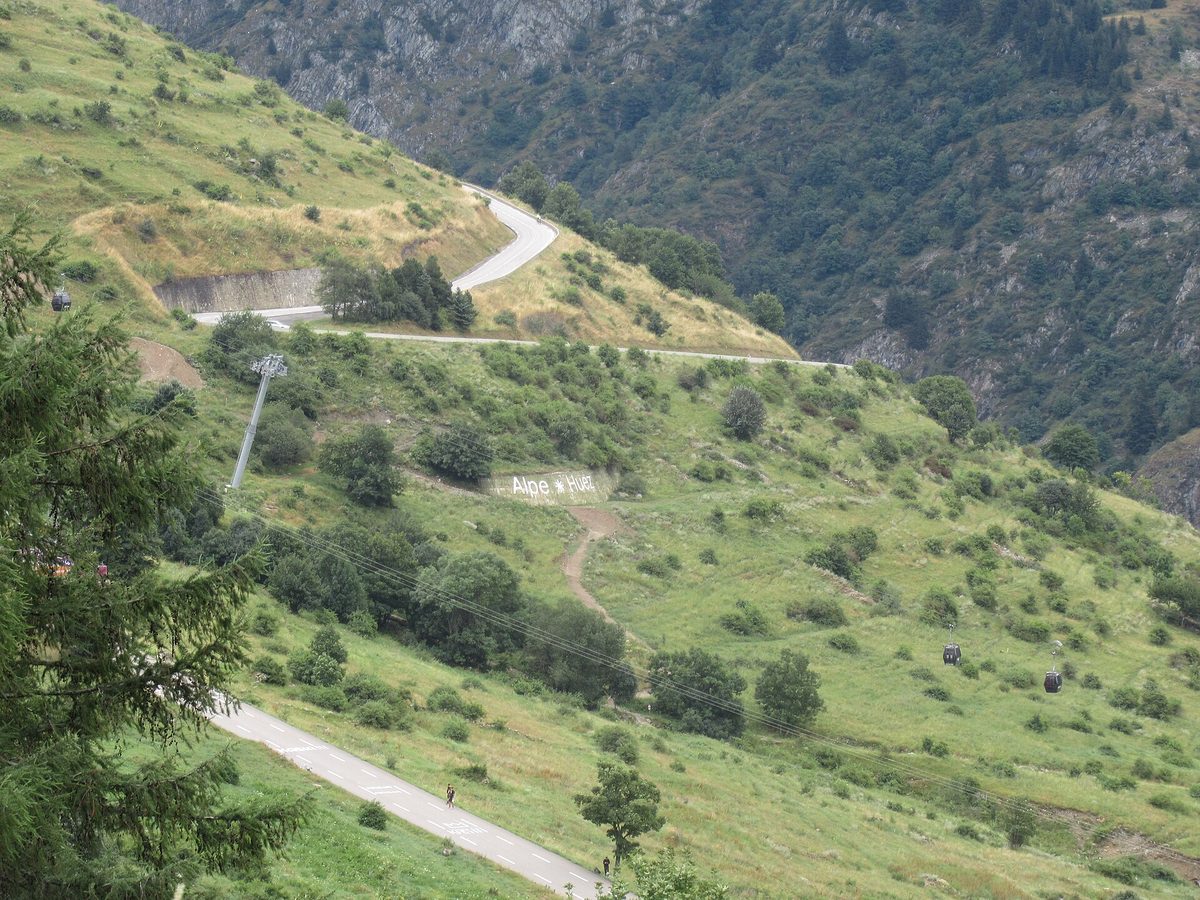
Alpe d'Huez
The 21 Hairpins — 13.8 km · 8.1% avg
Also useful: How to Climb Long Mountain Climbs: Pacing, Effort and Fueling for Alpe d'Huez, Ventoux and the Galibier