Carnic Alps · Beyond category · The Ovaro side
Ride Monte Zoncolan from Ovaro: 10.1 km at 11.9% to 1,730 m
Monte Zoncolan is the climb the Giro d'Italia uses when it wants to hurt people. From the village of Ovaro the road gains about 1,200 m in 10.1 km, an average of almost 12%, and the middle four kilometres never drop below 15%. It is not long, but for most riders it is the steepest sustained climb they will ever ride.
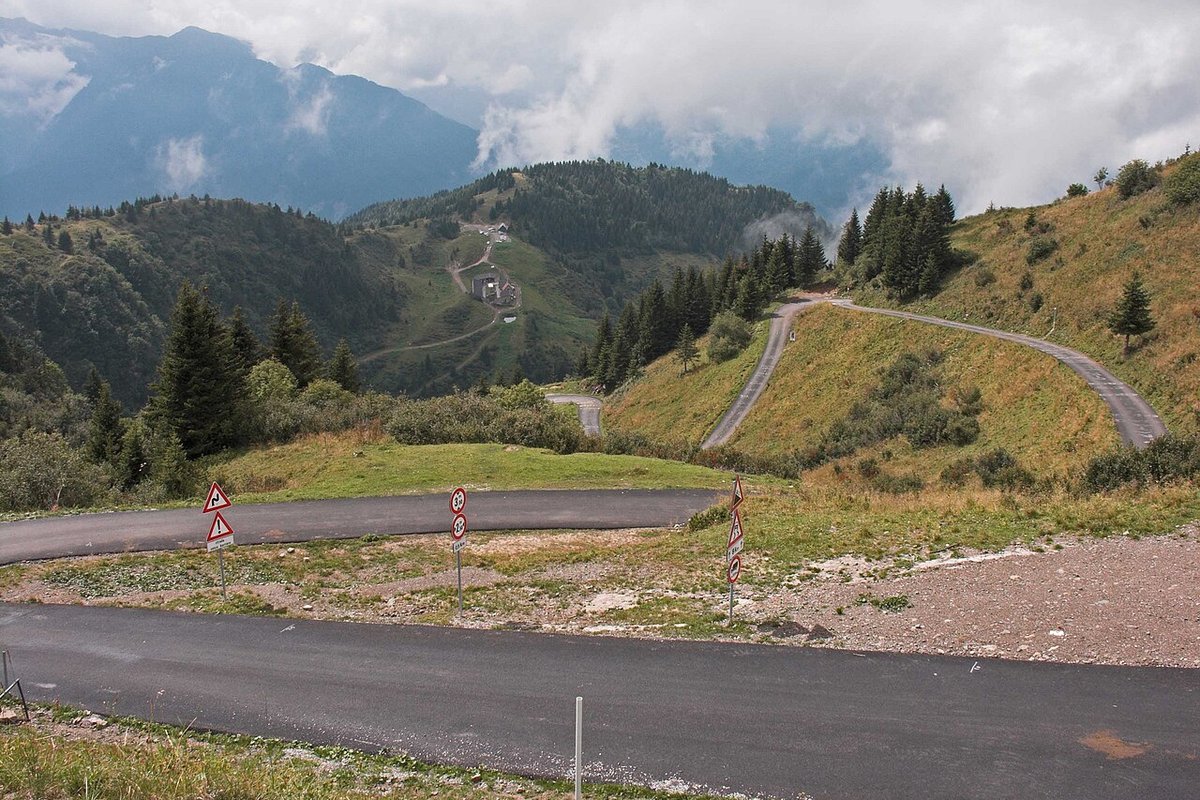
Quick facts
- Distance
- 10.1 km
- Average grade
- 11.9%
- Max grade
- ~22%
- Elevation gain
- ~1,200 m
- Summit
- 1,730 m (mountain 1,750 m)
The experience
The climb starts in Ovaro, in the Val Degano in Carnia, the mountain part of Friuli in north-east Italy, at about 530 m. The Giro's own figures are 10.1 km and 1,203 m of climbing at an average of 12%, with a maximum of 22%. The road tops out at the Sella di Monte Zoncolan, a pass at about 1,730 m next to the Ravascletto ski area; the mountain itself is 1,750 m. The road is narrow, about 5 m wide, and in good condition.
Section by section, going up: the first two kilometres, up to and through the hamlet of Liariis, are already 11–12%. Just after Liariis the road enters the forest and the real climb begins. From about the third to the sixth kilometre the gradient stays around 15–16%, with short ramps near 20%; this is the part the Giro calls the 'heart of darkness'. Above that it eases a little, to 10–13%. In the last kilometre you pass through three short tunnels (the Giro lists them at 150 m, 60 m and 110 m), and after a near-flat bend about 3 km from the top the final hairpins climb to the finish.
There are three roads to the top. Ovaro is the hardest and the one most people mean when they say 'the Zoncolan'. The road from Sutrio is longer and easier at first, about 13.5 km at 9%, but it joins the old road from Priola for the last 3.5 km at around 13%. The Priola road itself is about 8.9 km at 12.8%. PJAMM Cycling reports that the kilometre signs on the Ovaro side carry posters of great Grand Tour winners, from Coppi and Bartali to Merckx and Pantani.
The Giro first came in 2003, from Sutrio, and Gilberto Simoni won. In 2007 it used the Ovaro side for the first time, and Simoni won again in 39 minutes 3 seconds for the climb, still listed by Italian Wikipedia as the fastest time up this side. Ivan Basso won here in 2010 on his way to the overall title, Igor Antón in 2011, Michael Rogers in 2014 and Chris Froome in 2018. In 2021 the race came up from Sutrio again and Lorenzo Fortunato won. The women's Giro has finished here twice, with Fabiana Luperini in 1997 and Annemiek van Vleuten in 2018. The 2026 Giro did not visit the Zoncolan.
Our time estimate (own calculation, rider and bike 80 kg in total, steady power, same model as our other guides): about 1 hour 49 minutes at 150 watts, 1 hour 31 minutes at 180 W and 66 minutes at 250 W. The key number is the split: at 180 W the four steepest kilometres alone take about 47 minutes, half of the whole climb. For comparison, Simoni's 39:03 means an average of 15.5 km/h and about 1,850 m of climbing per hour; an 80 kg rider and bike would need around 435 watts for an hour to match it.
Gears by the same calculation, at 180 W: on the 15–16% sections you ride at only about 5 km/h, a fast walking pace. That is just 38–40 pedal turns per minute on 34×32 or 34×34, which is very hard on the knees and makes it difficult to keep the bike straight. To get up to around 45–48 turns per minute you need something like 30×34, and on the 18–20% ramps even that drops below 40. In plain words: a normal compact chainset with a 28 sprocket is not enough here for most riders. Fit the smallest front ring and the biggest rear sprocket your bike will take, and do not be ashamed of a mountain-bike-style gear.
The trap is that the Zoncolan does not let you recover once you are on the wall. On most climbs you can ride too hard for a while and then ease off on a flatter bend; here there is no flatter bend for four kilometres. Our advice: treat the first two kilometres to Liariis as a warm-up, even though they are already steep, and ride them clearly easier than you think you need to. On the wall, aim for a steady power you could hold for an hour and a half, not a speed, because the speed will look shockingly low. If you have to stop, stop on the inside of a hairpin where it is flattest, and restart by riding across the road rather than straight up. If this all sounds too much, the Sutrio side takes about the same time at 180 W (around 1 hour 34 minutes by our calculation) but saves the steep part for the end.
Pro tips
- Mistake: bringing normal mountain gears: A 34×28 is fine for the Alps but leaves most riders grinding at 35 pedal turns per minute here. Go as small as your bike allows, ideally a 1:1 gear or lower.
- Mistake: starting too hard in Ovaro: The first 2 km to Liariis already average 11–12%, and the real wall only begins after them. Every bit of effort you spend early is missing on the 15% section.
- Mistake: chasing speed: Your speed on the wall will be around 5 km/h. Ride by power or breathing, not by the number on your computer, which may even pause itself at such low speeds.
- Bring lights for the tunnels: There are three short tunnels in the last kilometre. Reports differ on whether they are lit, so use a front and rear light either way.
- Take enough water from the start: There are no sure water stops on the climb. In summer, a mobile cart sometimes sells drinks at the top, but do not count on it.
- Descend with care, or go down another side: The Ovaro side is just as steep going down. Brake in short, firm bursts to keep rims or discs from overheating, and check your brake pads before the ride. Or go down the Sutrio side, which is less steep for most of its length.
- Check the Giro dates: When the Giro finishes here, the road is closed to riders on race day. Check the race route before you plan a trip in May.
Estimate your time up Monte Zoncolan
By our model, a 72 kg rider on an 8 kg bike holding 216 W (3 W/kg) needs about 1:16 for the 10.1 km and 1,200 m of Monte Zoncolan. Enter your weight, your bike's weight and the power you can hold for about an hour of climbing.
Estimated time: 1:16:03
More about the climb time calculator ·
Steady power, no wind, no stops, and the average grade of the whole climb. Steep ramps, flat sections and descents are only evened out roughly, so irregular climbs and climbs with approximate figures (~) will be less accurate. Your values are saved only in this browser.
More climbs to compare
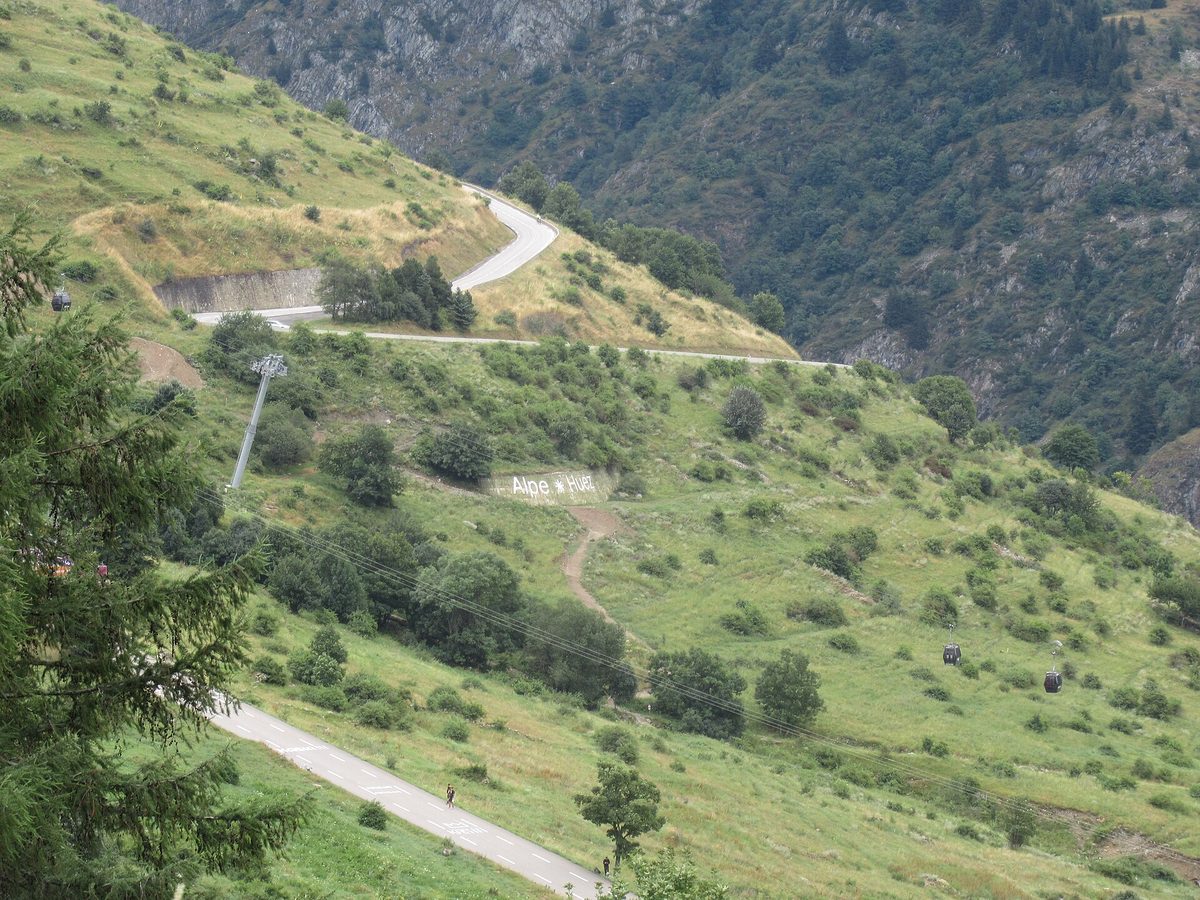
Alpe d'Huez
The 21 Hairpins — 13.8 km · 8.1% avg
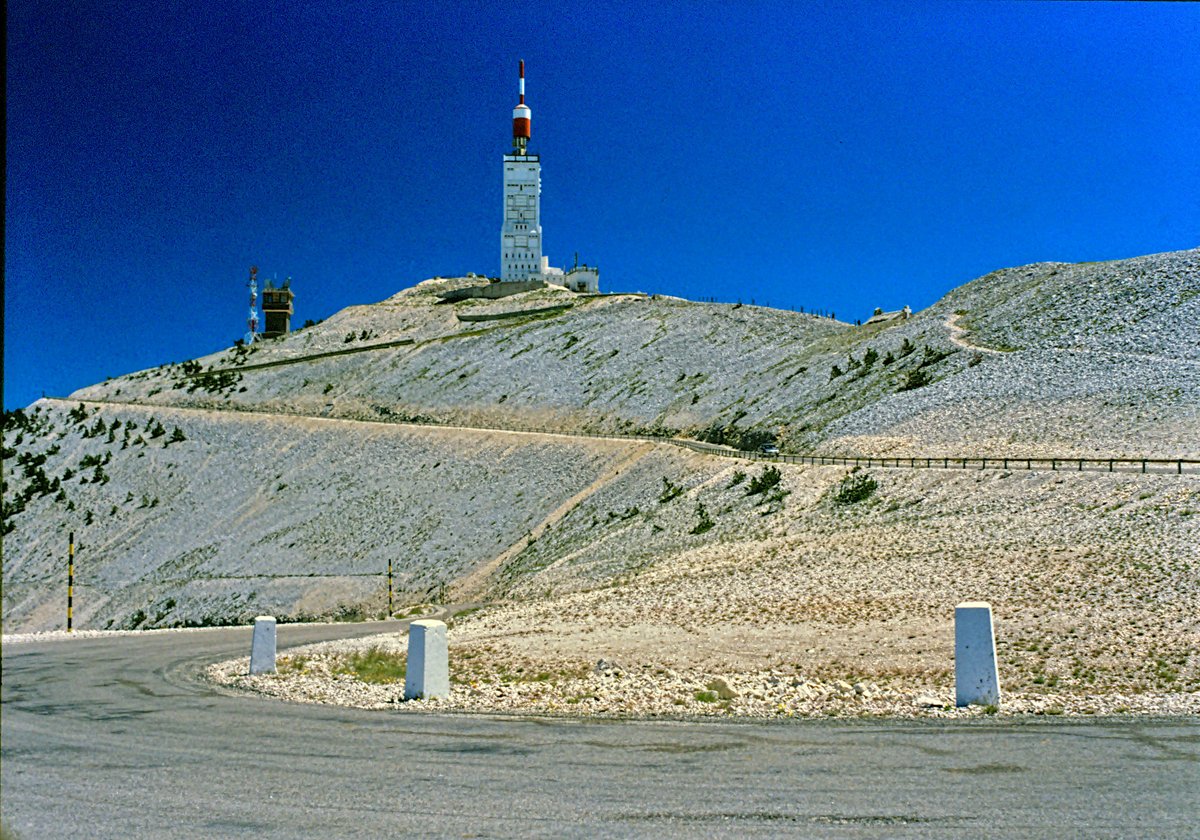
Mont Ventoux
Giant of Provence — 21.8 km · 7.4% avg
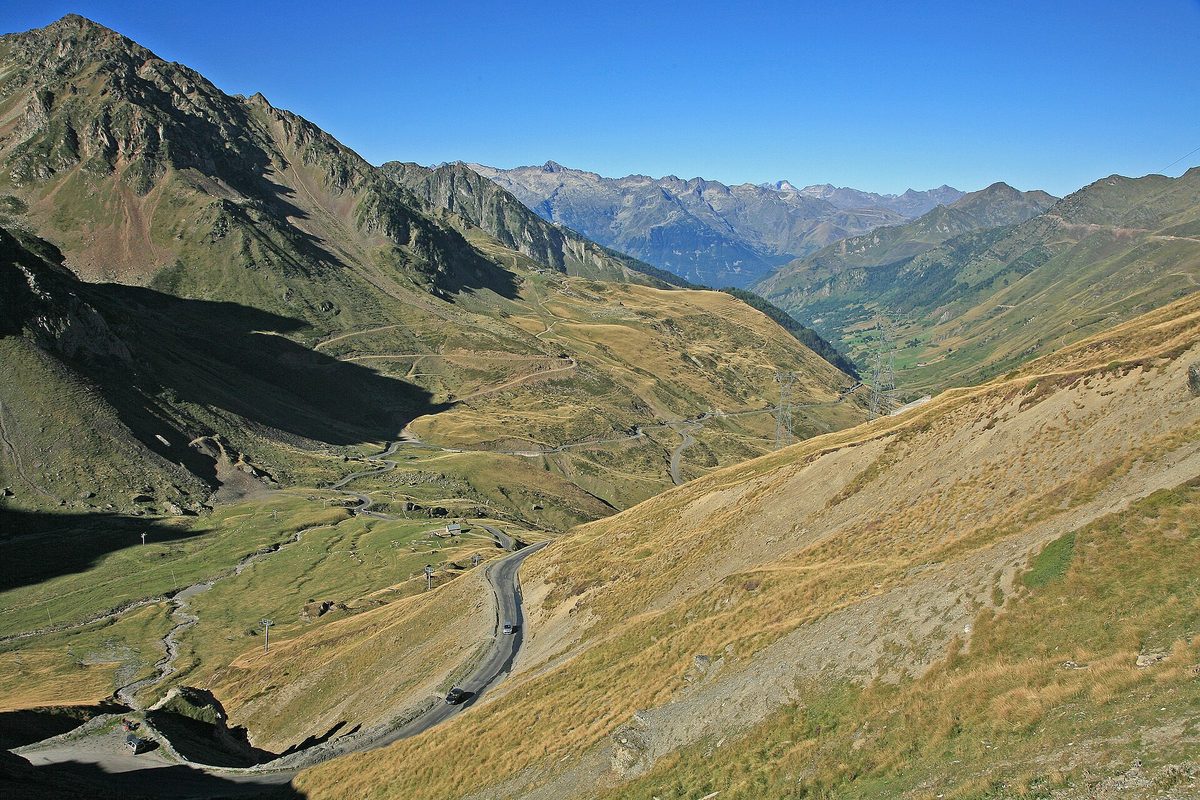
Col du Tourmalet
Giant of the Pyrenees — 19.0 km · 7.4% avg
Also useful: Gearing for Mountain Climbs: Chainrings, Cassettes and Bike Setup for Alpe d'Huez, the Galibier and the Angliru
Also useful: How to Climb Long Mountain Climbs: Pacing, Effort and Fueling for Alpe d'Huez, Ventoux and the Galibier