Technique · Bike setup · Gearing for the big cols
Gearing for Mountain Climbs: Chainrings, Cassettes and Bike Setup for Alpe d'Huez, the Galibier and the Angliru
Most riders who suffer on their first big mountain do not lack fitness. They lack one or two easy gears. This guide explains, in plain numbers, which chainrings and cassette you need for Alpe d'Huez, the Galibier, the Stelvio and the Angliru, and how to set up tyres, brakes, bottles and spare clothing for long days up and down mountains.
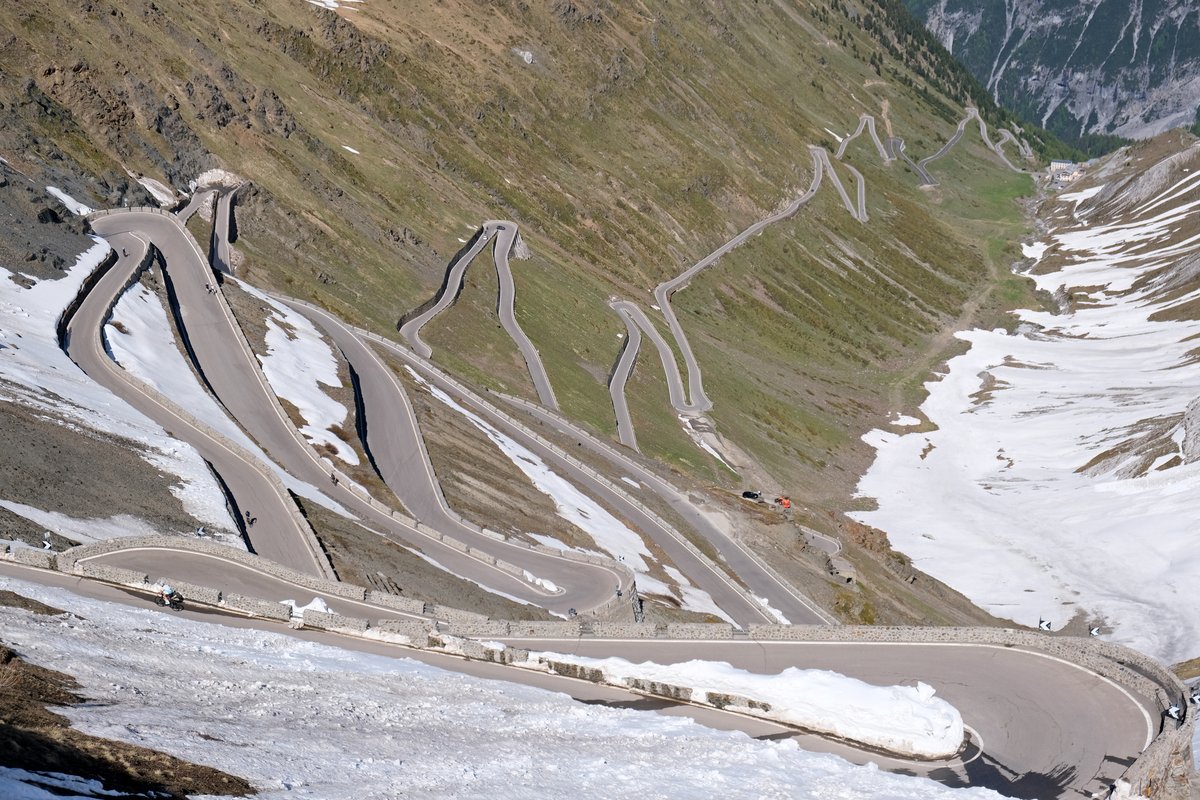
The short answer
- Alps week
- Compact 50/34 + 32–34 tooth biggest sprocket
- Very steep (Angliru)
- Below one-to-one, e.g. 33×36
- Cadence check
- About 70 pedal turns a minute on the average grade
- Tyres and brakes
- 28–32 mm tyres, fresh brake pads
- Biggest trap
- Too hard a lowest gear
| Climb type | Examples on this site | Lowest gear we would fit |
|---|---|---|
| Long, moderate (5–7%) | Croix de Fer — 29.0 km, 5.2% | 34×28 to 34×30 is enough for most riders |
| Classic alpine (7–8.5%, ramps to 11–13%) | Alpe d'Huez, Ventoux, Madeleine, Stelvio | 34×32 or 34×34 |
| Steep and relentless (8.5% with 13% ramps) | Joux Plane — 11.6 km, 8.5% | 34×34, or below one-to-one if you are heavier or less trained |
| Very steep (13% for kilometres, ramps over 20%) | Angliru — 12.5 km, 10.1%, max 23.5% | Below one-to-one: 33×36, 30×36 or a single-ring 40×44 |
How bike gears work, in plain words
Your gears have two parts:
- The chainrings are the toothed rings at the front, next to the pedals. Most road bikes have two: a big one for flat roads and a small one for climbing.
- The cassette is the stack of toothed sprockets on the back wheel. The biggest sprocket at the back is your climbing gear.
A gear is written as front teeth × rear teeth. "34×28" means the 34-tooth small chainring at the front and the 28-tooth biggest sprocket at the back.
The easy way to understand it: divide the front number by the rear number. That tells you how many times the back wheel turns for each full turn of the pedals.
| Gear | Front ÷ rear | Distance the bike moves per pedal turn (700×28c wheel) | In plain English |
|---|---|---|---|
| 39×28 | 1.39 | 2.94 m | The old "racing" climbing gear. Hard for most riders on 8%+ |
| 34×28 | 1.21 | 2.56 m | Compact chainset with a mid-range cassette |
| 34×30 | 1.13 | 2.39 m | Compact chainset with an 11–30 cassette |
| 34×32 | 1.06 | 2.24 m | Close to one-to-one |
| 34×34 | 1.00 | 2.11 m | "One-to-one": one pedal turn = one wheel turn |
| 33×36 | 0.92 | 1.93 m | "Below one-to-one": the wheel turns less than once per pedal turn |
The smaller the "front ÷ rear" number, the easier the gear. Anything below 1.00 is what riders call a sub-1:1 or below one-to-one gear. These used to be mostly a mountain-bike and touring-bike thing; today several road and gravel groupsets (the complete set of gears, shifters and brakes on a bike) offer them.
The chainset options you will see
- Standard (53/39): the traditional racing setup. With a 39-tooth small ring you need a very big cassette to get an easy gear. We would not take it to the Alps unless you are a strong, light rider.
- Mid-compact or semi-compact (52/36): a compromise. With an 11–34 cassette the lowest gear is 36×34 (1.06), about the same as 34×32.
- Compact (50/34): the usual choice for mountain riding. With a 32 or 34-tooth biggest sprocket it covers almost every climb on this site except the Angliru.
- Wide road gearing (for example 46/33 or 43/30): offered by some newer groupsets. SRAM, for example, gives lowest gears of about 0.91 for its 46/33 chainrings and about 0.83 for the 43/30 rings of the earlier Rival eTap AXS, both with a 10–36 cassette.
- Single ring ("1x", said "one-by"): one chainring at the front and a very wide cassette at the back, common on gravel bikes. A 40-tooth ring with a 44-tooth sprocket gives 0.91, as easy as 33×36. The downside: bigger jumps between gears, so on a steady 7% climb it is harder to find the perfect rhythm.
A useful warning: a "compact" bike is not automatically a climbing bike. A compact with an 11–25 cassette has a lowest gear of 34×25 (1.36), almost exactly the same as the old racing 39×28 (1.39). Always ask for the tooth numbers, not the label.
Our gearing maths: what each gear feels like on 8%, 10%, 13% and 20%
"Bring low gears" is easy to say. Here is what it means in numbers. These are our own calculations from standard cycling physics, not measurements. We used the same assumptions as on our Angliru page, so the numbers match:
- Rider and bike together: 80 kg
- Steady climbing power: 180 and 200 watts (a realistic steady effort for a fit amateur on a long climb; a power meter shows this number, but you do not need one to use the table)
- Road bike with 700×28c tyres (wheel circumference about 2.11 m)
- Rolling resistance and air drag for a normal road position. At climbing speeds air drag is small; gravity does almost all the work
Cadence means how many times your pedals go round per minute (rpm). For comparison, professional riders in the Giro, Tour and Vuelta averaged about 71 rpm on high mountain passes, against about 89 rpm on flat stages, in a study by Lucía and colleagues (2001). For a long climb we treat about 70 rpm as comfortable, 60 rpm as the lowest you want to hold for a long time, and under 50 rpm as grinding: each pedal stroke becomes a heavy push, your knees take the load and your legs tire much faster.
At 180 watts
| Gradient | Speed | 39×28 | 34×28 | 34×30 | 34×32 | 34×34 | 33×36 |
|---|---|---|---|---|---|---|---|
| 8% | 9.5 km/h | 54 rpm | 62 rpm | 66 rpm | 71 rpm | 75 rpm | 82 rpm |
| 10% | 7.8 km/h | 44 rpm | 51 rpm | 54 rpm | 58 rpm | 62 rpm | 67 rpm |
| 13% | 6.1 km/h | 35 rpm | 40 rpm | 43 rpm | 46 rpm | 48 rpm | 53 rpm |
| 20% | 4.1 km/h | 23 rpm | 27 rpm | 29 rpm | 30 rpm | 32 rpm | 35 rpm |
At 200 watts
| Gradient | Speed | 39×28 | 34×28 | 34×30 | 34×32 | 34×34 | 33×36 |
|---|---|---|---|---|---|---|---|
| 8% | 10.5 km/h | 60 rpm | 68 rpm | 73 rpm | 78 rpm | 83 rpm | 91 rpm |
| 10% | 8.6 km/h | 49 rpm | 56 rpm | 60 rpm | 64 rpm | 68 rpm | 74 rpm |
| 13% | 6.8 km/h | 39 rpm | 44 rpm | 47 rpm | 51 rpm | 54 rpm | 59 rpm |
| 20% | 4.6 km/h | 26 rpm | 30 rpm | 32 rpm | 34 rpm | 36 rpm | 39 rpm |
What the numbers tell us
- On 8%, the average of most classic alpine climbs, 34×28 works, but only just. At 180 watts you turn 62 rpm with no easier gear left. A 34×32 gives you about 70 rpm, and a 34×34 leaves you one gear in reserve for tired legs on day five of a trip.
- On 10%, a 34×28 drops you to about 51 rpm. That is the point where climbing stops feeling like riding and starts feeling like a leg-press machine.
- On 13%, the steepest hairpins of Alpe d'Huez and Joux Plane, no common road gear keeps 60 rpm at 180 watts. That is fine for a few hundred metres. What matters is that your lowest gear keeps you near 50 rpm there, which a 34×34 just about does (48 rpm).
- Going from 34×28 to 34×34 feels like taking the gradient down a few percent. By our calculation, 34×34 on a 13% hairpin turns your pedals as fast as 34×28 does on about 10.5%. A 30×36 on 13% feels like 34×28 on about 8.5%.
- On 20% and steeper, every road gear is a grind. Even 33×36 gives only about 35 rpm at 180 watts. On the Angliru the job of the gear is not comfort; it is keeping you moving fast enough to stay balanced.
Quick rules if you are lighter, heavier, stronger or weaker
On steep climbs almost all your power goes into lifting weight, so the maths scales simply:
- 10% more power gives you about 10% more cadence in the same gear. At 220 watts, add roughly a tenth to the 200-watt numbers.
- 10 kg more (rider plus bike) costs you about 11–12% speed and cadence. By our calculation, at 180 watts on 13%, 70 kg climbs at 7.0 km/h, 80 kg at 6.1 km/h and 90 kg at 5.5 km/h.
- Our two rules for choosing your lowest gear: at the climb's average grade you want about 70 rpm with one easier gear still in reserve; on the steepest ramp you want to stay above about 45–50 rpm.
The climbs on this site, by the same calculation
Cadence at 180 watts for an 80 kg rider and bike, on the average grade and on the steepest pitch:
| Climb | Average / max | 34×28 | 34×32 | 34×34 | 33×36 | Our pick |
|---|---|---|---|---|---|---|
| Mont Ventoux (Bédoin) — 21.8 km | 7.4% / 12% | 66 / 43 rpm | 76 / 49 rpm | 80 / 52 rpm | 88 / 57 rpm | 34×32 |
| Passo dello Stelvio (Prato) — 24.3 km | 7.4% / ~12% | 66 / 43 rpm | 76 / 49 rpm | 80 / 52 rpm | 88 / 57 rpm | 34×32 (34×34 from Bormio, ramps to ~14%) |
| Col de la Madeleine — 19.3 km | 8.0% / 11% | 62 / 47 rpm | 71 / 53 rpm | 75 / 56 rpm | 82 / 62 rpm | 34×32 |
| Alpe d'Huez — 13.8 km | 8.1% / 13% | 61 / 40 rpm | 70 / 46 rpm | 74 / 48 rpm | 81 / 53 rpm | 34×34 |
| Galibier — last 7.8 km from Plan Lachat | ~8.5% / ~12% | 59 / 43 rpm | 67 / 49 rpm | 71 / 52 rpm | 78 / 57 rpm | 34×34 |
| Col de Joux Plane — 11.6 km | 8.5% / 13% | 59 / 40 rpm | 67 / 46 rpm | 71 / 48 rpm | 78 / 53 rpm | 34×34 |
| Angliru — top 6 km | ~13% / 23.5% | 40 / 23 rpm | 45 / 26 rpm | 48 / 28 rpm | 52 / 30 rpm | 33×36 or lower |
The Croix de Fer (29.0 km at 5.2%) is the exception: at 180 watts a 34×28 gives about 88 rpm on the average grade, so you will spend most of the climb a few gears up from your lowest. Its short ramps to 11% are where you need the bottom gears.
Our honest recommendation for each kind of trip
These are the setups we would choose ourselves, based on the maths above and the advice on our climb pages. They are not the only way: a light, strong rider can climb all of the Alps on a 34×28. But one gear too many costs you very little, and one gear too few can cost you the climb.
| Trip | What we would fit | Why |
|---|---|---|
| A week in the French Alps (our 7-day plan) | 50/34 with an 11–32 or 11–34 cassette | Five big climbing days, several with long stretches at around 8%. By the later days, tired legs make every gear feel heavier |
| One famous climb (Alpe d'Huez or Ventoux) | 50/34 with at least a 30-tooth sprocket; 32–34 if you are heavier or new to mountains | You can finish on less, but 34×28 on the bottom hairpins of the Alpe is about 40 rpm |
| Stelvio, Galibier and other climbs over 2,000 m | 50/34 with 32–34 | Long climbs at height, where breathing is harder and steady low-gear pedalling pays off |
| The Angliru or similar very steep climbs | Below one-to-one: for example 46/33 or 43/30 with a 10–36 cassette, or a gravel bike with 40×44 | Not one 500 m stretch of the top half is under 12%. A 34×28 leaves you at about 23 rpm on the steepest ramp at 180 watts |
| Mixed trip, one bike | The lowest gear the Angliru needs | A lowest gear that is too easy is rarely a problem in the mountains; you just shift up. The cost is slightly bigger jumps between gears |
What about the hard end? Riders worry that easy gears make the bike slow on the flat or downhill. In the mountains it rarely matters: a 50×11 at 90 rpm already moves you at about 52 km/h, and on long descents you will mostly be freewheeling anyway.
Fit the gears at home, not on holiday
Changing to a bigger cassette is usually simple, but not always. Check three things before you buy:
- Your rear derailleur's limit. The derailleur is the arm that moves the chain across the sprockets at the back. Each one has a biggest sprocket it can handle. Shimano's 12-speed 105 derailleur, for example, is made for cassettes up to 36 teeth; some older road derailleurs stop at 28 or 30.
- Chain length. A bigger sprocket often needs a longer chain. Too short a chain can damage the derailleur if you shift into the big ring and the big sprocket at the same time.
- Your wheel. Some cassettes need a different freehub (the part of the rear wheel the cassette slides onto).
Fit the new parts at least two weeks before you travel, and ride them on your steepest local hills. Shifting problems show up after a few rides, not in the shop car park. Bike shops in mountain towns are busiest in exactly the weeks you want to ride, and may not stock your part.
Tyres: grip, comfort and long descents
Every climb on this site is followed by a descent, often 20 km or more, and you rely on your tyres in every hairpin.
- Width: 28 mm is a good default for most modern road bikes. If your frame has room, 30–32 mm gives more grip and comfort on rough or patched mountain roads, at almost no cost on the climb.
- Pressure: wider tyres run lower pressure. Use a tyre or wheel maker's online pressure calculator with your real weight, tyre width and rim width, instead of pumping to the maximum printed on the tyre. Too hard means less grip in wet or bumpy bends.
- Hookless rims: some modern carbon wheels have rims without a small hook on the edge (called "hookless" or "straight-side"). Under the international rim standard these must never go above 5 bar (72.5 psi) with 25–29 mm tyres, or 4.5 bar with 30–34 mm, and need tyres approved for them. Check your wheels before you pump.
- Tubeless or inner tubes: tubeless tyres hold a liquid sealant that closes small punctures by itself. Either system works; carry a spare tube even with tubeless.
- Replace worn tyres before the trip, not after the first descent. A tyre with flat spots or cuts has less grip and punctures more easily.
Brakes: what the descents ask of them
Coming down Ventoux to Bédoin (21.8 km) or the Stelvio to Prato (24.3 km) means braking into bend after bend for a long time. All that braking turns into heat.
- Fresh pads. Fit new brake pads before a mountain trip if yours are half worn. A week of descents, especially in the rain, wears them fast. Our one-week plan suggests checking them every evening.
- New disc pads need "bedding in": a series of firm stops on a quiet flat road so the pads grip properly. Do it at home, not on the first descent.
- Brake firmly, then let go. Do not drag the brakes lightly all the way down. Wheel makers explain that steady dragging keeps heating the rim or disc, while short, firm braking before a bend followed by a few seconds off lets everything cool.
- Rim brakes and long descents: with rim brakes the heat goes into the wheel rim, which is next to the tyre and tube. Brake in firm bursts, stop to let the rims cool if the descent is very long, and follow your wheel maker's advice, especially with carbon rims. Do not let air out of your tyres at the top "to be safe": a soft tyre flexes more and heats up more.
- Disc brakes: heat goes into the discs instead, which is easier on the tyres, but very hot discs can still lose power ("fade"). If the levers feel soft or come closer to the handlebar, stop and let them cool.
- Check which lever brakes the front wheel on any bike that is not your own. It varies between countries and shops.
Bottles, layers and what to carry
- Two bottle cages and two large bottles (about 750 ml each). On a long climb you can empty both. Use the known refill points: Valloire on the Galibier, Trafoi or Franzenshöhe on the Stelvio, and Viapará on the Angliru, where there is nothing reliable above.
- A windproof jacket and full-finger gloves for every summit above about 1,800 m, even in July. Air cools by roughly 6.5 °C for every 1,000 m you climb, and you put the jacket on at the top, before the descent. See how to climb long climbs for more on layers.
- Arm warmers for cool mornings, and something warmer in September and October.
- A small saddle bag with a spare tube, tyre levers, a mini pump or gas cartridge, a multi-tool and a spare chain link.
- A rear light for tunnels. The Bormio side of the Stelvio has lit rock tunnels, but a light still makes you easier to see. (The tunnel near the top of the Galibier is closed to bikes; keep left on the road to the true summit.)
- ID and a payment card. Some loops cross a border, such as the Stelvio and Umbrail loop through Switzerland.
- If your gears are electronic, charge the battery the night before every big day.
Rental bikes: what to check
Renting in Bourg-d'Oisans, Bédoin or Bormio saves a bike box and an airline fee, but you only get the setup you ask for.
- Ask for the tooth numbers, for example "50/34 with an 11–34 cassette", not just "a compact". A compact with an 11–28 is a very different climb.
- Book early for July and August. The best-sized bikes and the lowest gears go first.
- Bring your measurements: saddle height (centre of the crank axle to the top of the saddle) and, if you know them, the height and reach of your handlebars. Take a photo of your own bike from the side.
- Bring your own pedals and shoes, and ideally your own saddle if you are sensitive to saddles. A new contact point on a five-hour day can hurt more than the climb.
- Check the brakes and tyres before you leave the shop: pad wear, tyre condition, and which lever is the front brake.
- Ride it on the flat first. Twenty minutes on the valley road shows a sticking gear or a creaking part long before the first hairpin.
Common mistakes
- Bringing flat-country gears to the mountains. A 39×28 or 34×25 that never feels short at home leaves you at about 55 rpm on 8% and about 45 rpm on 10% (our calculation, 180 watts, 80 kg).
- Trusting the word "compact". Ask for the cassette size too.
- Fitting a big cassette the week before, or in a shop on holiday, without checking the derailleur and chain length.
- Thinking low gears are for weak riders. Even professionals slow their pedalling to about 70 rpm on mountain passes. There is no prize for grinding.
- Ignoring the descent. Worn pads, old tyres, or tyres pumped too hard cost far more than a few seconds on the way up.
- Dragging the brakes all the way down. Brake firmly before the bend and let go on the straight.
- Testing a new saddle, shoes or cleats on the trip.
- Leaving with one bottle. Two is the minimum on climbs that take one to two and a half hours.
Sources
- Climb figures: live bestcyclingclimbs.com pages for Alpe d'Huez, Mont Ventoux, Télégraphe + Galibier, Col de la Madeleine, Col de Joux Plane, Col de la Croix de Fer, Passo dello Stelvio and the Angliru, checked 15 October 2026. Existing gear advice on those pages: "34×30–34" (Galibier, one-week plan, Stelvio, long-climbs guide) and "a gear smaller than one-to-one" (Angliru).
- Climbing cadence of professionals: Lucía, Hoyos and Chicharro, "Preferred pedalling cadence in professional cycling", Medicine & Science in Sports & Exercise 33(8): 1361–1366 (2001). About 71 rpm on high mountain passes, about 89 rpm on flat stages.
- Groupset examples: Shimano 105 RD-R7100 rear derailleur specifications (largest sprocket 36 teeth; 11–34 and 11–36 cassettes; 50-34 and 52-36 chainsets). SRAM support pages for Rival eTap AXS (10–36 cassette; 48/35, 46/33 and 43/30 chainrings give lowest gears of about 0.97, 0.91 and 0.83; the current Rival AXS lists 46/33 and 48/35 rings and 10–30 / 10–36 cassettes).
- Hookless rim pressure limits: ISO / ETRTO limits as summarised by Schwalbe (hookless rims FAQ), BikeRadar ("Are hookless rims safe for road cycling?") and SRAM/Zipp (hookless tire compatibility): 5 bar for 25–29 mm tyres, 4.5 bar for 30–34 mm.
- Braking on long descents: Velo (Outside) Technical FAQ, wheel makers on short versus long braking; BikeGremlin, "Bicycle braking technique on long descends"; Melbourne Bicycle Touring Club on why letting air out of tyres before a long rim-brake descent increases the risk.
- Our own calculations: rider and bike 80 kg, rolling resistance 0.005, frontal drag area 0.40 m², air density 1.15 kg/m³, wheel circumference 2.11 m (700×28c), no drivetrain loss; same model as the gearing table on /angliru/. Temperature drop of about 6.5 °C per 1,000 m as on /how-to-climb-long-climbs/.
Climbs mentioned in this guide
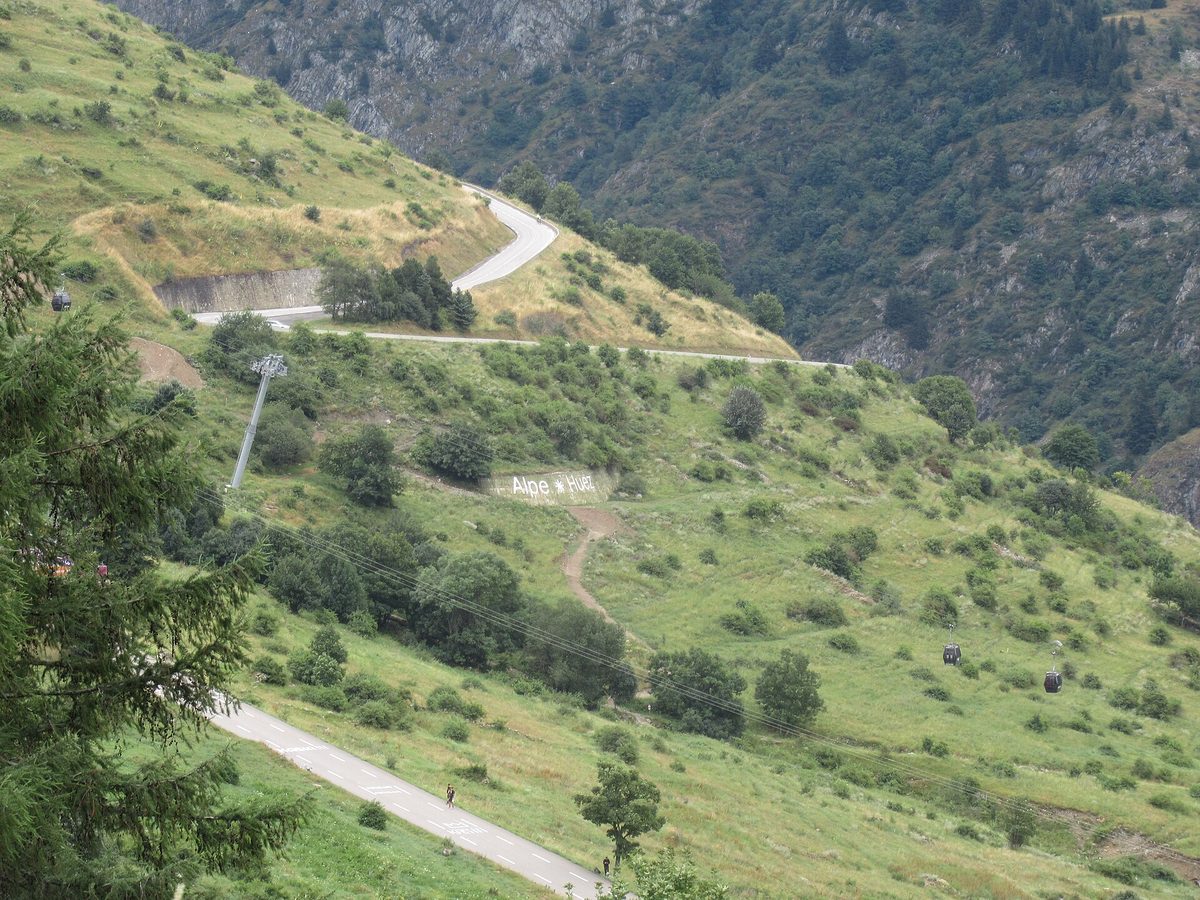
Alpe d'Huez
The 21 Hairpins — 13.8 km · 8.1% avg
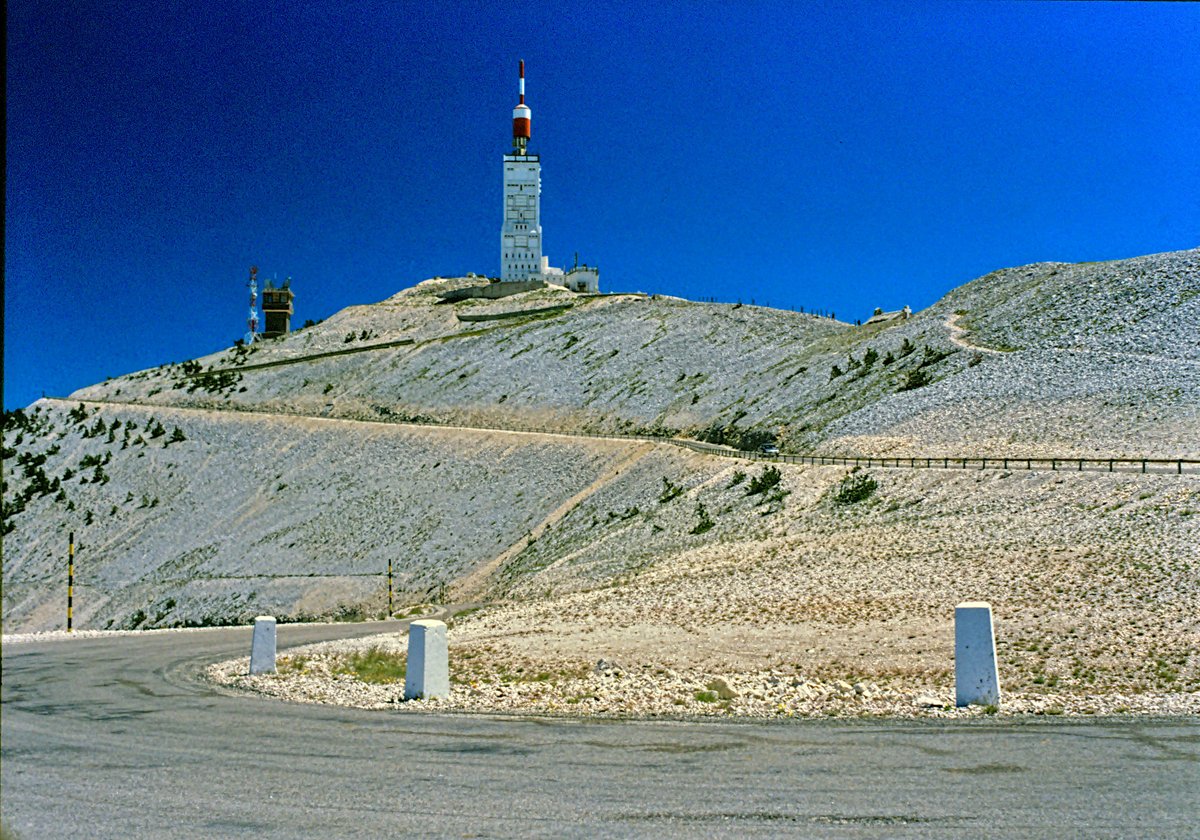
Mont Ventoux
Giant of Provence — 21.8 km · 7.4% avg
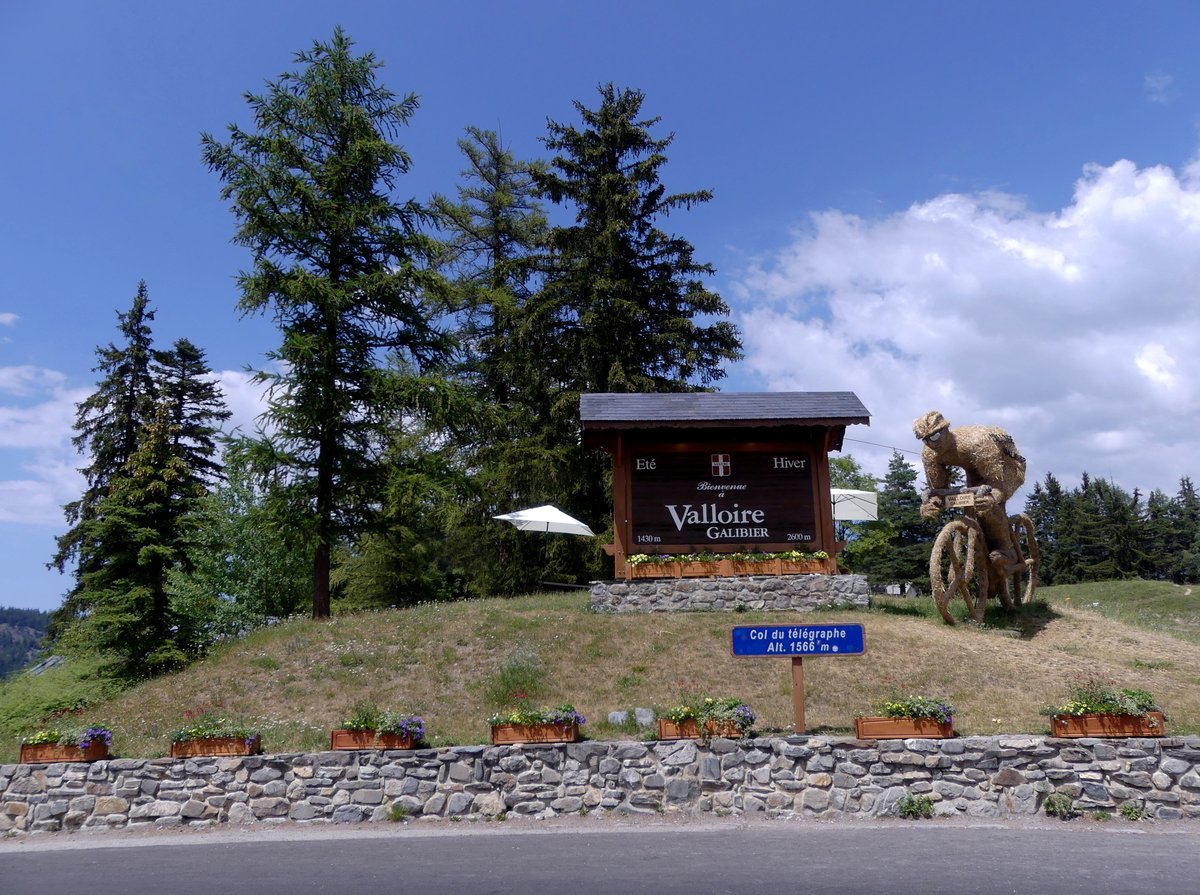
Télégraphe + Galibier
The Full Galibier from Saint-Michel — 34.8 km · ~6% avg
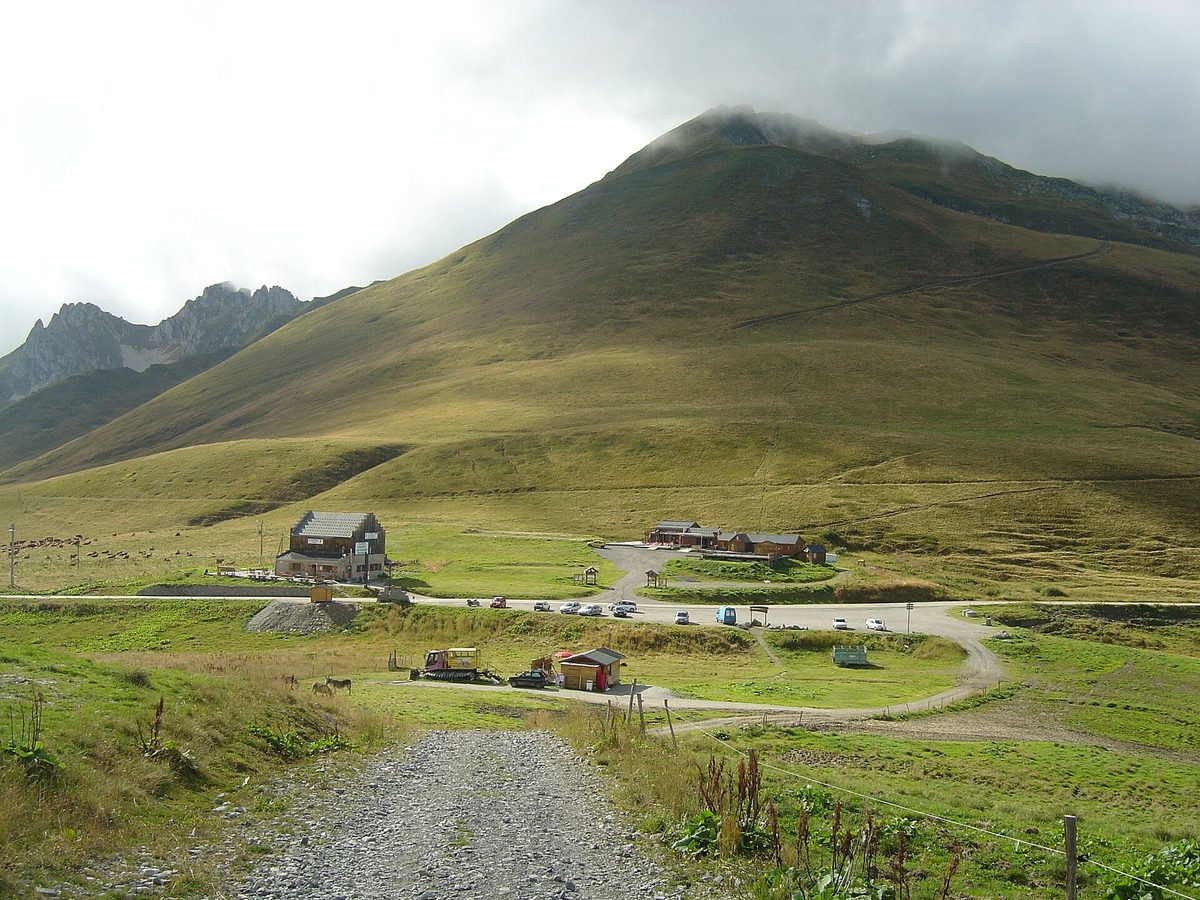
Col de la Madeleine
The Beauty and the Beast — 19.3 km · 8.0% avg
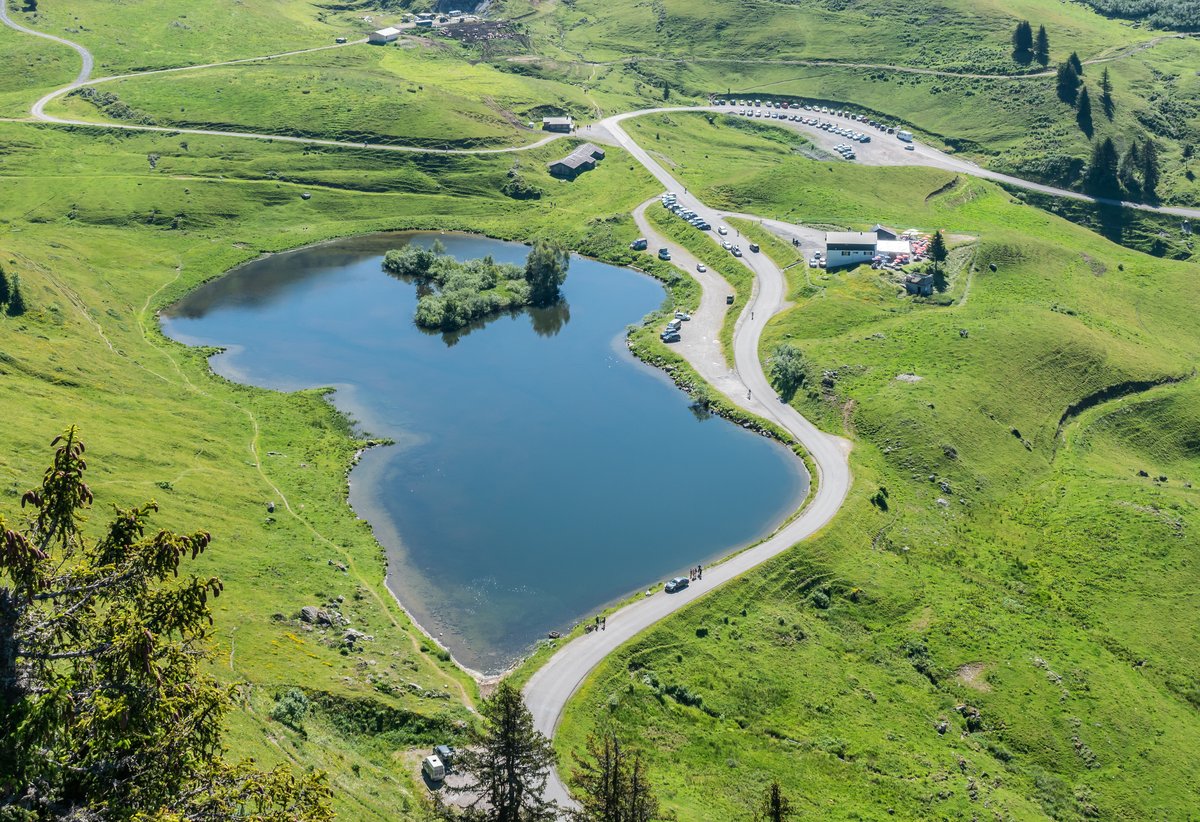
Col de Joux Plane
The Relentless Wall Above Samoëns — 11.6 km · 8.5% avg
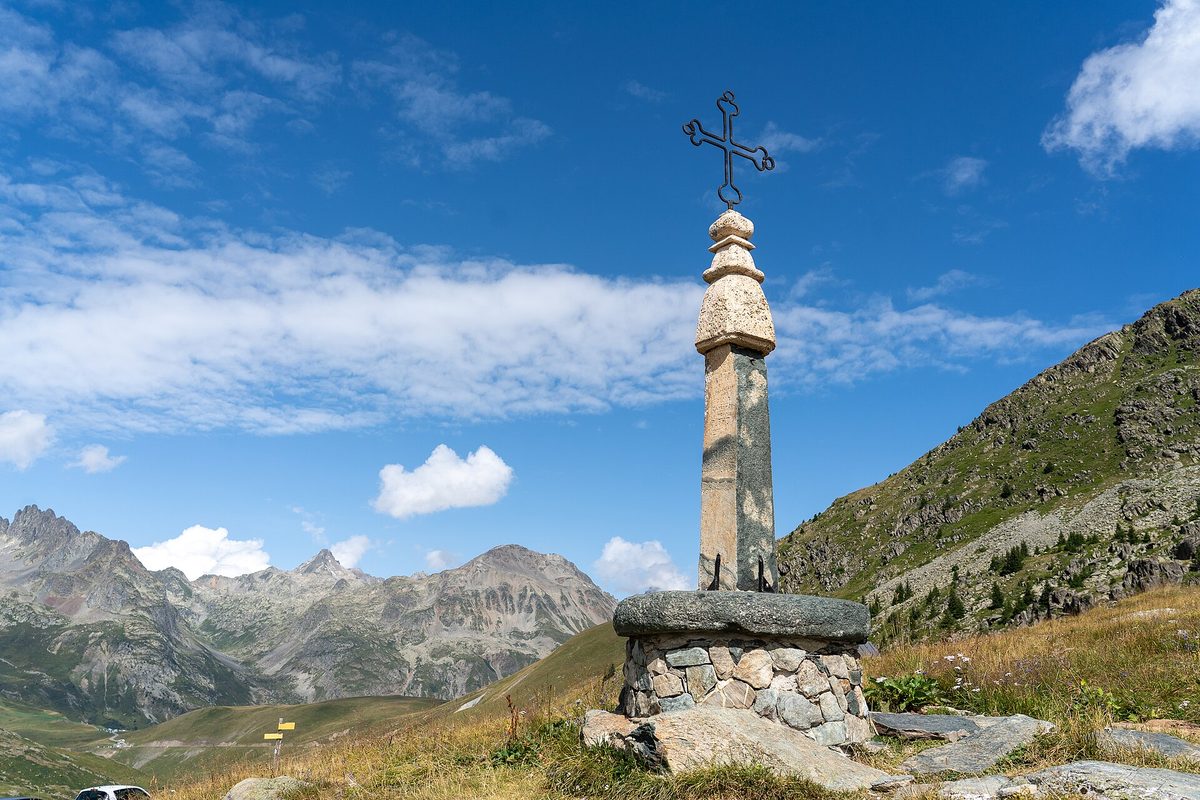
Col de la Croix de Fer
The Iron Cross — 29.0 km · 5.2% avg
Passo dello Stelvio
The 48 Hairpins of the Giro — 24.3 km · 7.4% avg
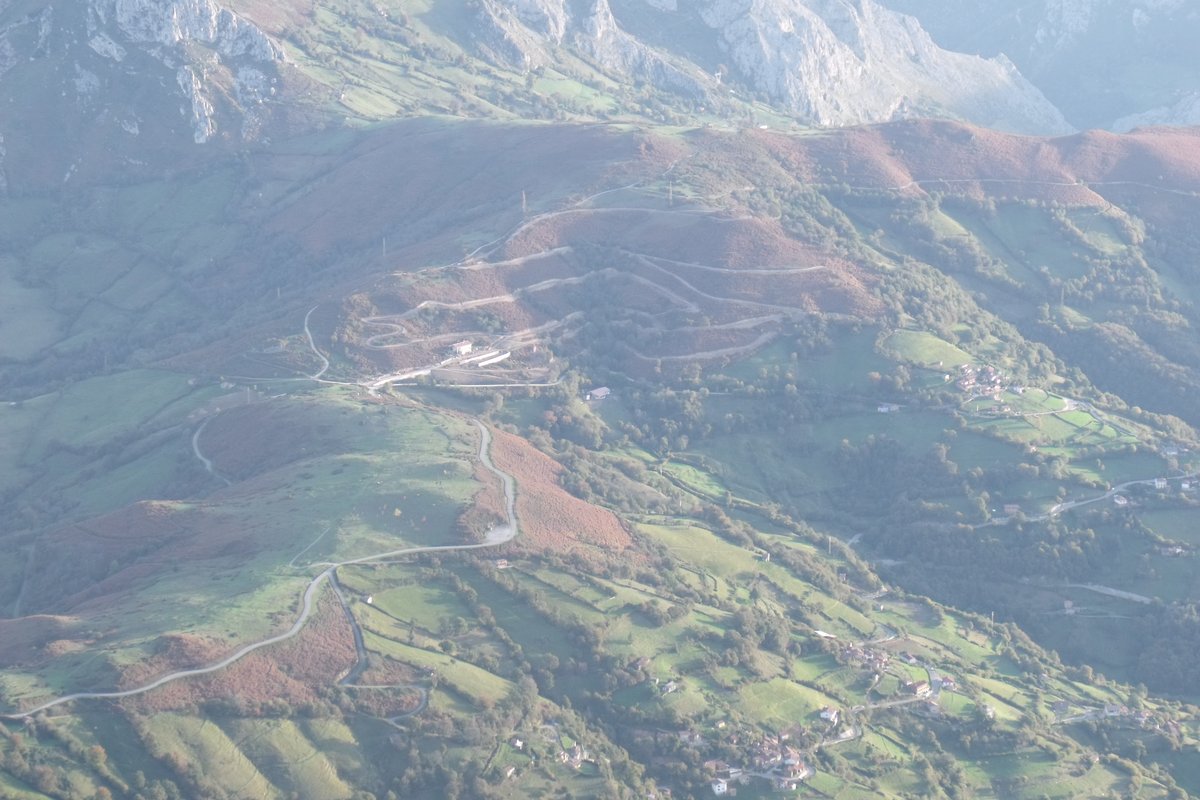
Alto de l'Angliru
The Steepest Finish of the Vuelta — 12.5 km · 10.1% avg
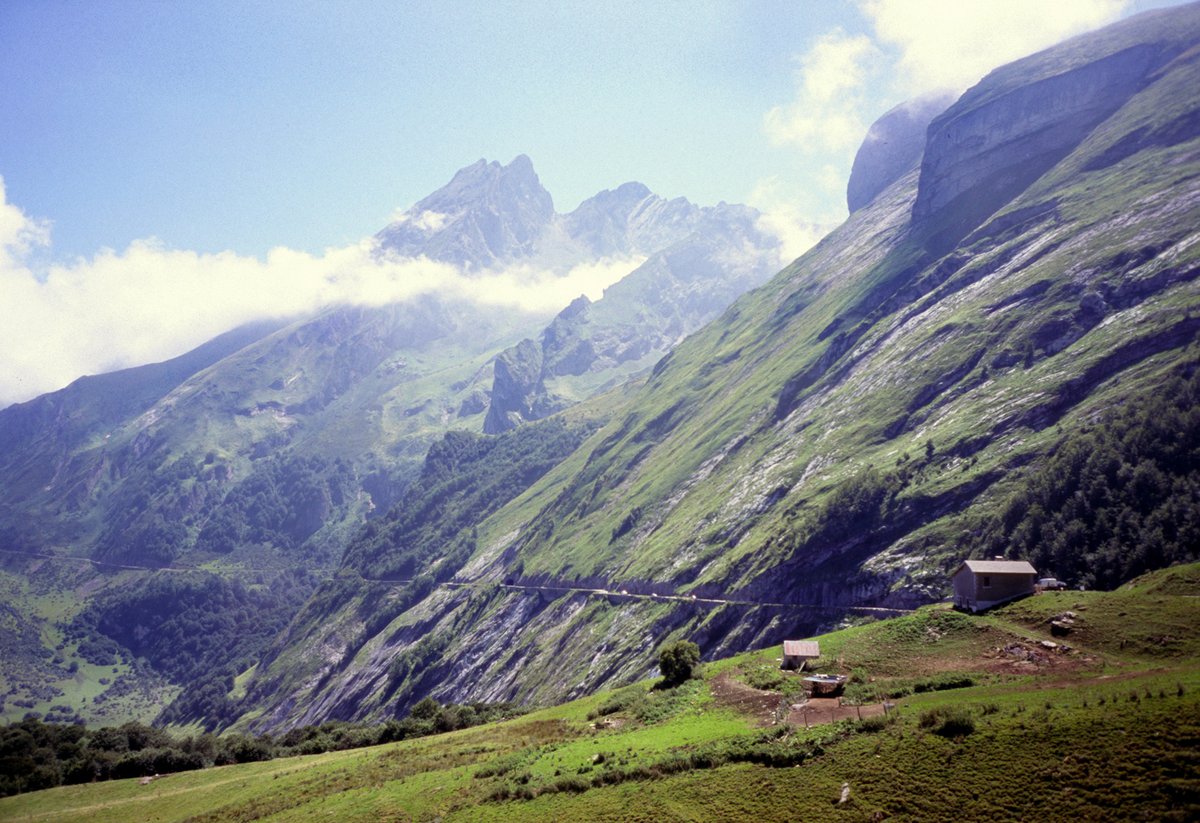
Col d'Aubisque
Balcony of the Pyrenees — 16.6 km · 7.2% avg
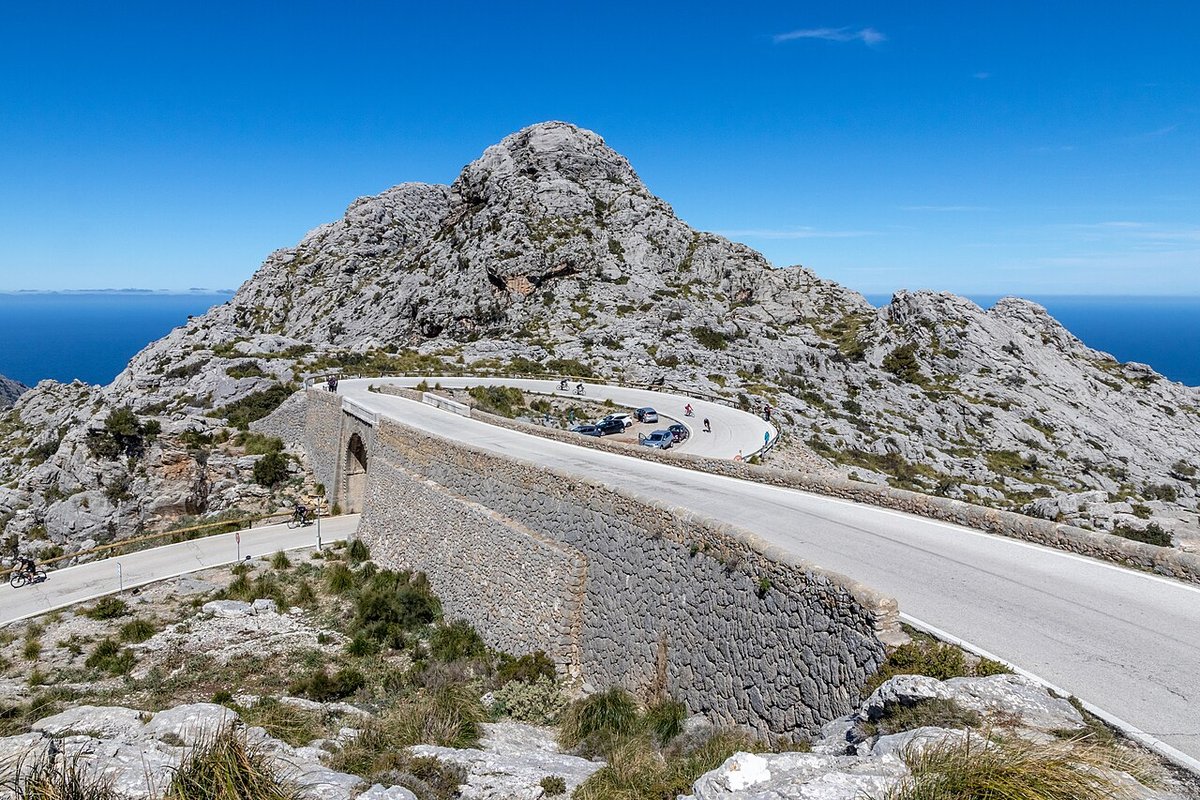
Sa Calobra
Mallorca's tie-knot climb — 9.4 km · 7% avg