French Alps · Technique · Pacing long climbs
How to Climb Long Mountain Climbs: Pacing, Effort and Fueling for Alpe d'Huez, Ventoux and the Galibier
A long alpine climb is not a short steep wall you can brute-force. On Alpe d'Huez you are climbing for the better part of an hour. On Mont Ventoux from Bédoin, closer to two. On the full Télégraphe + Galibier from Saint-Michel-de-Maurienne, you are looking at roughly 2,100 m of climbing over 34.8 km. The riders who finish strong are almost never the ones who look fastest at the bottom. This guide is the practical side of getting up: how hard to go, what to eat, which gears to use, what to wear, and when to turn around.
The short answer
- First rule
- Start easier than feels right
- Effort check
- Full sentences for most of the climb
- Fuel
- 30–60 g carbohydrate per hour
- Gear
- Compact + wide cassette (e.g. 34×30–34)
- Hardest trap
- Going too hard in the first third
| Climb type | Example on this site | What usually goes wrong | What to aim for |
|---|---|---|---|
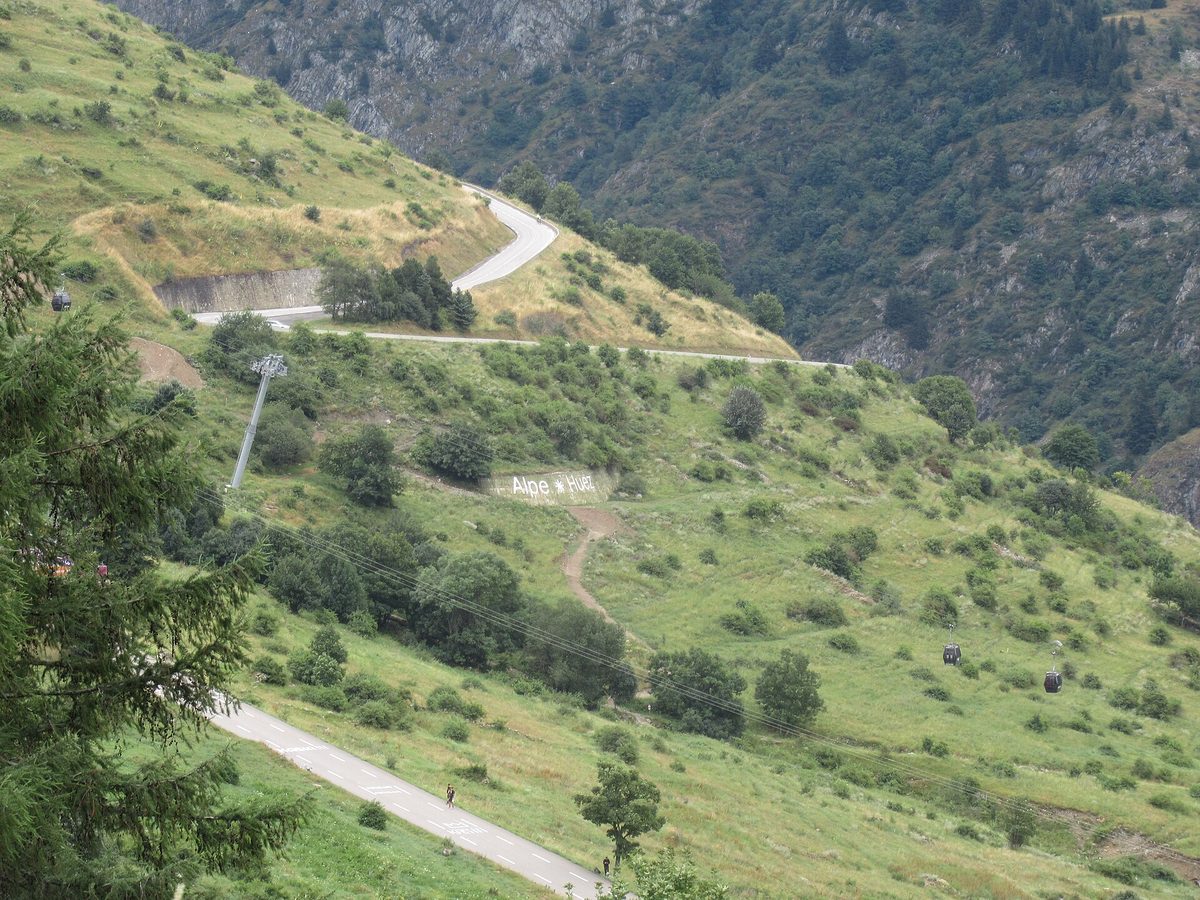
| Steep and famous | Alpe d'Huez — 13.8 km, 8.1% | Blowing up before bend 15 | Easy through the first hairpins; lift only if you still feel strong past Dutch Corner |
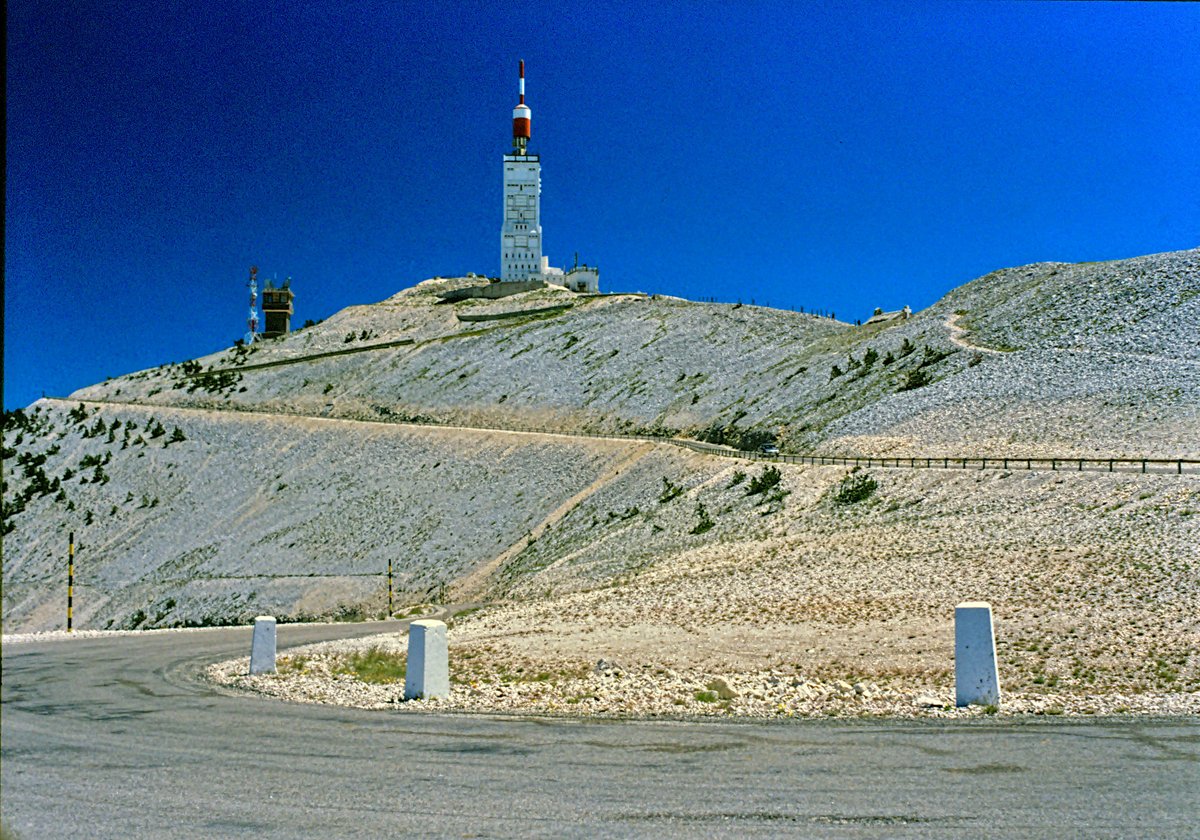
| Long and steady | Mont Ventoux via Bédoin — 21.8 km, 7.4% | Racing the forest, empty on the moonscape | Hold a talk-test pace under the trees; save a gear for Chalet Reynard to the top |
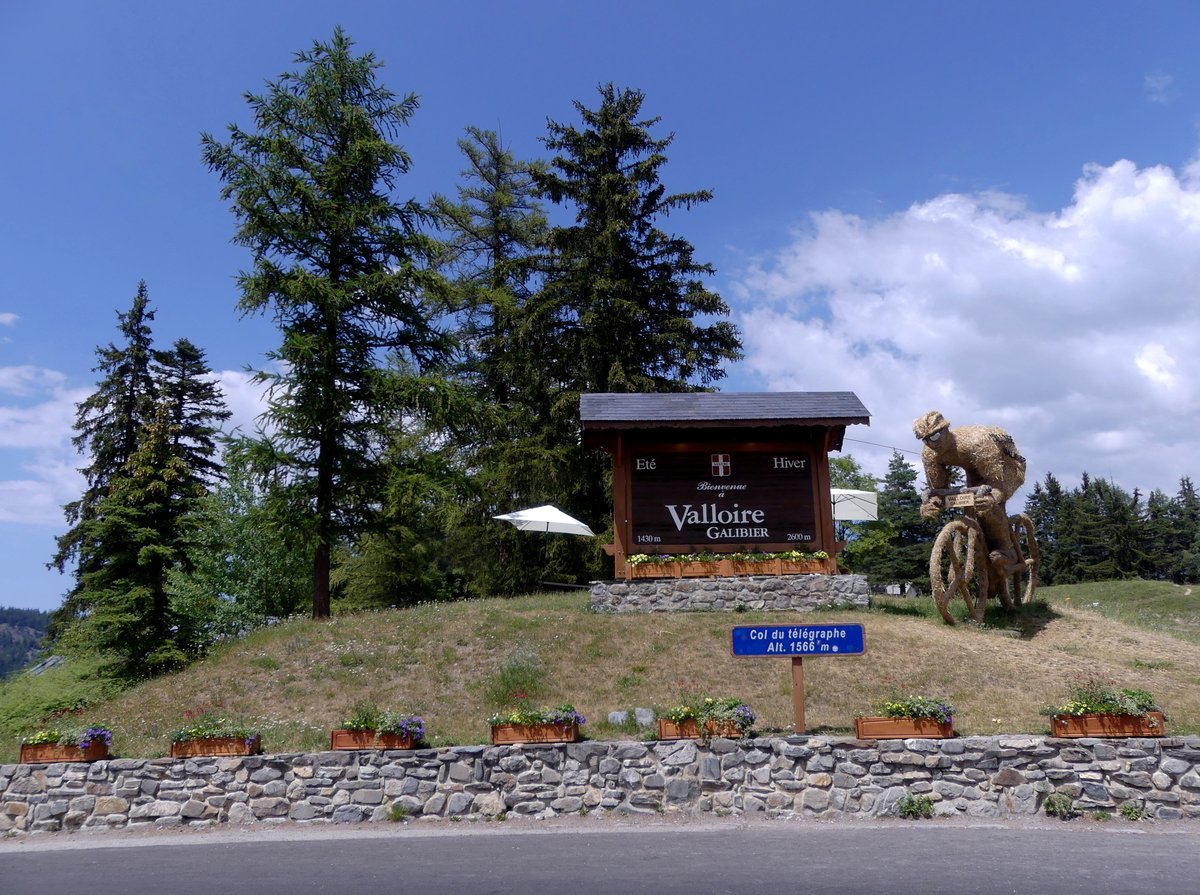
| Very long, steep last | Télégraphe + Galibier — 34.8 km, ~6% | Overcooking the Télégraphe | Warm-up effort to Valloire; real work only after Plan Lachat |
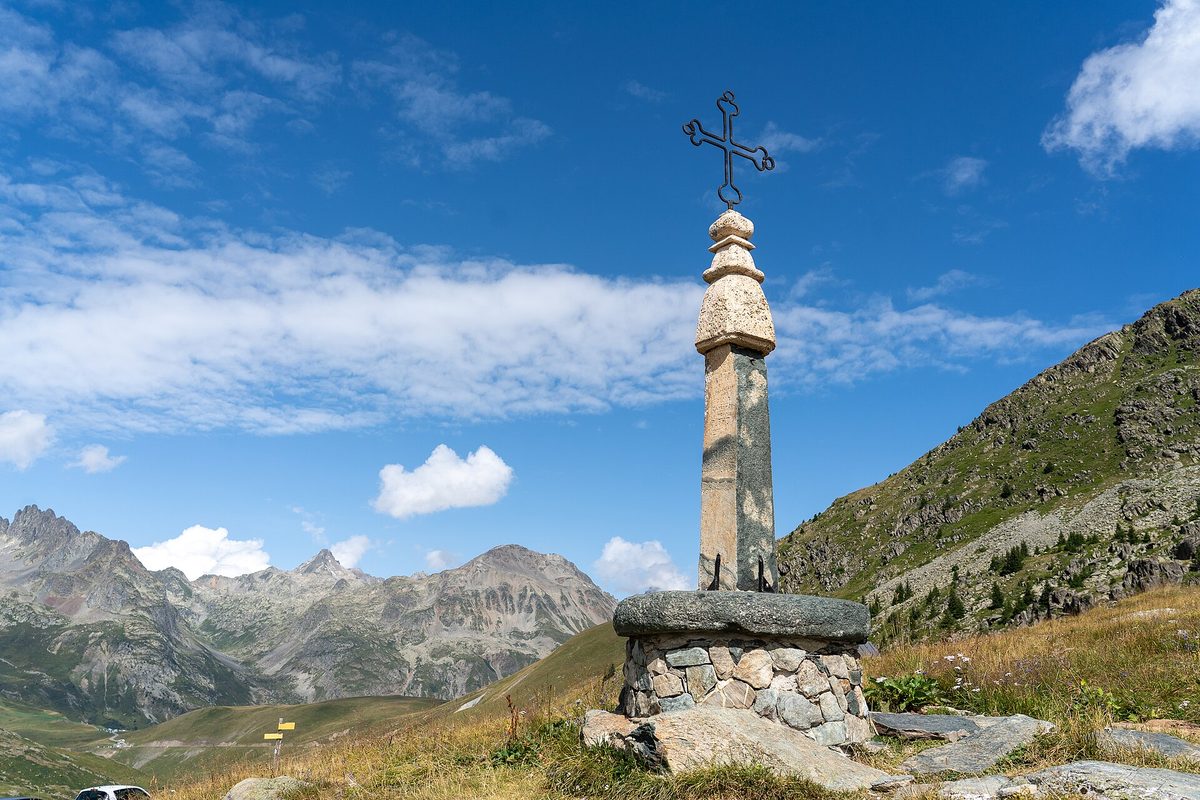
| Long and irregular | Croix de Fer — 29.0 km, 5.2% | Surges on every steep ramp | Ride the waves: soft on the steeps, keep rolling on the flats |
| Steady and steep | Madeleine — 19.3 km, 8.0% | Starting in too hard a gear | Lowest gear early; accept a slow first hour |
Why long climbs feel different
On a short ramp you can dig deep, recover on the flat, and dig again. On a long mountain climb there is no flat. Your body has to settle into an effort you can hold for one, two or even three hours, while the air thins, the temperature drops, and the steepest bit often comes late.
That is why the average grade on paper can mislead you. The full Télégraphe + Galibier is only about 6% including the short drop into Valloire, yet it is one of the hardest days on this site because the last 7.8 km from Plan Lachat average around 8.5%, and the final kilometre to 2,642 m sits near 9.5–10% with a steepest pitch of about 12%. The Croix de Fer averages 5.2% over 29.0 km from Allemond, but the road comes in waves of steep, flat and even short descents, so riders who chase every surge arrive empty at Lac de Grand Maison.
Think of a long climb as an economy problem, not a hero problem. The goal is to reach the top still able to put a jacket on, take the photo, and ride down safely.
The golden rule: start too easy
Almost every pacing mistake on a famous climb happens in the first third.
- On Alpe d'Huez the opening hairpins are the steepest (max 13%). They feel heroic. They also empty the tank before bend 15, which is exactly what the live page warns about.
- On Ventoux via Bédoin the vines look gentle, then the forest locks you into a long grind near 9–10%. If you "race" Saint-Estève, the moonscape after Chalet Reynard becomes a crawl.
- On the Télégraphe the gradient is rhythmic at about 7.1%. It is easy to ride it like a race. Every hard kilometre there is paid back above Plan Lachat.
A useful rule of thumb: the first third should feel almost boring. If you are proud of how strong you feel after ten minutes, you are probably going too hard.
If you use a power meter, coaches often suggest holding well below your short-climb number for anything that will take an hour or more — think of it as a steady endurance effort you could repeat tomorrow, not a one-off time trial. If you do not use numbers, use the talk test below. Either way, plan for a slight "negative split": a little stronger in the last third than in the first, not the other way round.
The talk test (no gadgets required)
You do not need heart-rate zones or a power meter to pace a col. Exercise scientists have shown that the simple talk test tracks closely with the effort level where breathing starts to tip over into hard work (the ventilatory / aerobic threshold area). In plain words:
| What you can do | What it usually means on a long climb |
|---|---|
| Speak full sentences comfortably | Safe zone for most of a 1–3 hour climb |
| Speak only short phrases | Borderline — fine for short hard bits, not for the whole col |
| Can barely get words out | Too hard for a long climb — ease off |
For Alpe d'Huez, Ventoux, the Madeleine or the Galibier, stay in the full-sentence zone until the last few kilometres. Only then, if the legs still feel honest, let speech get shorter.
Cadence and gears
Cadence is how fast you turn the pedals. On long climbs, a smooth, slightly higher cadence usually costs less than mashing a hard gear at a crawl — especially when the road kicks up and the air thins.
Bring low gears. The tips on our Galibier and one-week pages are deliberate: a compact chainset with a wide cassette (for example a 34-tooth small ring and a 30–34 tooth biggest sprocket) lets most riders keep turning smoothly on 8–10% slopes. If your bike only has a hard gear left on Alpe d'Huez's early hairpins or above Plan Lachat, the climb becomes a strength contest you will lose before the top.
Practical gear habits:
- Shift early on steepening ramps. Waiting until you are already grinding slows you more than one "too easy" gear.
- Stand for short resets if that is your habit, but do not turn standing into a series of attacks.
- On irregular climbs like the Croix de Fer, use the flatter sections to sit, drink and settle the breathing — not to surge.
Fueling and drinking
A long climb burns through the carbohydrate stored in your muscles. Sports-nutrition guidance for endurance efforts of about 1 to 2.5 hours is typically 30–60 grams of carbohydrate per hour (gels, chews, bars, or a sports drink). On very long days — a full Télégraphe + Galibier, or a big Alps loop — trained guts can often use more, especially when drinks mix different sugars, but only if you have practised that plan on training rides. Start lower if your stomach is untested.
What that means on the road:
- Eat before you feel empty. Carbohydrate from a gel or drink takes several minutes to become useful. Start fueling in the first 20–30 minutes, not when the lights go out.
- Drink early too. On Ventoux in summer heat under the trees, and on any climb with a cold, windy summit, dehydration sneaks up quietly.
- Use the known stops. Valloire is the last good refill on the full Galibier route. On Ventoux, Chalet Reynard is the obvious checkpoint. On the Croix de Fer, Lac de Grand Maison is a natural pause.
- Practise your foods. Race week is a bad time to try a new gel.
If you are climbing for under about 45 minutes and you ate well beforehand, you can often get away with water and a small snack. Once you are past an hour — which is most of the climbs on this site — treat eating as part of the pacing plan, not an afterthought.
Clothing layers
Valley warmth lies. Air cools by roughly 6.5 °C for every 1,000 m you climb. On the full Télégraphe + Galibier you start around 710 m and finish at 2,642 m — nearly 2,000 m higher — so the summit is often about 12 °C colder before wind. After a sweaty climb that difference feels bigger on the descent.
Pack, even in July:
- A light windproof jacket
- Full-finger gloves (or at least ones you can put on at the top)
- Arm warmers or a thin long-sleeve layer if the forecast is cool
- Extra for September and October mornings
Put the jacket on before you start the descent, not halfway down when your hands are already cold. The summit photo can wait thirty seconds.
When to stop or turn around
Finishing is optional. Getting down safely is not.
Turn around or take a long stop if:
- You feel dizzy, unusually nauseous, or your vision is off
- A thunderstorm is building above an exposed summit (common on summer afternoons in the Alps)
- Your hands are too cold to brake confidently
- You are out of food and water with a long hard section still ahead (for example empty bottles before Plan Lachat)
Known good pause points on climbs from this site:
| Climb | Sensible checkpoint |
|---|---|
| Alpe d'Huez | Any hairpin if you need to reset; Dutch Corner (around bend 7) as a "nearly there" landmark, not a finish line |
| Mont Ventoux (Bédoin) | Chalet Reynard — leave the forest, assess wind and legs before the moonscape |
| Télégraphe + Galibier | Télégraphe summit, then Valloire for bottles and food; Plan Lachat before the hard upper slopes |
| Croix de Fer | Lac de Grand Maison — drink, look around, then decide on the summit and the Glandon detour |
There is no shame in riding the Galibier from Valloire only (about 18 km at 6.9%) instead of the full 34.8 km from Saint-Michel. That is still a proper high mountain climb to 2,642 m.
Worked example: pacing the full Télégraphe + Galibier
This is how we would ride the biggest single effort on the site if the goal is to arrive at 2,642 m still enjoying the day — not to set a personal record.
Section by section
| Section | Distance / grade (site figures) | Effort target | What to do |
|---|---|---|---|
| 1. Col du Télégraphe | 11.8 km at 7.1% to 1,566 m | Full sentences, almost too easy | Treat it as a warm-up. Ignore faster groups. Drink and eat once or twice. |
| 2. Down to Valloire | ~4.7 km, about 150 m down | Easy roll | Mandatory stop: refill both bottles, eat something solid, put a layer in the pocket if the wind is up. |
| 3. Valloire to Plan Lachat | ~10 km, gentler then rising to ~2,000 m | Still conversational | Do not chase. The open valley often brings a headwind. Keep fueling. |
| 4. Plan Lachat to tunnel | Last 7.8 km at about 8.5% | Short phrases OK | This is the real climb. Sit in a low gear, steady cadence. No attacks. |
| 5. Final kilometre to summit | ~9.5–10%, steepest pitch ~12%, to 2,642 m | Hard but controlled | Only empty the tank here if the legs still feel honest. Stay left — bikes may not use the tunnel. |
| Descent | Back toward Valloire or over toward the Lautaret | Survival mode | Jacket and gloves on at the top. Brake early; the air is cold and the road is fast. |
Why this order of effort works
You will already have climbed about 1,000 m by Plan Lachat. From there every kilometre is above roughly 2,000 m, where breathing gets harder. Spending matches on the wooded Télégraphe is the classic amateur mistake on this route — and it is the one our Télégraphe + Galibier page is written to prevent.
Mini example: Alpe d'Huez by hairpin blocks
If your long-climb practice day is the Alpe instead:
| Block | Hairpins (bottom → top) | Effort |
|---|---|---|
| Bottom | 21 → 16 | Easiest of the day — the road is steepest here (up to 13%). Soft pedal the ego. |
| Middle | 15 → 8 | Steady talk-test rhythm. Drink. This is where a blown start hurts. |
| Dutch Corner zone | Around bend 7 | Glance, do not celebrate. The climb is not over. |
| Top | 6 → 1 | Lift only if you paced the bottom. Summit at 1,850 m, photo, jacket, descend. |
Same principle as the Galibier: protect the first third so the last third is still riding, not surviving.
Common mistakes
- Racing the bottom. The most expensive error on Alpe d'Huez, Ventoux and the Télégraphe.
- Skipping food because "it is only a climb." At 21–35 km it is a meal plan, not a sprint.
- Too hard a gear. Mashing at low cadence on 8% grades digs a hole you cannot climb out of.
- No jacket at the summit. A great ascent followed by a dangerous, freezing descent.
- Chasing every surge on an irregular climb. Especially costly on the Croix de Fer.
- Starting late on a hot day. Afternoon storms and valley heat stack the odds against you — see our when to ride guide.
- Treating Valloire as optional. On the full Galibier it is the last real feed zone.
Mental approach
Long climbs reward boring decisions. Count hairpins, kilometre posts, or landmarks instead of staring only at the summit. Break the day into the sections in the table above. Remind yourself that feeling "too fresh" at one-third distance is success, not a missed opportunity.
If you are on a multi-day trip, pace for tomorrow as well as today. Our one-week French Alps plan puts Alpe d'Huez early and the full Galibier after a rest day for exactly that reason: the biggest effort needs a full tank, and the week is lost if day two is ridden like a race.
Our recommendations
- First big alpine climb: Alpe d'Huez. Short enough to finish, famous enough to motivate, and the hairpin numbers give you built-in checkpoints.
- Best teacher of patience: the Croix de Fer. The 5.2% average hides waves of gradient; if you learn to ride those waves, every other long climb gets easier.
- Biggest single test: Télégraphe + Galibier from Saint-Michel. Use the worked example above.
- Heat and wind exam: Mont Ventoux via Bédoin. Pace the forest; respect the mistral on the moonscape.
- Same-week pairing: ride Alpe d'Huez before the Galibier, not after a cooked first day — as in the seven-day plan.
Pro tips
- Start every long climb in a gear that feels silly-easy for the first ten minutes.
- Use the talk test: full sentences until the last few kilometres.
- Eat and drink from the bottom; aim for roughly 30–60 g of carbohydrate per hour on climbs over an hour.
- Fit low gears before the trip (compact + wide cassette), not halfway up the Madeleine.
- Stop in Valloire on the full Galibier route — bottles and food are not optional.
- Pack a windproof layer and gloves for every summit above about 1,800 m.
- Start early in July and August to beat heat, traffic and storms.
- On irregular climbs, refuse to surge; ride the rhythm of the road.
- Have a shorter backup (Galibier from Valloire, or Alpe d'Huez alone) if weather or legs turn.
- Check the pass is open before you leave — high roads still close for snow and storms outside midsummer.
Sources
- Climb figures: live bestcyclingclimbs.com pages for Alpe d'Huez, Mont Ventoux, Télégraphe + Galibier, Col du Galibier, Col de la Croix de Fer, Col de la Madeleine and Col du Glandon, checked 12 October 2026. Croix de Fer distance/gain corrected on the site on 8 October 2026 to 29.0 km / 1,506 m from Allemond (older copy used 24.0 km / 1,268 m via Rochetaillée).
- Talk test / aerobic effort: Persinger, Foster and colleagues on the Talk Test as a marker of exercise intensity (including cycle ergometer work); Foster et al., Journal of Cardiopulmonary Rehabilitation and Prevention (2008) and related Talk Test research — speech comfort tracks near the ventilatory threshold. Plain-language summary of aerobic-threshold breathing: High North Performance, "The Aerobic Threshold (AeT) Explained For Cyclists".
- Carbohydrate during endurance exercise: American College of Sports Medicine guidance commonly cited as about 30–60 g carbohydrate per hour for endurance efforts around 1–2.5 hours; Jeukendrup, "A Step Towards Personalized Sports Nutrition: Carbohydrate Intake During Exercise", Sports Medicine (2014), PMC4008807; Currell & Jeukendrup, multiple-transportable carbohydrates and cycling performance, Medicine & Science in Sports & Exercise (2008).
- Temperature with height: standard atmosphere lapse rate about 6.5 °C per 1,000 m; Saint-Michel ~710 m to Galibier 2,642 m as on /telegraphe-galibier/ and /when-to-ride-the-alps/.
- Route detail used in the worked example: Télégraphe 11.8 km / 7.1% / 1,566 m; Valloire descent ~4.7 km; Plan Lachat ~10 km from Valloire; last 7.8 km ~8.5%; final km ~9.5–10% with steepest pitch ~12%; tunnel closed to bikes — all as on /telegraphe-galibier/.
Climbs mentioned in this guide
Alpe d'Huez
The 21 Hairpins — 13.8 km · 8.1% avg
Mont Ventoux
Giant of Provence — 21.8 km · 7.4% avg
Télégraphe + Galibier
The Full Galibier from Saint-Michel — 34.8 km · ~6% avg
Col de la Croix de Fer
The Iron Cross — 29.0 km · 5.2% avg
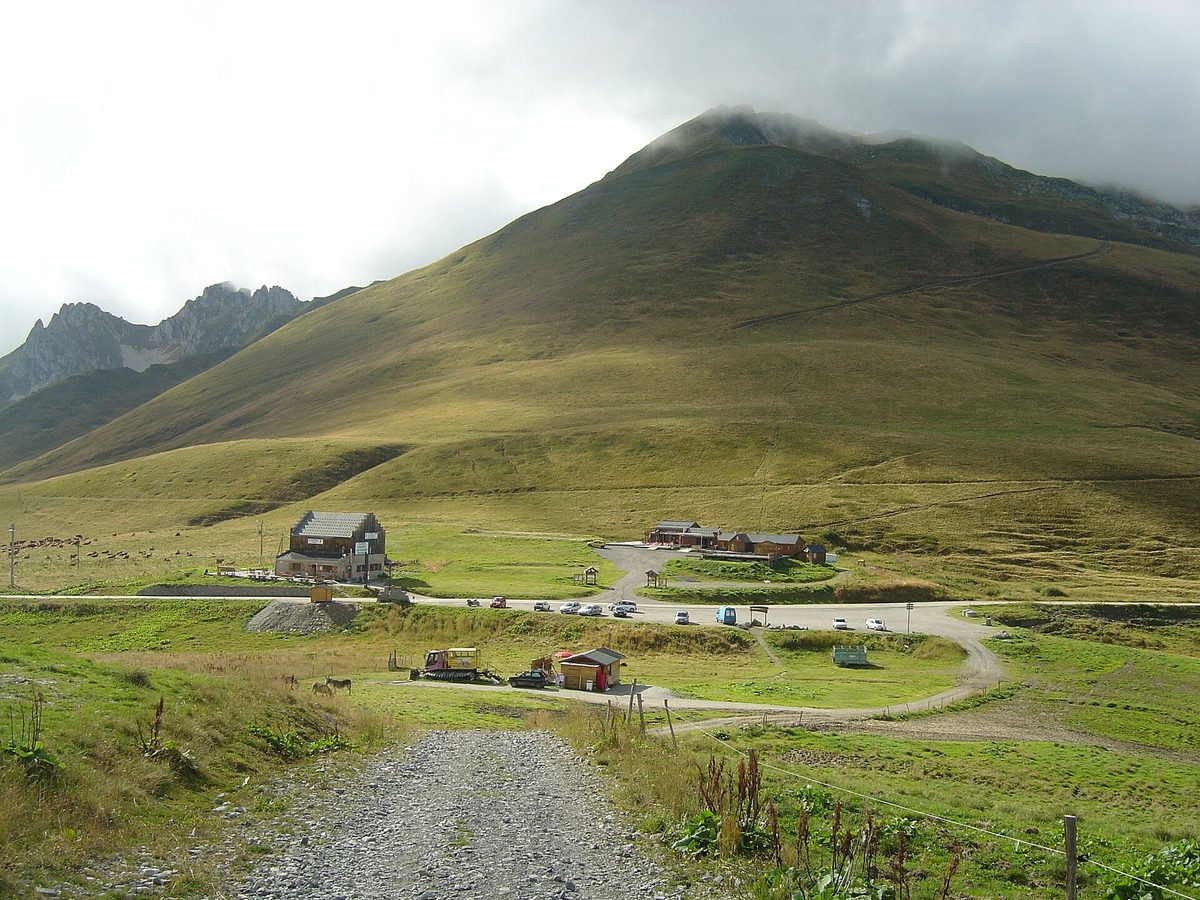
Col de la Madeleine
The Beauty and the Beast — 19.3 km · 8.0% avg
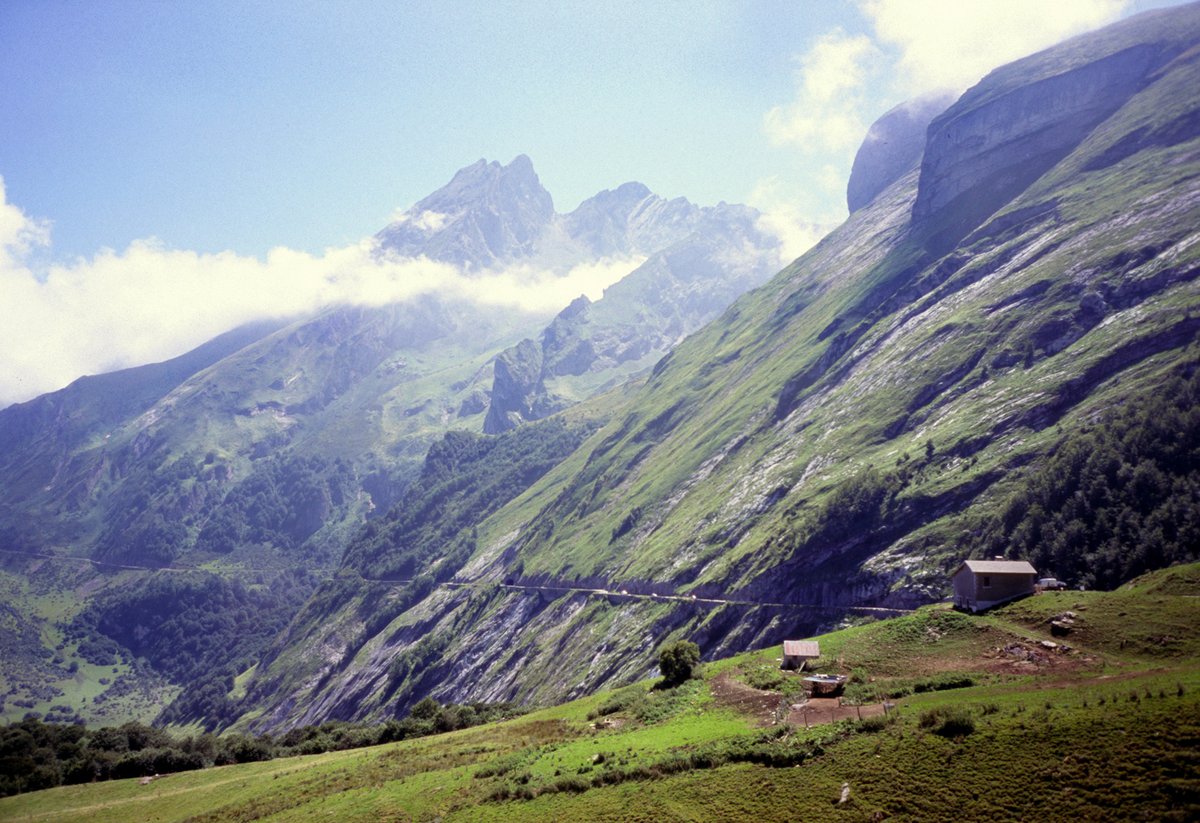
Col d'Aubisque
Balcony of the Pyrenees — 16.6 km · 7.2% avg
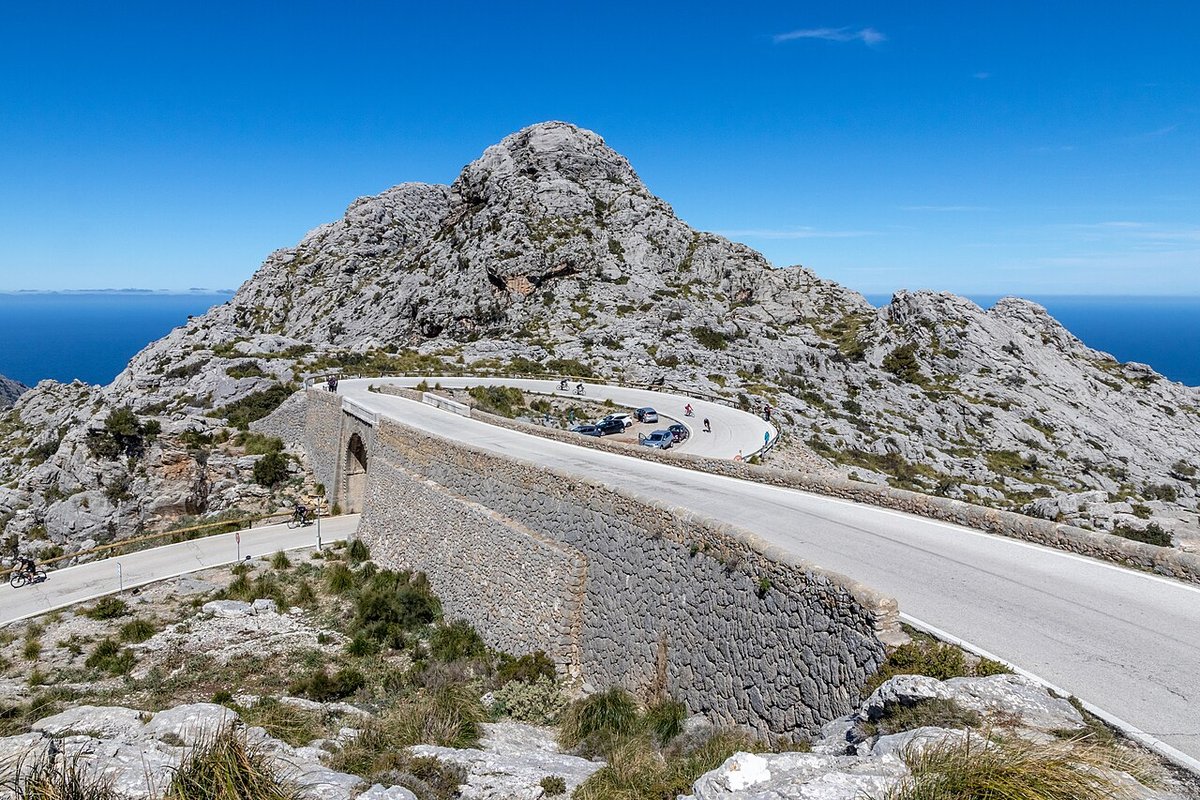
Sa Calobra
Mallorca's tie-knot climb — 9.4 km · 7% avg