Italian Alps · Beyond category · The Mazzo di Valtellina side
Ride the Mortirolo from Mazzo di Valtellina: 12.4 km at 10.5% to 1,852 m
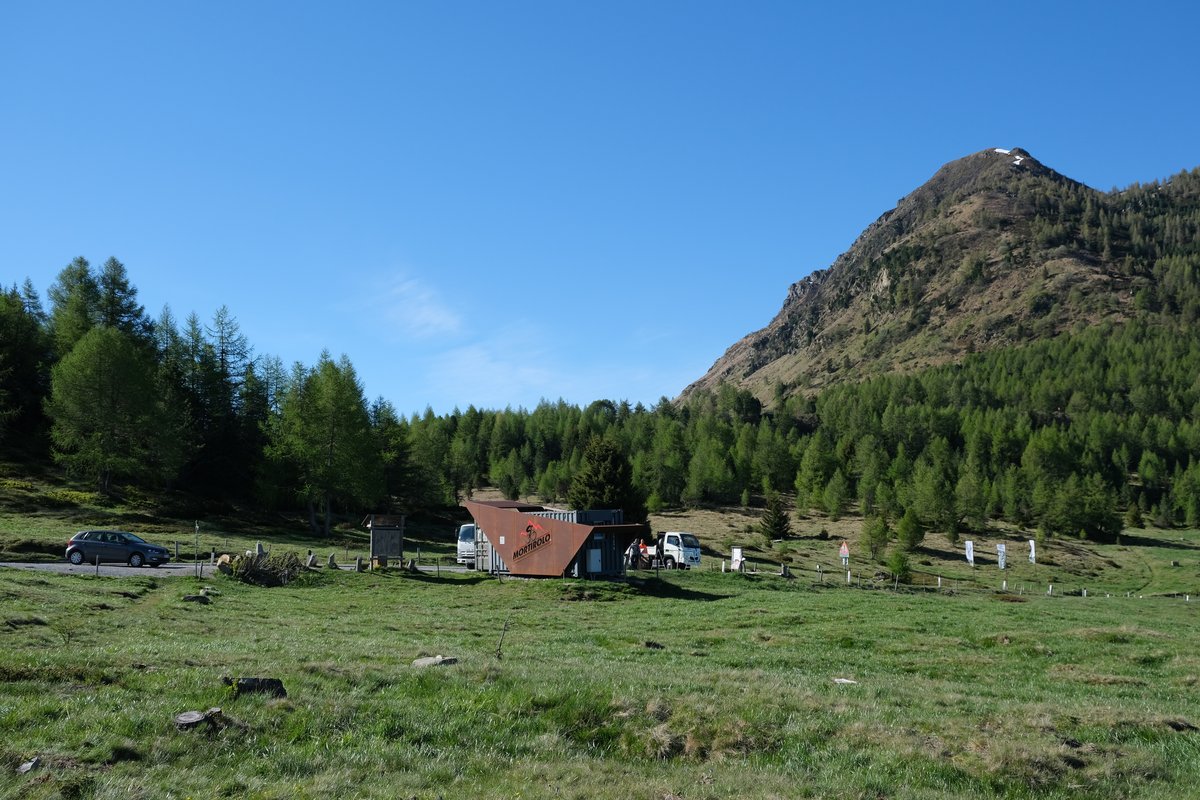
The Mortirolo is the climb many riders call the hardest in the Alps. From Mazzo di Valtellina it climbs about 1,300 m in 12.4 km at an average of 10.5%, with ramps of 18%, and there is almost no place to rest. It is not high and it is not long, but it is steep from start to finish. This is the road where Marco Pantani made his name in the 1994 Giro d'Italia, and his statue now stands at kilometre 8.
Quick facts
- Distance
- 12.4 km
- Average grade
- 10.5%
- Max grade
- ~18%
- Elevation gain
- ~1,300 m
- Summit
- 1,852 m
The experience
The climb starts in Mazzo di Valtellina, a small village at about 560 m on the Stelvio road (SS 38) between Tirano and Bormio, in the Valtellina valley in Lombardy. English Wikipedia gives 12.4 km at 10.5% with 1,300 m of climbing and a maximum of 18%. The road goes over the Passo della Foppa, which everyone calls the Mortirolo, at 1,852 m and continues down to Monno and Edolo in Val Camonica. It is a narrow, quiet road. Most traffic between the two valleys uses the easier Passo dell'Aprica instead.
Section by section, going up: the first three kilometres, past the old Castello di Pedenale, are 9–11%. That is already steep, but it is the easy part. From the church of San Matteo at about kilometre 3.5 the climb gets really hard. Altigraphs measures kilometres 4, 5 and 7 at 14.3% and the hardest single kilometre at almost 16%, and Italian Wikipedia says the gradient never drops below 11% between kilometres 3 and 9. Climbfinder counts 33 hairpins on the climb, and riders report that small signs at the bends show the gradient to the next bend. At kilometre 8 you pass the Pantani monument. After that the road eases to around 9–10%, and the last kilometre to the meadow at the top is about 7%.
There are several roads to the top. Mazzo is the classic side and the one the Giro has used most. Tovo di Sant'Agata, just next door, is about as steep but more irregular, with short pitches over 20% according to Italian Wikipedia. Grosio is easier at 14.8 km and 8.3%. The south side from Edolo via Monno is 17.2 km at 6.7%, with its hardest part near the top. Many riders combine the Mortirolo with the Gavia or the Stelvio in one day; Bormio is a short ride up the valley from Mazzo.
The Giro d'Italia first used the Mortirolo in 1990, from the Edolo side. After that the race mostly climbed it from Mazzo. On 5 June 1994, in the stage from Merano to Aprica, the young Marco Pantani attacked on the Mortirolo, dropped Miguel Indurain and the race leader Evgeni Berzin, and won the stage alone. Ivan Gotti holds the fastest time from Mazzo with 42 minutes 40 seconds in 1996, according to Italian Wikipedia. Since Pantani died in 2004, the first rider over the top in the Giro wins the Cima Pantani prize. The Giro last climbed the Mazzo side in 2019, and crossed the pass from the Edolo side in 2024 and 2025. The 2026 Giro did not visit the Mortirolo.
Our time estimate (own calculation, rider and bike 80 kg in total, steady power, same model as our other guides, using the Altigraphs kilometre profile): about 1 hour 58 minutes at 150 watts, 1 hour 39 minutes at 180 W and 1 hour 12 minutes at 250 W. The split is the useful part: at 180 W the first three kilometres take about 22 minutes, kilometres 4 to 8 take about 49 minutes, and the last four take about 27. In other words, half of your time on the climb is spent on the five steepest kilometres before the Pantani monument. The top is lower than the Gavia or the Stelvio, so the thin air costs less: by the same lab study we use in other guides (Clark et al., 2007), only about 5–6 minutes at 180 W.
Gears by the same calculation, at 180 W: on 14% you ride at about 5.6 km/h, which is only 36 pedal turns per minute on 34×28 and 42 on 34×32. On the 18% ramps you are down to about 4.5 km/h, which means 29 turns per minute on 34×28 and 36 on 34×34. That is not pedalling any more, it is pushing. On the Mortirolo even a strong rider is helped by a 34×32 or 34×34, and a gravel-style 32×36 or similar gets you closer to 45–50 turns on the steepest parts. Lower gears do not make you slower; they let you keep the same power without grinding your knees for an hour.
The trap is that there is no easy part to recover on. On most long climbs you can go a little too hard and then rest on a flatter section. Here the steepest five kilometres come right after a start that is already 9–11%, so a fast first ten minutes costs you for the next hour. Our advice: ride the first three kilometres at a pace that feels almost too easy, use your lowest gear from the start of the steep part, and think of the Pantani statue at kilometre 8 as the end of the hard work. Fill both bottles in Mazzo, because rider reports about fountains on the way up differ. The pass is about 8 °C colder than the valley by the usual rule of 6.5 °C per 1,000 m, so bring a jacket for the descent. At 180 W, plan for about 1 hour 45 minutes including the altitude effect, plus stops.
Pro tips
- Mistake: starting too fast: The first 3 km are already 9–11%, and the hardest 5 km follow straight after. Every minute you gain at the start you pay back several times between kilometres 4 and 8.
- Mistake: too big gears: On 14–18% a 34×28 forces most riders down to around 30 turns of the pedals per minute. Fit a 34×32, 34×34 or bigger if you can.
- Mistake: standing up the whole way: Getting out of the saddle on every ramp burns energy fast on a climb this long. Sit and spin your lowest gear, and stand only for short moments to stretch your back.
- Mistake: waiting for a flat bit: There is none until the last kilometres. Settle into one steady effort from San Matteo to the Pantani monument instead of hoping the road will ease.
- Take enough water: Rider reports about fountains on the way up differ. Fill both bottles in Mazzo, and on a hot day start early.
- Descend another way: The Mazzo side is narrow and very steep, so it is hard work on the brakes. Many riders go down to Monno and Edolo, or ride the Mortirolo as a loop with the Aprica or the Gavia.
- Check the road: The road is narrow and climbs through forest, so watch for cars on the hairpins. On days with big events like the Granfondo Gavia e Mortirolo, the road can be busy with riders or closed to traffic; check the local event dates before you go.
Estimate your time up Passo del Mortirolo
By our model, a 72 kg rider on an 8 kg bike holding 216 W (3 W/kg) needs about 1:23 for the 12.4 km and 1,300 m of Passo del Mortirolo. Enter your weight, your bike's weight and the power you can hold for about an hour of climbing.
Estimated time: 1:23:21
More about the climb time calculator ·
Steady power, no wind, no stops, and the average grade of the whole climb. Steep ramps, flat sections and descents are only evened out roughly, so irregular climbs and climbs with approximate figures (~) will be less accurate. Your values are saved only in this browser.
More climbs in Italy
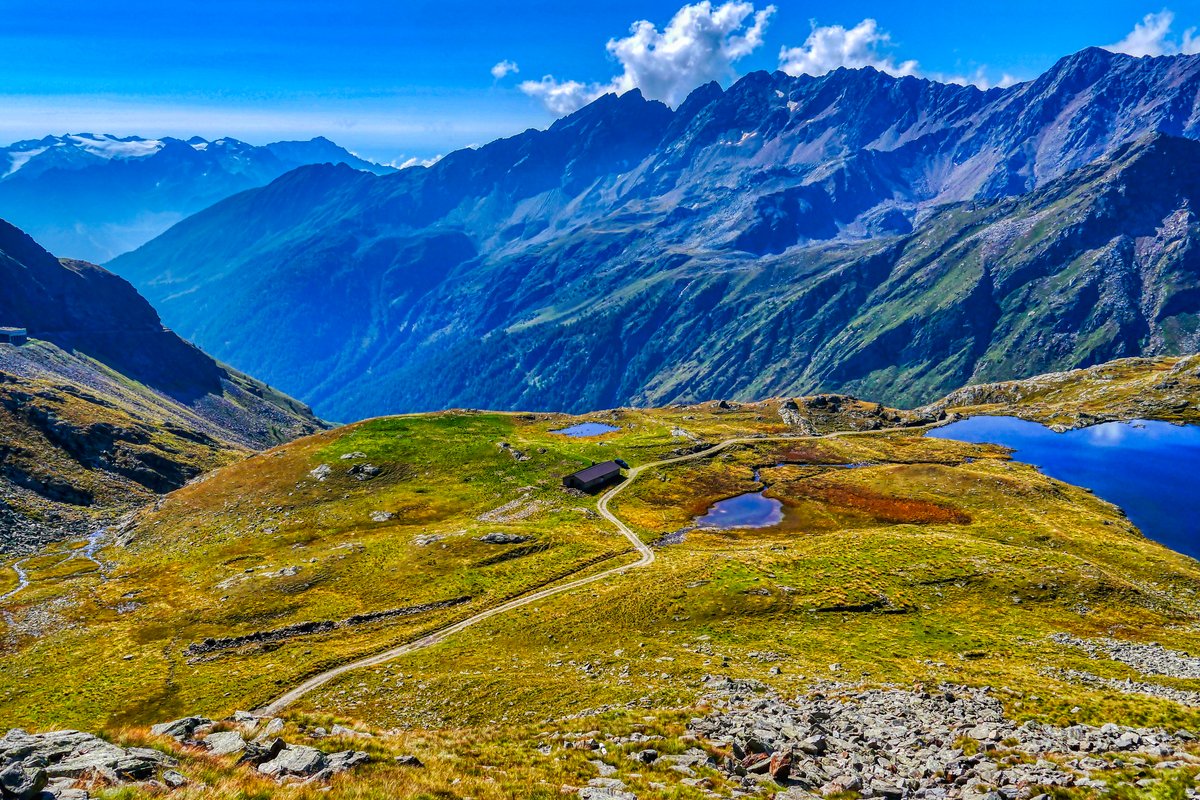
Passo di Gavia
The Giro's wild back road — 16.5 km · 8.0% avg
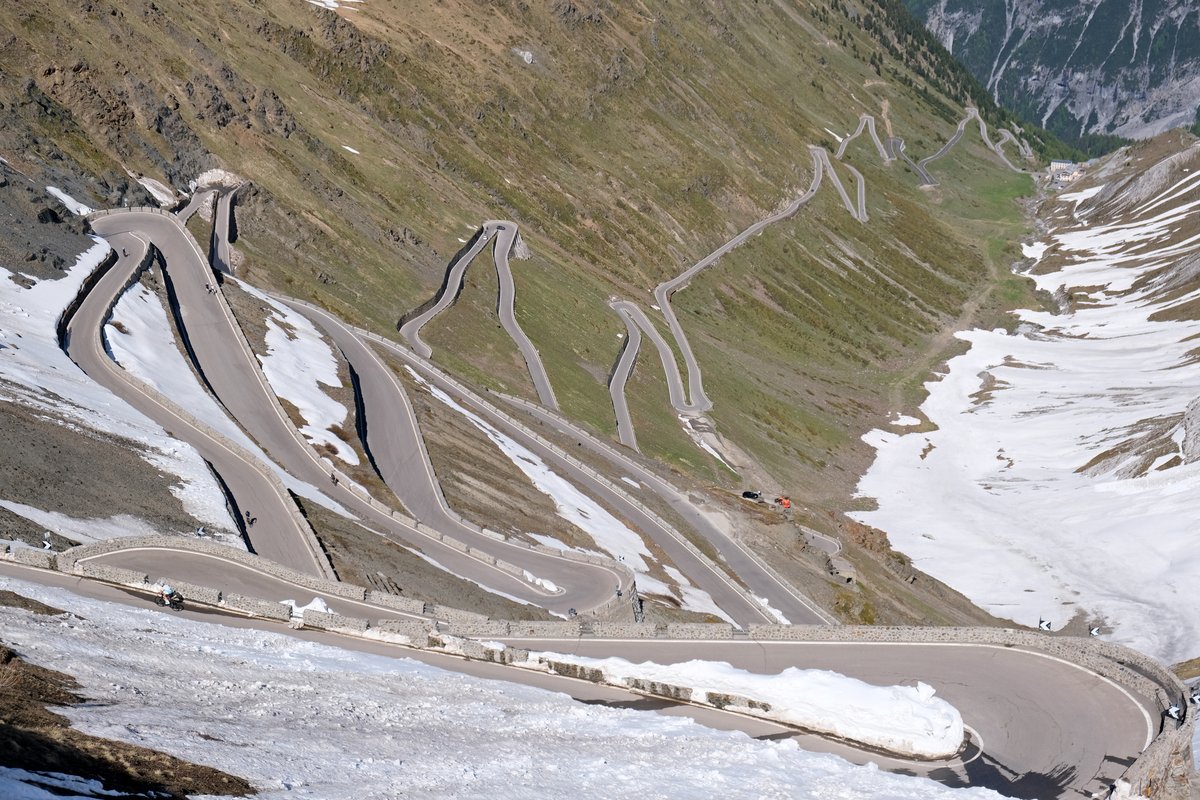
Passo dello Stelvio
The 48 Hairpins of the Giro — 24.3 km · 7.4% avg
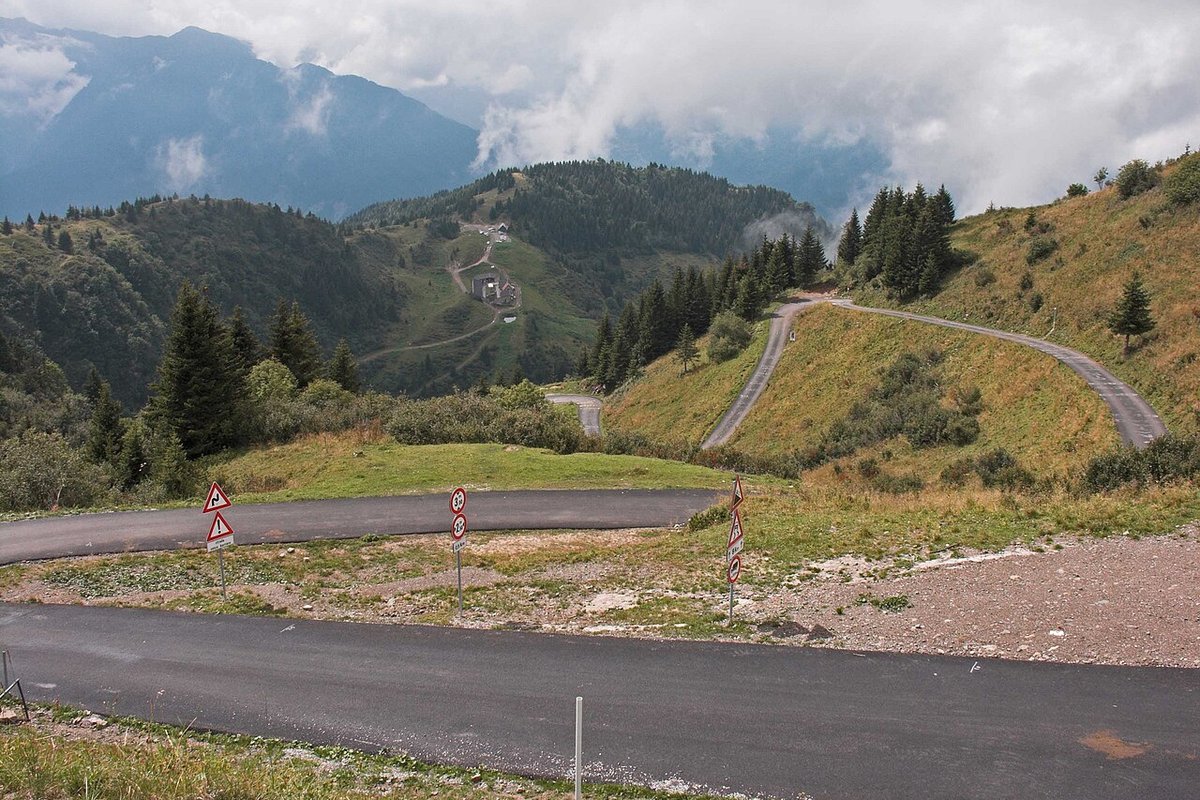
Monte Zoncolan
The Giro's steepest monster — 10.1 km · 11.9% avg
Also useful: Gearing for Mountain Climbs: Chainrings, Cassettes and Bike Setup for Alpe d'Huez, the Galibier and the Angliru