French Pyrenees · Category 1 · Via Arreau
Col d'Aspin from Arreau: 12 km at 6.5% to 1,489 m
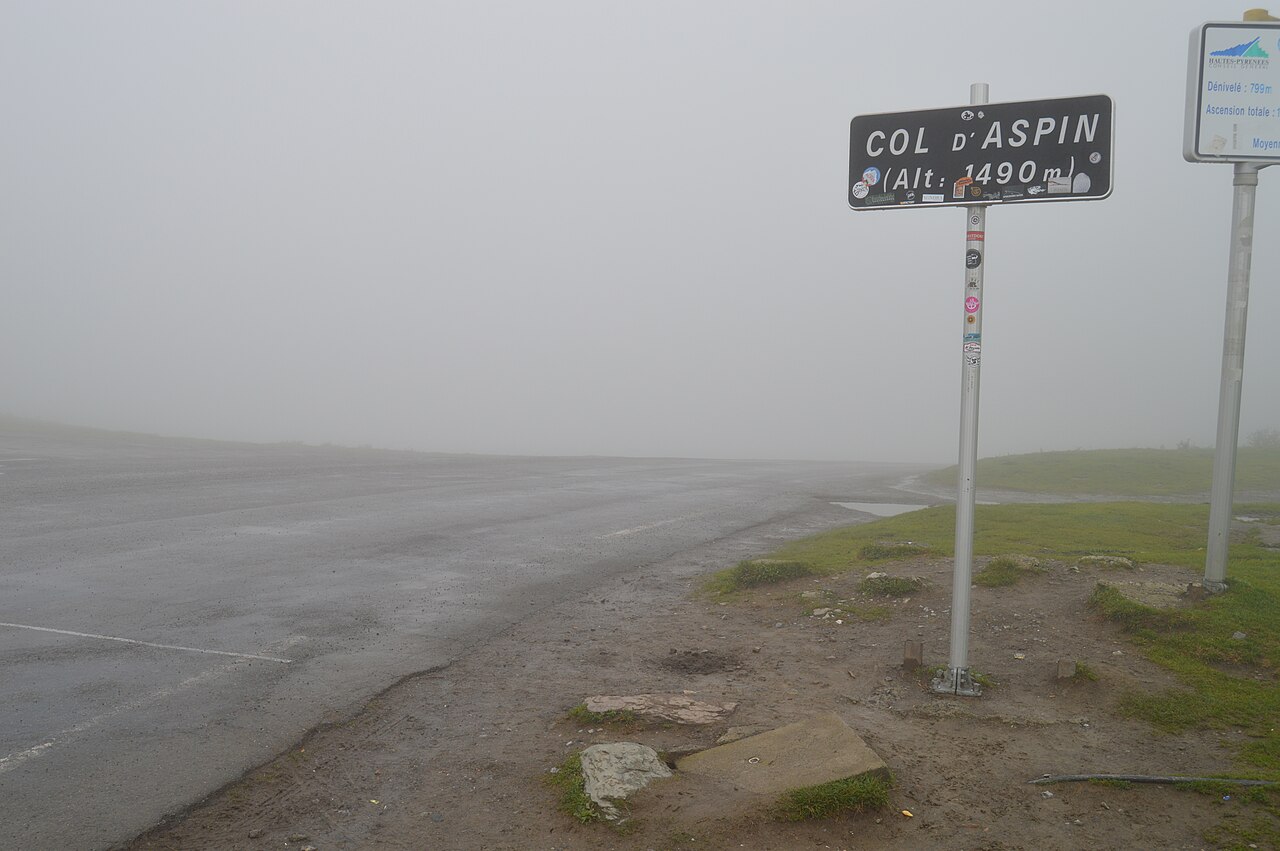
The Col d'Aspin links the Aure valley at Arreau with the Campan valley and Payolle, and it is the middle link in the classic Pyrenean chain between the Col de Peyresourde and the Col du Tourmalet. From Arreau the climb is 12.0 km at about 6.5% with roughly 780 m of climbing to 1,489 m. It rides in two parts: a gentle first two kilometres out of the valley, then close to 7% almost all the way, with the summit in view for much of the way up. The Tour de France first crossed it in 1910 and came back as recently as July 2026.
Quick facts
- Distance
- 12.0 km
- Average grade
- 6.5%
- Max grade
- ~9.5% (steepest km, signed)
- Elevation gain
- 779 m
- Summit
- 1,489 m
The experience
The climb starts where the D918 leaves the D929 just outside Arreau, at about 697 m, and follows the D918 west to the pass. Wikipedia and Cols-cyclisme both give 12.0 km at 6.5% (6.49%) with 779 m of climbing and a maximum of 9.5%, and the Tour de France listed the same 12 km at 6.5% for its 2026 stage. The summit is 1,489 m on the IGN map cited by English Wikipedia; French Wikipedia gives 1,493 m. Like most big French cols, the road has a cyclist milestone every kilometre showing the distance to the top and the average gradient of the next kilometre.
How it rides, from French Wikipedia's description and rider reports on Climbfinder and Cols-cyclisme: the first 2.1 km are fairly easy at around 4.2%. After the turn-off to the village of Aspin-Aure comes a kilometre at about 8%, and from there the gradient rarely lets up. The road climbs in loops through open meadows with trees along the verge at intervals, and riders repeatedly mention that you can see the pass for a long time before you reach it. About five kilometres from the top there is a harder kilometre (about 9%, signed 9.5%), and the final kilometres settle at around 7.5%. Several riders warn that the upper half has little shade and gets hot on summer afternoons, and that cows graze around the summit and sometimes stand on the road.
The pass was first crossed by the Tour de France in 1910, when Octave Lapize led over the top. English Wikipedia counts 71 Tour crossings and French Wikipedia 76, which makes it one of the race's most-used climbs. In 1950 spectators at the pass threw bottles and stones at riders, and the Italian team of Gino Bartali and Fiorenzo Magni, who were leading the race, withdrew that evening. Recent crossings include Thibaut Pinot first over the top in 2022, Neilson Powless in 2023 and Lenny Martinez on stage 6 of the 2026 Tour, from Pau to Gavarnie-Gèdre, which climbed this side before the Tourmalet. Katarzyna Niewiadoma led over it in the 2023 Tour de France Femmes.
Our time estimate for the rest of us (own calculation, rider and bike 80 kg in total, steady power, same model as our other guides, using 12.0 km at 6.5%): about 1 hour 15 minutes at 150 watts, 1 hour 3 minutes at 180 W and 47 minutes at 250 W. Because the first two kilometres are easier than the average, the rest of the climb is a little steeper than 6.5%.
Gears by the same calculation, at 180 W: on 6.5% you ride at about 11.3 km/h, which is 74 pedal turns per minute on 34×28 and 85 on 34×32. On 8% it is 62 on 34×28 and 71 on 34×32, and on the steepest 9.5% kilometre 53 and 61. That is manageable on a 28, but a 32 keeps your cadence comfortable if you are riding the Tourmalet afterwards.
Our own angle is the start. The first 2.1 km at about 4.2% invite a big gear, but by our calculation they take only around 8 minutes at 180 W, and riding them 20 watts harder saves about 40 seconds. The remaining 9.9 km average about 7.0% by our arithmetic and take around 56 minutes at 180 W, 62 minutes at 160 W and 50 minutes at 200 W. Every watt you keep for that section is worth far more than the same watt spent in the valley. Expect it to be about 5 °C cooler at the pass than at the start (the usual drop of about 6.5 °C per 1,000 m), and start early in summer if you want shade and quieter roads.
Pro tips
- Mistake: racing the first two kilometres: The valley start is easy and short. By our calculation, 20 extra watts there saves only about 40 seconds; save them for the 7% section.
- Mistake: watching the summit: Riders say the pass is in view for a long time and seems to come no closer. Ride to the kilometre markers instead.
- Bring sensible gears: At 180 W on the steepest kilometre you turn about 53 pedal turns per minute on 34×28. A 32 helps on a long day.
- Heat and shade: Riders report little shade on the upper half. Start early in summer and carry enough to drink; there is nothing to buy at the summit.
- Watch for cows and traffic: Livestock graze around the pass, and summer traffic can be heavy. On 14 July 2026 the road was reserved for cyclists from 9:00 to 12:00 as part of the Pyrenees Cycl'n Trip days.
- Make a loop: Riders recommend descending to Payolle and returning over the Hourquette d'Ancizan, or continuing to the Tourmalet.
Estimate your time up Col d'Aspin
By our model, a 72 kg rider on an 8 kg bike holding 216 W (3 W/kg) needs about 0:54 for the 12.0 km and 779 m of Col d'Aspin. Enter your weight, your bike's weight and the power you can hold for about an hour of climbing.
Estimated time: 0:53:39 at 216 W (3.00 W/kg)
Average speed: 13.4 km/h (8.3 mph) · Climbing rate (VAM, metres climbed per hour): 871 m/h
| Effort | Power | Time |
|---|---|---|
| −10% | 194 W (2.7 W/kg) | 0:59:03 |
| Your power | 216 W (3.0 W/kg) | 0:53:39 |
| +10% | 238 W (3.3 W/kg) | 0:49:17 |
More about the climb time calculator ·
Steady power, no wind, no stops, and the average grade of the whole climb. Steep ramps, flat sections and descents are only evened out roughly, so irregular climbs will be less accurate. Your values are saved only in this browser.
Sources
- Wikipedia: Col d'Aspin and French Wikipedia — summit height, both sides' figures, section gradients, Tour de France crossings and summit leaders including 2026, 1950 incident. Checked 24 November 2026.
- Cols-cyclisme: Col d'Aspin from Arreau — length, gain, average and maximum gradient, cyclist-only road days, rider reports. Checked 24 November 2026.
- Climbfinder: Col d'Aspin from Arreau — alternative length, gain and summit height, hairpins, rider reports. Checked 24 November 2026.
- Cyclingnews: Tour de France 2026 stage 6 preview — the race's listed figures for the climb (12 km at 6.5%). Checked 24 November 2026.
More climbs to compare
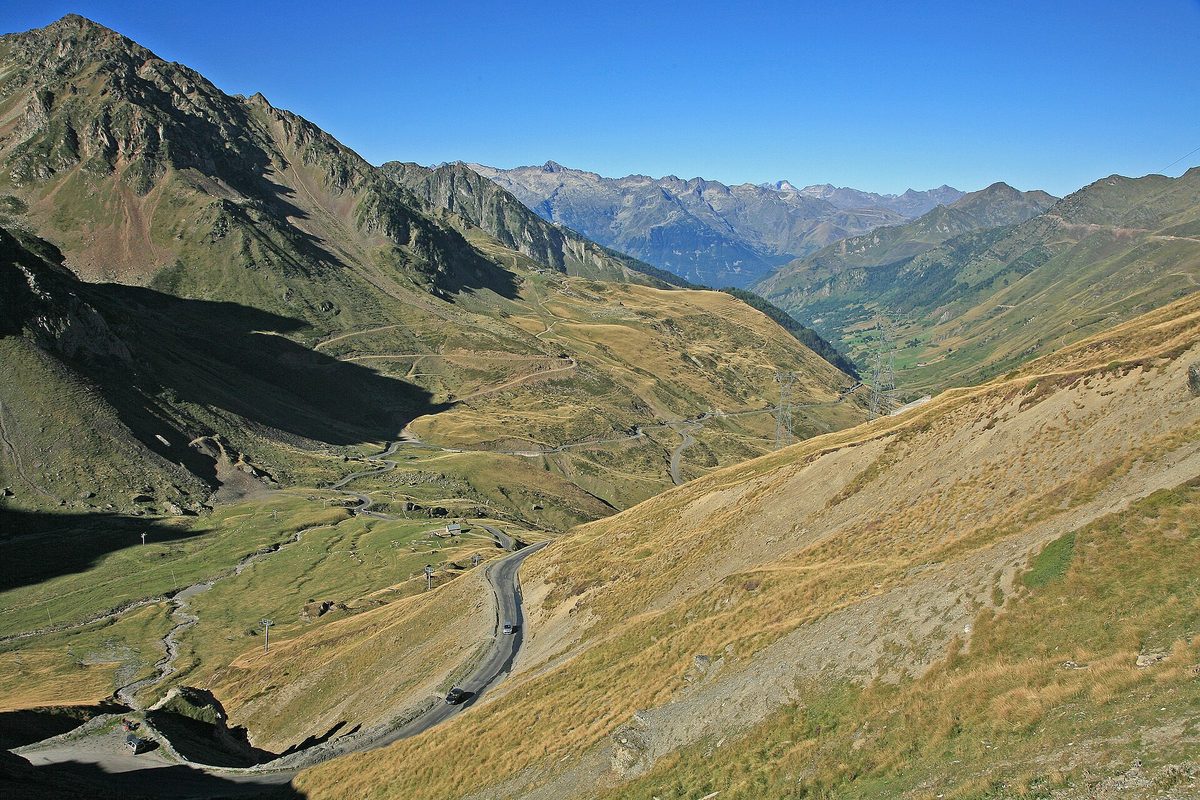
Col du Tourmalet
The next climb west on the D918 — 19.0 km · 7.4% avg
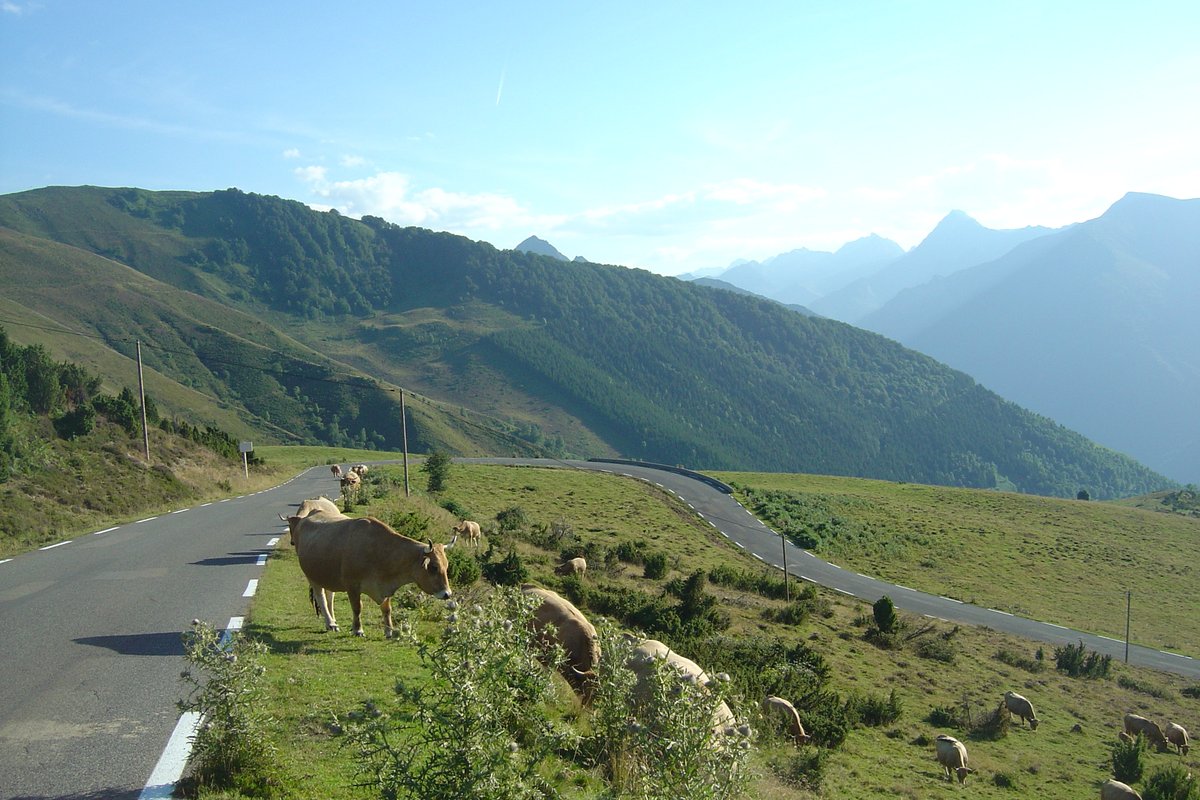
Hautacam
A Tour summit finish above Lourdes — 13.7 km · 7.8% avg
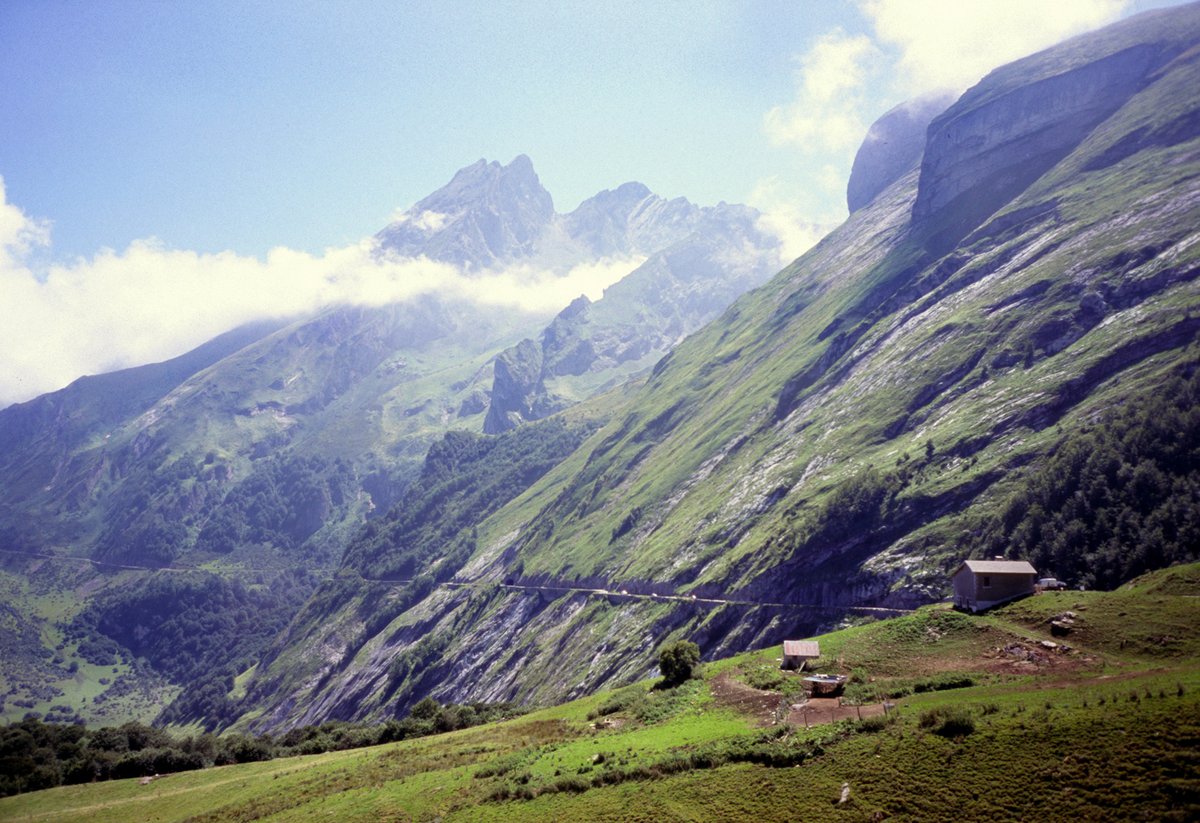
Col d'Aubisque
Forest, Gourette and high pasture — 16.6 km · 7.2% avg
Also useful: How to Climb Long Mountain Climbs: Pacing, Effort and Fueling for Alpe d'Huez, Ventoux and the Galibier