Picos de Europa · Hors catégorie · Via Covadonga
Ride Lagos de Covadonga: 13.9 km at 6.9% with La Huesera, to 1,123 m
Lagos de Covadonga is the road from the shrine of Covadonga up to two mountain lakes, Enol and Ercina, in the Picos de Europa National Park in Asturias. It has been a summit finish of the Vuelta a España more often than any other climb. On paper it is 13.9 km at 6.9%, but that average hides how the climb is built: seven kilometres in a row at almost 10%, including the famous steep straight called La Huesera, and then an easier, rolling top section to the lakes.
Quick facts
- Distance
- 13.9 km
- Average grade
- 6.9%
- Max grade
- ~15%
- Elevation gain
- 961 m
- Summit
- 1,123 m
The experience
The road, the CO-4, leaves the valley road just below the shrine and basilica of Covadonga, roughly 9–10 km from Cangas de Onís, and climbs to the lakes at a little over 1,100 m. It ends there, so it is a there-and-back ride. Altigraphs, which measures the road on a digital elevation map, gives 13.9 km at 6.9% with 961 m of climbing, from 162 m at the start to 1,123 m at the top. Spanish Wikipedia, using the Spanish climb site altimetrias.net, gives almost the same: 14 km at 6.87% with 962.5 m.
Section by section, using Altigraphs' kilometre profile: the first kilometre is gentle at about 4%, past Covadonga. Then comes the hard part: kilometres 2 to 8 are 7.6%, 10.7%, 9.3%, 7.4%, 9.6%, 11.9% and 11.3%, so seven kilometres averaging almost 10% and about 680 m of climbing. Kilometre 7 is La Huesera, a long straight with ramps of 12–15%, and soon after it come the bends at the Mirador de la Reina viewpoint, also with ramps of 14–15% according to Spanish Wikipedia. Climbfinder gives the steepest 100 m as 15.9%. After that the climb changes: about 6% for two kilometres, 3.5%, 6.5%, then a short downhill and a last rise to the top.
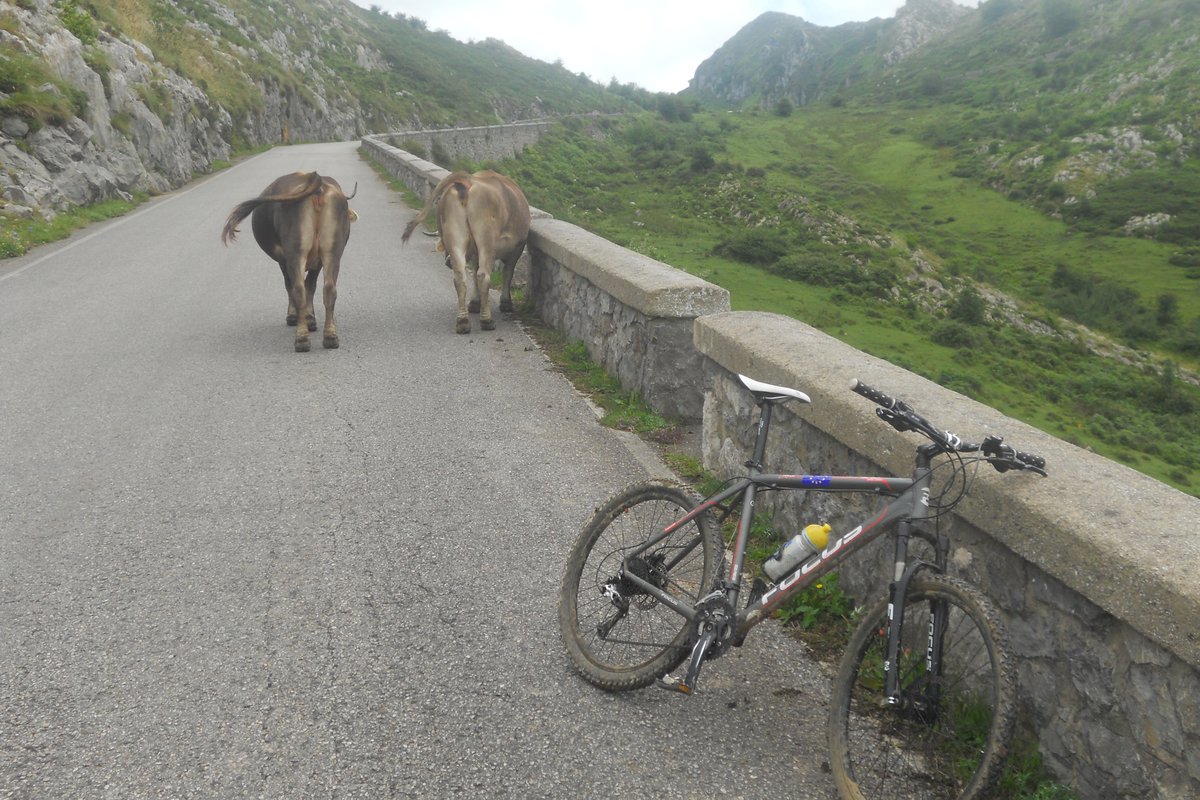
The landscape is the reward. The lower part climbs through woods above the gorge of Covadonga, then the road comes out onto open limestone hills with stone walls, grass and grazing animals. Cows on the road are normal up here, as in the photo above, and riders on Climbfinder warn that the descent is narrow and winding, often wet from small streams and covered in animal droppings. The lakes area is a popular walking spot with car parks and places to eat, but opening times vary, so bring what you need from Cangas de Onís or Covadonga. The weather comes in fast from the sea: several riders describe reaching the top in fog.
The Vuelta a España first finished here on 2 May 1983, in rain and wind. Marino Lejarreta won the stage, and Bernard Hinault, who went on to win that Vuelta, compared the climb with Alpe d'Huez. Because the lakes are also called the lakes of Enol, Spanish journalists nicknamed the stage 'los Lagos de Hinault', and the name stuck. In total the race has finished here 23 times, from 1983 to 2024, which together with the Angliru makes it the Vuelta's most important modern climb. Winners include Pedro Delgado, Robert Millar, Lucho Herrera, Laurent Jalabert, Nairo Quintana, Thibaut Pinot and Primož Roglič; Carlos Barredo's 2010 stage win was later taken away for doping. The 1996 stage was Miguel Induráin's last day as a professional: he left the race that day.
The most recent men's finish was stage 16 of the 2024 Vuelta, from Luanco, won by Marc Soler 18 seconds ahead of Filippo Zana. The women's Vuelta finished here in 2023, when Demi Vollering won the stage but missed the overall win by only nine seconds. Our time estimate for the rest of us (own calculation, rider and bike 80 kg in total, steady power, same model as our other guides, using Altigraphs' kilometre profile): about 1 hour 35 minutes at 150 watts, 1 hour 20 minutes at 180 W and 59 minutes at 250 W. At 180 W the first kilometre takes about 4 minutes, kilometres 2 to 8 about 52 minutes, and the whole rolling top part from kilometre 9 only about 24 minutes. So two thirds of your time is spent on the steep seven kilometres, and La Huesera with the kilometre after it takes about 18 minutes on its own.
Gears by the same calculation, at 180 W: on 9–10% you ride at about 8 km/h, which is 51–56 pedal turns per minute on 34×28 and 58–64 on 34×32. On 12% it is 43 on 34×28 and 49 on 34×32, and on the 15% ramps of La Huesera only 35 on 34×28, 40 on 34×32 and 42 on 34×34. Most people find anything under about 50 turns a minute heavy work for long, so a 32 or 34 sprocket at the back is a real help here, not a luxury.
Our own angle is a day plan built around the access rules, because this is the one big climb where cars are the problem, not bikes. To protect the national park, private cars are banned from the lakes road day and night on the busiest days: in 2026 that meant most of the spring holidays, May weekends and every day from 1 June to 18 October (with a few local festival days excepted), plus some days in late October, early November and early December. Visitors go up by bus instead, and Asturias tourism states plainly that bicycles are not affected by these rules. In 2026 the buses started at 8:00, with the last bus up at 17:45 until the end of September and at 16:00 from October. By our calculation, from Cangas de Onís the 9–10 km of gentle valley road to the start take about 20 minutes and the climb about 1 hour 20 minutes at 180 W. So if you leave Cangas at about 6:30 you reach the lakes around 8:10, before the bus traffic builds up, and on the steep part you have the road almost to yourself. The other quiet window is after the last bus up, but then you must be back down before dark, and in October that is early. Whatever time you go, expect it to be about 6 °C cooler at the top than at the bottom (the usual drop of about 6.5 °C per 1,000 m), so bring a jacket for the descent. Dates and bus times change every year, so check the official Asturias tourism page before you go.
Pro tips
- Mistake: trusting the 6.9% average: The average includes an easy start, a rolling top and a short downhill. Kilometres 2 to 8 average almost 10%, and that is the climb you need to pace.
- Mistake: going too hard before La Huesera: La Huesera comes at kilometre 7, after five hard kilometres. If you are already at your limit at kilometre 5, slow down; the steepest ramps of 12–15% are still ahead.
- Mistake: riding up in the middle of a busy summer day: On car-free days the road is full of buses and taxis in the middle of the day. Bikes may ride at any time, so start early, before the first buses at 8:00 (2026 times).
- Bring low gears: On the 15% ramps you turn only about 35 pedal turns per minute on 34×28 at 180 W. A 32 or 34 sprocket at the back makes La Huesera much easier to ride steadily.
- Descend carefully: The road is narrow and winding, cows and horses walk on it, and it is often wet and dirty. Watch for buses coming up on the narrow bends.
- Expect fog and cold at the top: Cloud can come in quickly and it is about 6 °C cooler at the top than at the bottom. Bring a jacket, even on a warm day in Cangas de Onís.
Estimate your time up Lagos de Covadonga
By our model, a 72 kg rider on an 8 kg bike holding 216 W (3 W/kg) needs about 1:05 for the 13.9 km and 961 m of Lagos de Covadonga. Enter your weight, your bike's weight and the power you can hold for about an hour of climbing.
Estimated time: 1:05:20
More about the climb time calculator ·
Steady power, no wind, no stops, and the average grade of the whole climb. Steep ramps, flat sections and descents are only evened out roughly, so irregular climbs will be less accurate. Your values are saved only in this browser.
More climbs to compare
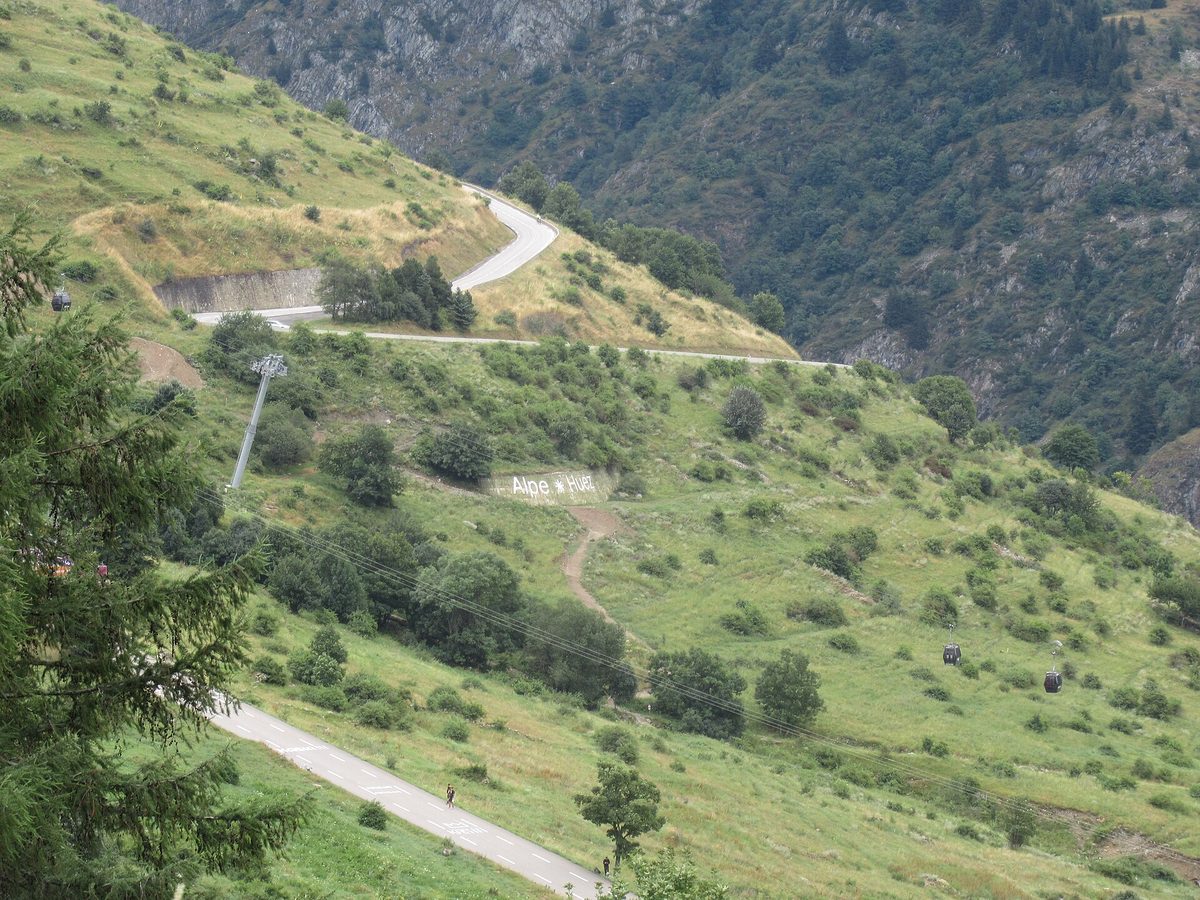
Alpe d'Huez
The 21 Hairpins — 13.8 km · 8.1% avg
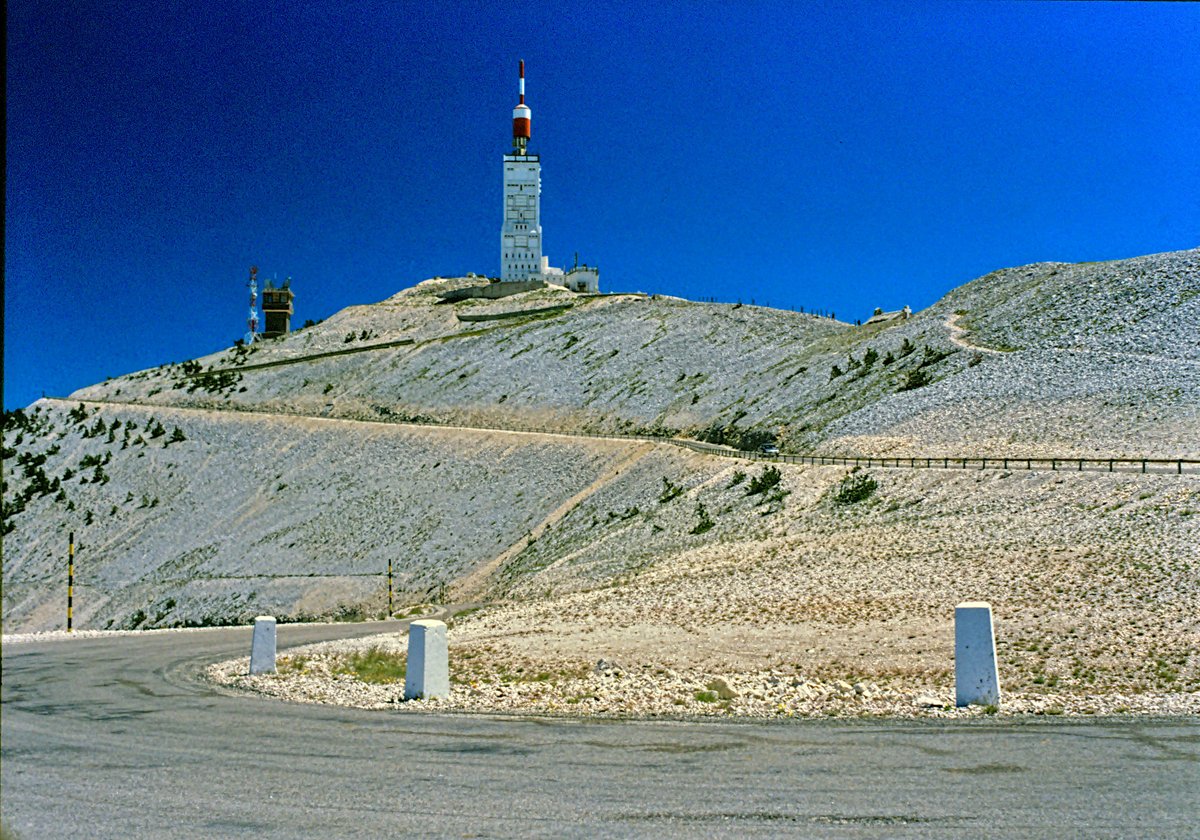
Mont Ventoux
Giant of Provence — 21.8 km · 7.4% avg
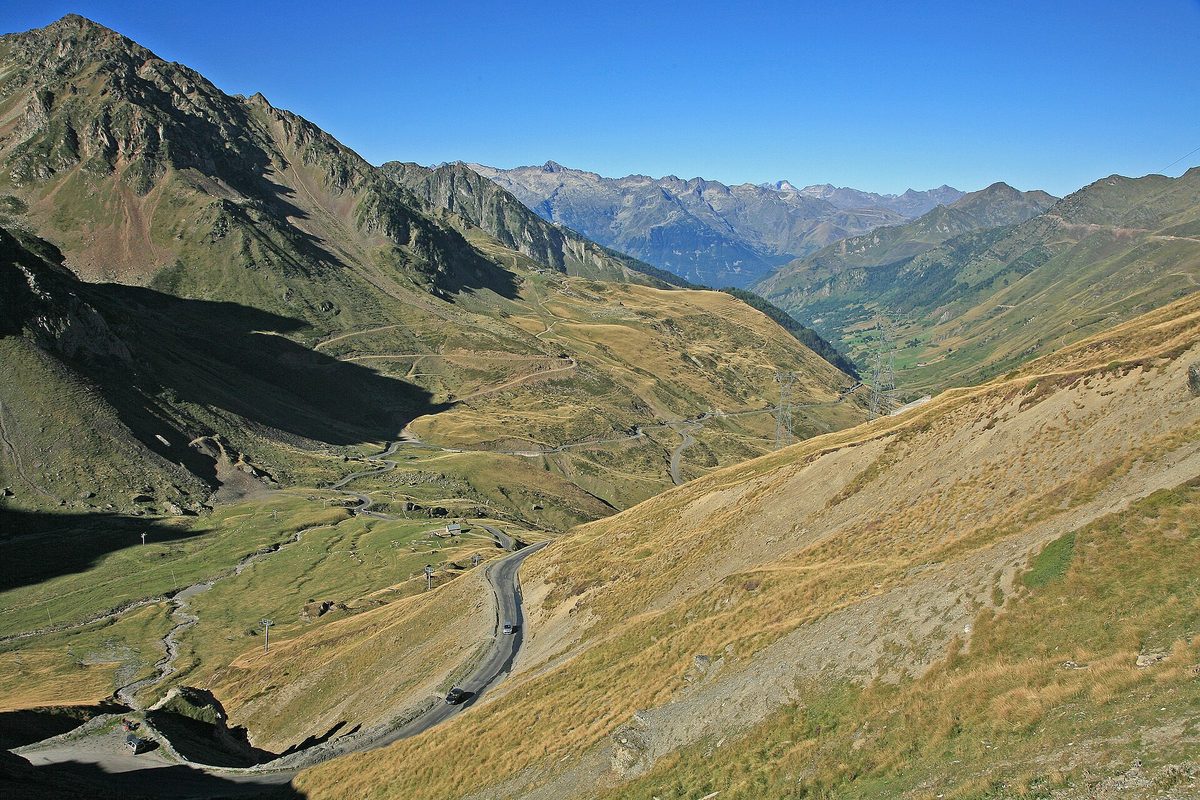
Col du Tourmalet
Giant of the Pyrenees — 19.0 km · 7.4% avg
Also useful: How to Climb Long Mountain Climbs: Pacing, Effort and Fueling for Alpe d'Huez, Ventoux and the Galibier
Also useful: Gearing for Mountain Climbs: Chainrings, Cassettes and Bike Setup for Alpe d'Huez, the Galibier and the Angliru