Montana · Glacier National Park · West side to Logan Pass on the Continental Divide
Going-to-the-Sun Road: Cycling Guide and Restrictions
Going-to-the-Sun Road crosses Glacier National Park in Montana and tops out at Logan Pass, 2,026 m (6,646 ft), on the Continental Divide. The west-side climb is 16.8 km with 935 m of climbing at 5.6% (Climbfinder). The pass usually opens in late June or early July, and bikes face afternoon limits in summer.
Quick facts
| Distance | 16.8 km (west side) |
|---|---|
| Average grade | 5.6% |
| Max grade | 7.9% (steepest 100 m) |
| Elevation gain | 935 m |
| Summit | Logan Pass, 2,026 m (6,646 ft) |
| Start | McDonald Creek valley, above Lake McDonald and Avalanche Creek |
| Typical opening | Fully open by early July to about the third Monday of October (NPS) |
What does the west side feel like?
It starts in the forest and ends on a cliff. PJAMM Cycling says the real climb begins about seven miles past the end of Lake McDonald, so many riders start lower and use the flat miles along the lake as a warm-up. The gradient is steady, mostly 5 to 6%, and gets a little steeper in the second half, where the road is cut into the mountainside. PJAMM's grade breakdown puts 38% of the climb at 0 to 5% and 44% at 5 to 10%, with only about a mile above that.
Where are the landmarks?
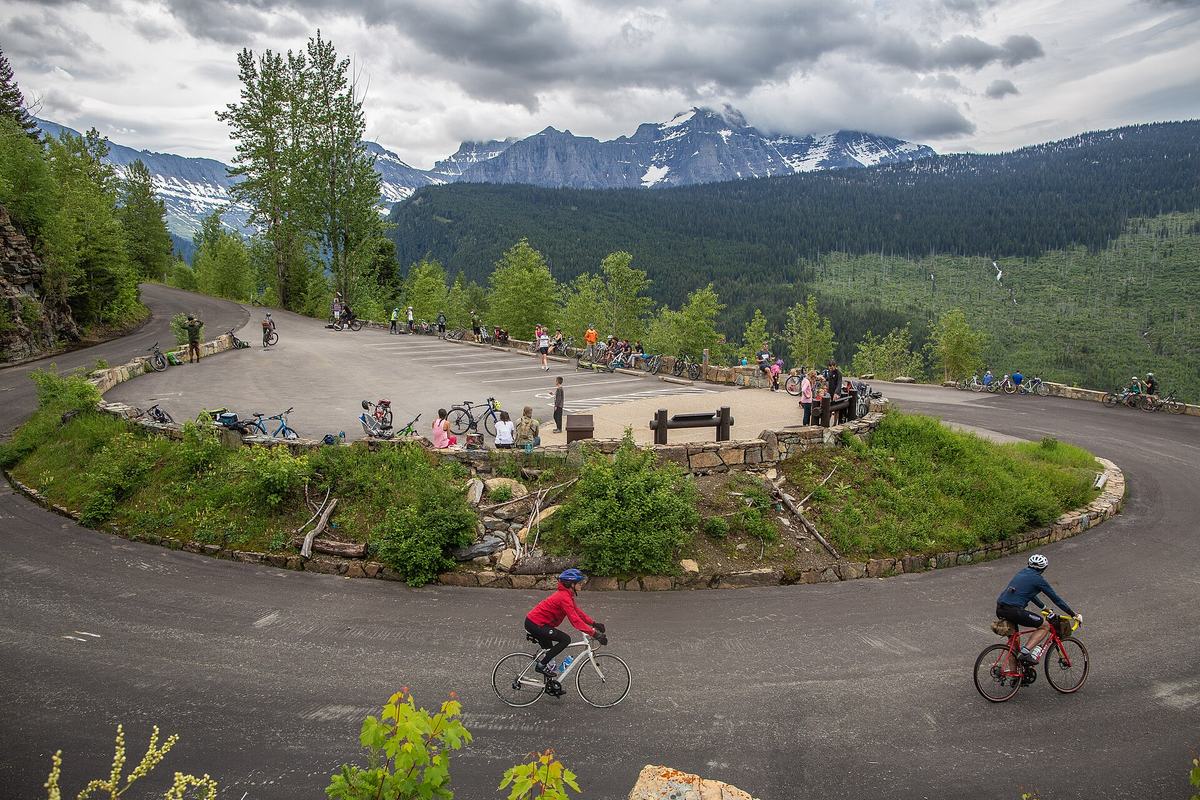
Glacier Guides' mile markers from West Glacier put Lake McDonald Lodge at mile 11, Avalanche Creek at mile 16, the West Side Tunnel at mile 23 and the Loop, the road's one big hairpin, at mile 24 (about 4,400 ft). After the Loop the road runs along the Garden Wall past Bird Woman Falls Overlook, Haystack Falls, the Weeping Wall at mile 29 and Triple Arches, before reaching Logan Pass at mile 32. The National Park Service gives the same 32 miles from the west entrance.
Which side should you ride?
Most riders climb from the west. From St. Mary on the east side the road gains less height, and Climbfinder measures its climb at 10.8 km at 5.3% with 578 m. Glacier Guides puts the climb from West Glacier at about 3,431 ft over 32 miles and from St. Mary at about 2,198 ft over 18 miles. PJAMM suggests riding both sides as an out-and-back from the west, about 35 miles with 5,000 ft of climbing. Like the Grossglockner and the Stelvio, it is a great scenic road built for cars in the motoring age, but here the gradient is gentler and the bigger challenge is traffic, weather and timing.
What is spring hiker and biker season?
Before the road opens to cars, sections beyond the vehicle closure are open to people on foot and on bikes while crews plow. The National Park Service says most cyclists come to ride Going-to-the-Sun Road in this early season. Road crew closures apply Monday to Thursday, avalanche hazard closures apply at all times, and closure points are set weekly on Thursdays, so check the road status page before you go. The park notes that shuttles for bikes will not run during the 2026 hiker and biker season.
Why does the road open so late?
Snow. Wikipedia says up to 80 feet (24 m) of snow can lie on Logan Pass, plowing takes about ten weeks, and the latest full opening was on 13 July 2022. Just east of the pass the Big Drift often records more than 100 feet of snow. The National Park Service says there is no set opening date for the road over Logan Pass and that it has typically been fully open by early July.
Pro tips
- Know the afternoon bike hours: On 21 November 2026 the park's bicycling page said that from full opening through 27 September bikes are not allowed eastbound from Apgar to Logan Pass between 12 pm and 6 pm, or westbound between 3 pm and 6 pm. Its general road page listed a 3 pm to 6 pm closure in both directions, so check the current rules before you plan your day.
- Start early: PJAMM started at 6:30 a.m. and found the road quiet; it notes traffic can be heavy as early as 8 a.m. in the peak months. The park says the Logan Pass parking lot usually fills by sunrise.
- Ride single file and let cars by: None of Glacier's roads have bike lanes or shoulders. Riding side by side is not allowed when the road is open to vehicles, and you must use pull-outs and stop when four or more cars are behind you. Lights or reflectors are required in low light.
- Pack for winter on the way down: Rangers often treat cyclists for hypothermia after spring and early-summer descents, the park says. Bring warm layers, gloves and a hat, plus food and water, because services are limited beyond Apgar Village and West Glacier early in the season.
- Be bear aware: The park asks cyclists to carry bear spray, never leave food unattended in panniers or backpacks, and keep 100 yards from bears and wolves.
- Gearing: Climbfinder says you do not need special gearing; a compact chainset is plenty for a steady 5 to 6% climb. Remember that an entrance fee is charged when you enter the park by bike, and e-bikes are allowed only with motors under 750 watts that assist while pedalling.
Estimate your time up Going-to-the-Sun Road
By our model, a 72 kg rider on an 8 kg bike holding 216 W (3 W/kg) needs about 1:07 for the 16.8 km and 935 m of Going-to-the-Sun Road. Enter your weight, your bike's weight and the power you can hold for about an hour of climbing.
Estimated time: 1:06:49
More about the climb time calculator ·
Steady power, no wind, no stops, and the average grade of the whole climb. Steep ramps, flat sections and descents are only evened out roughly, so irregular climbs will be less accurate. Your values are saved only in this browser.
Questions
Can you cycle Going-to-the-Sun Road?
Yes. Bicycles are allowed on all paved roads in Glacier National Park, including Going-to-the-Sun Road, but not on hiking trails. In summer you share a narrow road with heavy two-way traffic and no shoulder, and the park says only riders experienced with that kind of traffic should ride it in peak season.
When is Going-to-the-Sun Road open to bikes?
The lower sections are open all year. In spring, cyclists can ride beyond the vehicle closure during hiker and biker season, within the posted closures. The full road over Logan Pass usually opens by early July and typically stays open until around the third Monday of October, according to the National Park Service.
How long is the ride to Logan Pass?
The climb itself is 16.8 km with 935 m of gain at 5.6% from the McDonald Creek valley (Climbfinder), or 10.8 miles at 5.4% according to PJAMM. Logan Pass is 32 miles from the west entrance and 18 miles from the east entrance, so most riders cover far more distance than the climb alone.
Are there time restrictions for cyclists?
Yes. In summer the Apgar to Logan Pass section is closed to bikes in the afternoon. On 21 November 2026 the park's bicycling page listed 12 pm to 6 pm eastbound and 3 pm to 6 pm westbound, from full opening through 27 September. Rules change by season, so check the official park page first.
More climbs to compare
Mount Lemmon
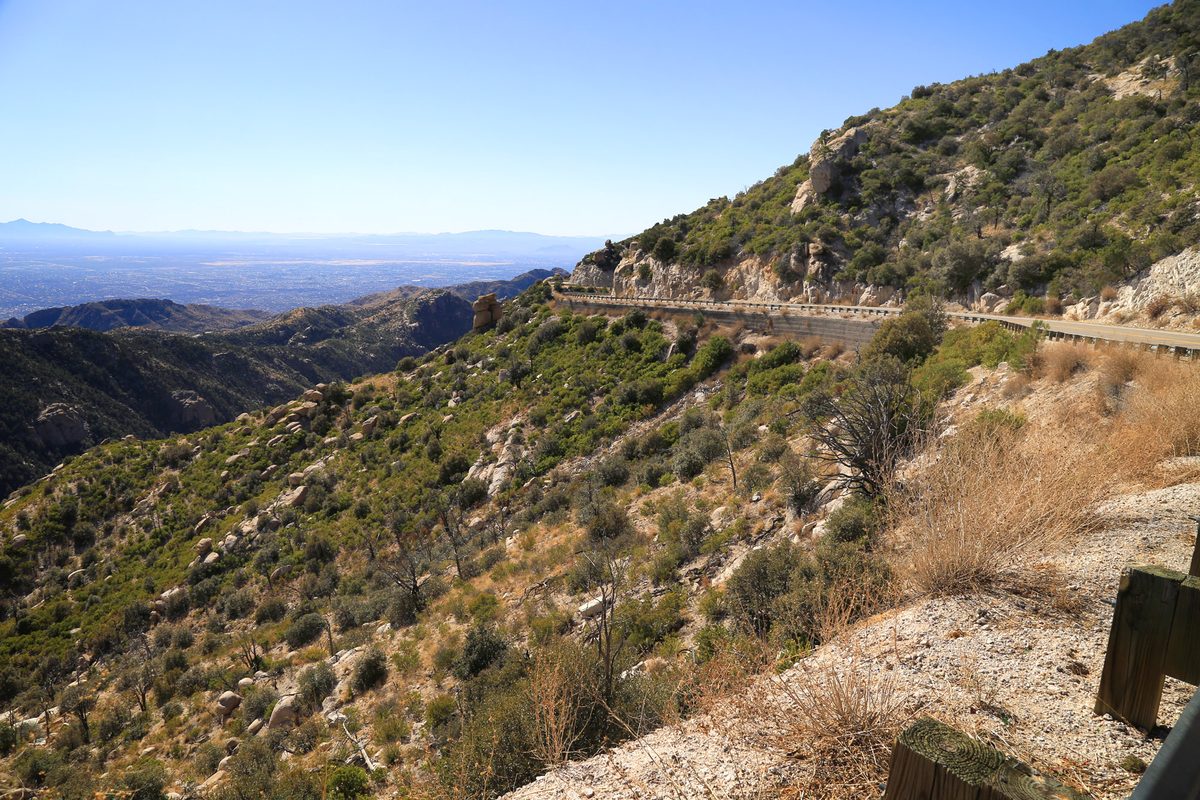
Tucson's long sky-island climb: about 45 km at a steady 4-5% from the desert floor to the observatory at 2,784 m — 44.7 km from milepost 0 (50.4 km from Tucson, Climbfinder) · About 4.7% on the Catalina Highway; 4.2% overall to the observatory avg
Mount Tamalpais
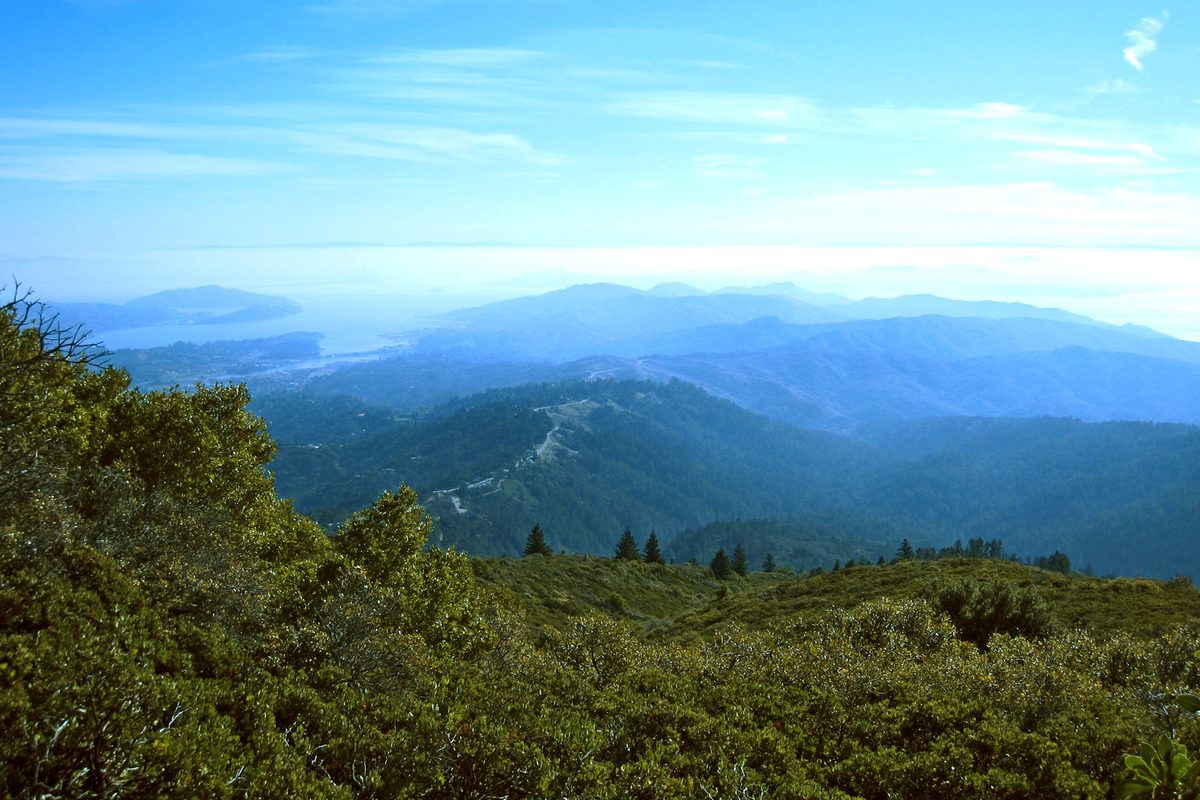
Marin's mountain above Mill Valley: 16.2 km at 4.9% from near sea level to Ridgecrest Boulevard at 762 m — 16.2 km · 4.9% avg
Grossglockner High Alpine Road
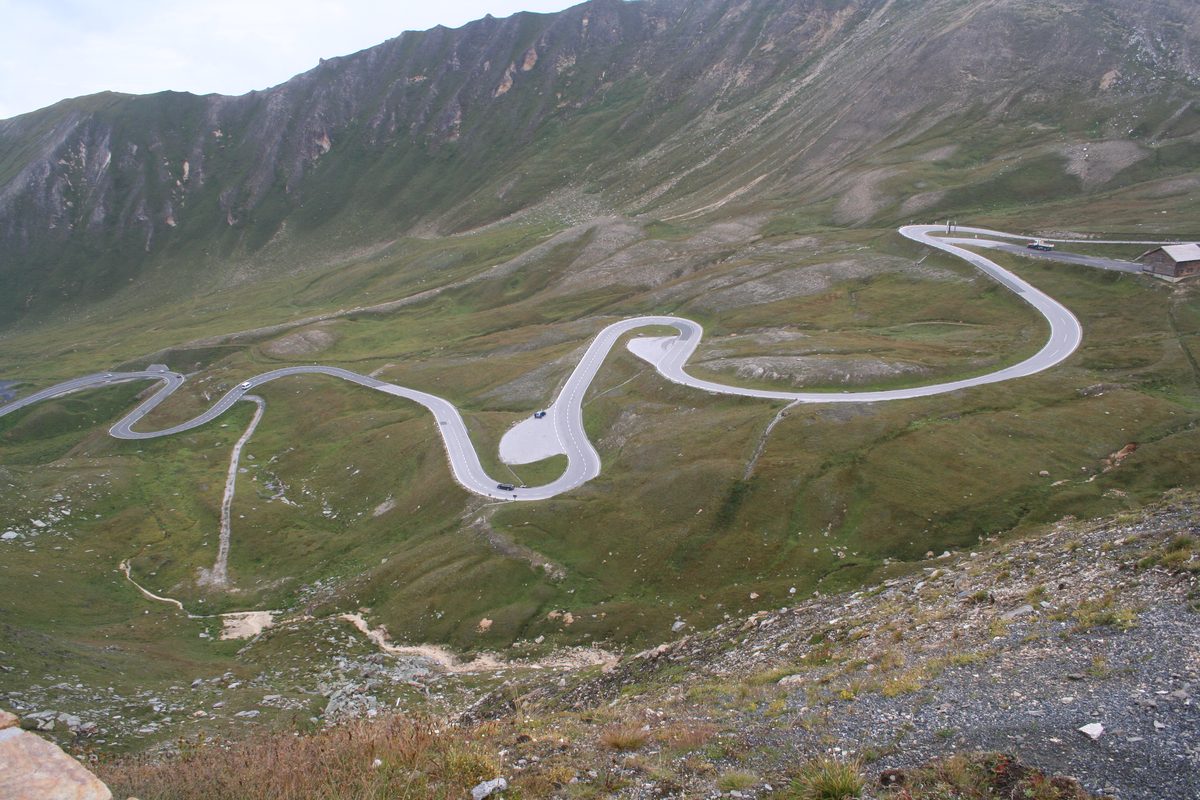
Austria's famous pass road from Fusch over the Hochtor, with a cobbled spur to the Edelweissspitze at 2,571 m — 26.2 km (Fusch to the Hochtor) · 7% (nearly 10% for about 13 km above Ferleiten) avg
Also useful: How to Climb Long Mountain Climbs: Pacing, Effort and Fueling for Alpe d'Huez, Ventoux and the Galibier