Venetian Prealps · Giro double climb 2024 · Via Semonzo
Monte Grappa from Semonzo: 18.5 km at 8.3% to 1,745 m
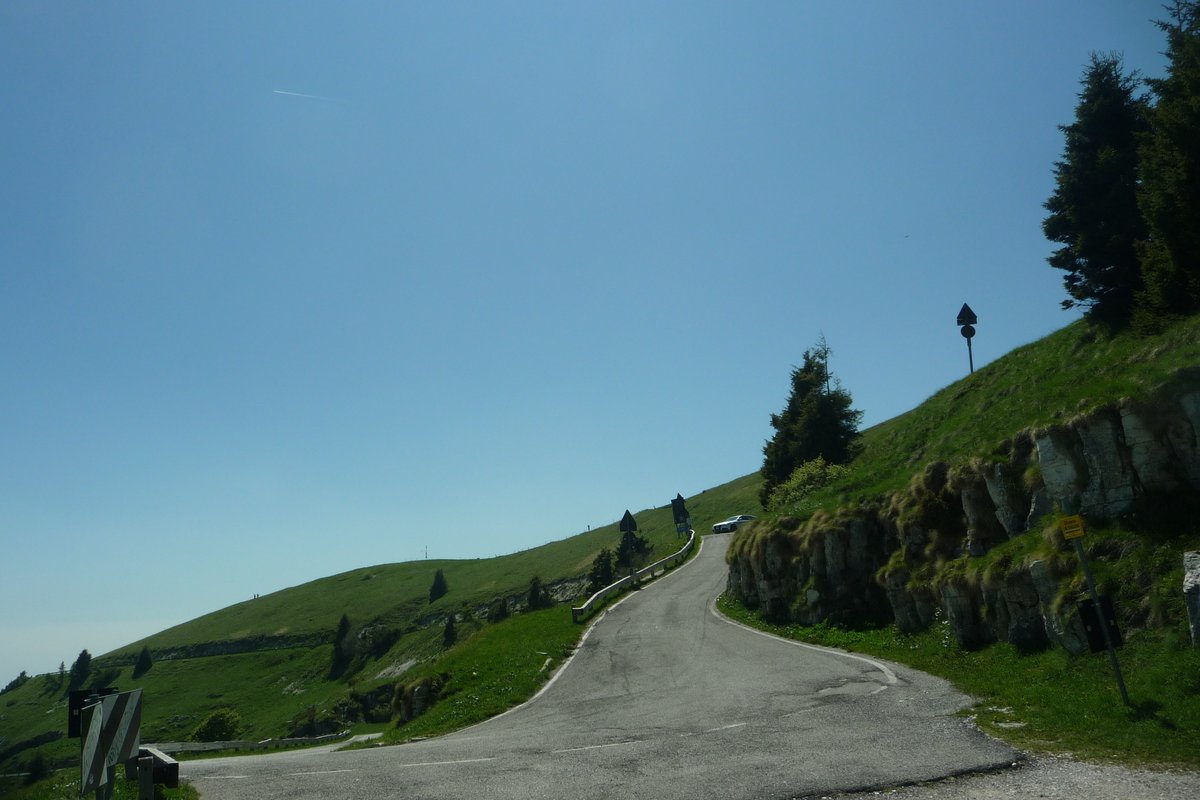
Monte Grappa is the sacred mountain of the Veneto, rising straight out of the plain above Bassano del Grappa. Of its many paved sides, the one riders mean when they say 'Grappa' is the hard climb from Semonzo: about 18.5 km at 8.3% with 1,530 m of climbing to Rifugio Bassano at 1,745 m, on SP 140 / Strada Generale Giardino. The average grade understates it, because short false flats and a brief descent are followed by long stretches at 10–11%. The Giro d'Italia has used the mountain in seven editions since 1968, including a mountain time trial in 2014 and a decisive double ascent from Semonzo in 2024. At the top stands the Military Memorial, the resting place of more than 22,000 soldiers from the First World War.
Quick facts
- Distance
- 18.5 km
- Average grade
- 8.3%
- Max grade
- ~15%
- Elevation gain
- 1,530 m
- Summit
- 1,745 m
The experience
The climb starts in Semonzo del Grappa, a village on the southern foot of the massif at about 215 m. The Italian climb archive salite.ch gives 18.5 km at 8.3% with 1,530 m of climbing from 215 m to Rifugio Bassano at 1,745 m. Climbfinder, which starts and stops at slightly different points, gives 19.1 km at 8.1% with 1,542 m and a top at 1,726 m. Altigraphs measures 18.6 km at 7.9% with 1,477 m to about 1,661 m, so a little short of the rifugio. Climbfinder counts 25 hairpins; riders and local guides often mention 28 numbered tornanti on this side. The roads are SP 140 and Strada Generale Giardino.
Section by section, using Altigraphs' kilometre profile (the clearest published breakdown of this side): the first 7 km out of Semonzo sit between about 7.6% and 8.7%, through the numbered hairpins under trees. Kilometre 8 rises to 10.1%. Then the climb eases: 7.6%, 6.1% and 4.2% through the Campo Croce area, with short tunnels nearby. After that comes the hard middle: 7.2%, then two kilometres at 11.2% and 11.3%. A near-flat kilometre at 2.7% follows, before 9.0% and 9.7% and a steadier finish around 8% into the open top. Climbfinder gives the steepest 100 m as 19.8%; biciveneto and other guides put the maximum ramps around 15%. The average of about 8% is real, but it is made of hard blocks separated by false flats, not a steady grind.
The first half is mostly forest and hairpins, so you gain height quickly with some shade. Climbfinder reviewers describe two short mini-tunnels, paraglider launch fields, and then an opening into alpine pasture with views back over the Venetian plain toward the lagoon on a clear day. Several reviews warn that there are no drinking fountains on the way up, that the open upper half can be windy, and that a restaurant at the summit is useful before the long descent. The road surface is generally good; after the 2024 Giro some stretches were freshly resurfaced. Traffic is lighter than on the famous Dolomite passes if you start early, but weekends around Bassano can still be busy.
The Giro d'Italia first finished on Monte Grappa in 1968 (Trento–Monte Grappa, won by Emilio Casalini). It crossed again in 1974 on the stage to Bassano del Grappa, won by Eddy Merckx, and in 1982 on the way to San Martino di Castrozza. The modern era began in 2010, when the race climbed from Semonzo toward Asolo and Vincenzo Nibali won the stage after the descent. In 2014 Nairo Quintana won a mountain time trial from Bassano del Grappa up this side to Cima Grappa, in the pink jersey. In 2017 the Giro used the northern Caupo side en route to Asiago. In 2024 stage 20 from Alpago to Bassano del Grappa climbed Semonzo twice; Tadej Pogačar attacked on the second ascent and won the stage, sealing the overall. That is seven Giro editions since 1968, with Semonzo the side the race has chosen for its hardest recent visits.
Monte Grappa is also a war memorial. The Military Memorial on the summit holds the remains of about 12,615 Italian and 10,295 Austro-Hungarian soldiers from the First World War battles on this mountain; fewer than 3,000 of the Italian dead are identified. A short walk from the bike park (bikes are not taken onto the sacrario itself) is enough to see why local riders treat the place with respect. There is also a partisan monument on the upper slopes. If you want another Italian climb that is short on mercy and long on reputation, the Monte Zoncolan from Ovaro is in a different league of steepness, but the same kind of day: bring low gears and leave something for the top.
Our time estimate for the rest of us (own calculation, rider and bike 80 kg in total, steady power and no wind, same model as our other guides, using Altigraphs' kilometre profile of 18.6 km): about 2 hours 19 minutes at 150 watts, 1 hour 57 minutes at 180 W and 1 hour 26 minutes at 250 W. At 180 W that is an average of about 9.5 km/h. Climbfinder's table for its 19.1 km version gives 1:44 at 11 km/h, which lines up if you are a little stronger or the wind is kind. Gears by the same calculation, at 180 W: on the average ~8% you ride at about 9.2–9.6 km/h, which is roughly 60–63 pedal turns per minute on 34×28 and 68–72 on 34×32. On the 11.3% kilometres it is about 45 on 34×28 and 52 on 34×32. With a 34×28 you spend about 66 of the 117 minutes below 60 turns a minute; with a 34×32 that falls to about 32 minutes. This is a climb where a 32 or 34 sprocket is not vanity.
Our own angle is the false-flat trap. Using the same model at 180 W, the three easier kilometres through Campo Croce (about 7.6%, 6.1% and 4.2%) take roughly 15 minutes. The next three (7.2%, 11.2% and 11.3%) take about 23 minutes. Later, the near-flat kilometre at 2.7% takes about 3 minutes, then the next two at 9.0% and 9.7% take about 14.5 minutes. So the 'rests' that pull the average down to ~8% are short; the hard blocks after them are where the climb is decided. If you push on the easy stretches and then fade to about 160 W on those hard blocks, you lose about 4.5 minutes compared with holding 180 W. On the open upper 7–8 km a 20 km/h headwind costs about 8–9 minutes at 180 W. Check the wind for the summit, not Bassano; keep something in reserve after every false flat; and bring a jacket — about 10 °C cooler at Rifugio Bassano than in Semonzo on a standard lapse rate, more with wind.
Pro tips
- Mistake: believing the 8% average: The false flats around Campo Croce and the short 2.7% stretch pull the average down. The kilometres just after them run at 9–11% and take far longer.
- Mistake: a 28 sprocket only: At 180 W on the 11% stretches a 34×28 is only about 45 pedal turns a minute. A 32 or 34 sprocket keeps you turning through the hard blocks.
- Don't race the 'easy' bits: If you burn matches on the 4% stretches and then fade to 160 W on the hard blocks, you lose about 4.5 minutes versus holding a steady 180 W.
- Fill bottles in Semonzo: Climbfinder reviewers report no drinking fountains on the ascent. There is a restaurant at the summit, but nothing reliable in between.
- Go early: Weekends around Bassano can be busy with cars and motorbikes. Early starts are quieter, and cooler before the open top.
- Bring a jacket, and walk the memorial: Rifugio Bassano is about 10 °C cooler than Semonzo, and the top is often windy. Bikes stay outside the sacrario — leave a few minutes to visit on foot.
Estimate your time up Monte Grappa
By our model, a 72 kg rider on an 8 kg bike holding 216 W (3 W/kg) needs about 1:41 for the 18.5 km and 1,530 m of Monte Grappa. Enter your weight, your bike's weight and the power you can hold for about an hour of climbing.
Estimated time: 1:40:57
More about the climb time calculator ·
Steady power, no wind, no stops, and the average grade of the whole climb. Steep ramps, flat sections and descents are only evened out roughly, so irregular climbs will be less accurate. Your values are saved only in this browser.
More climbs in Italy
Campo Imperatore
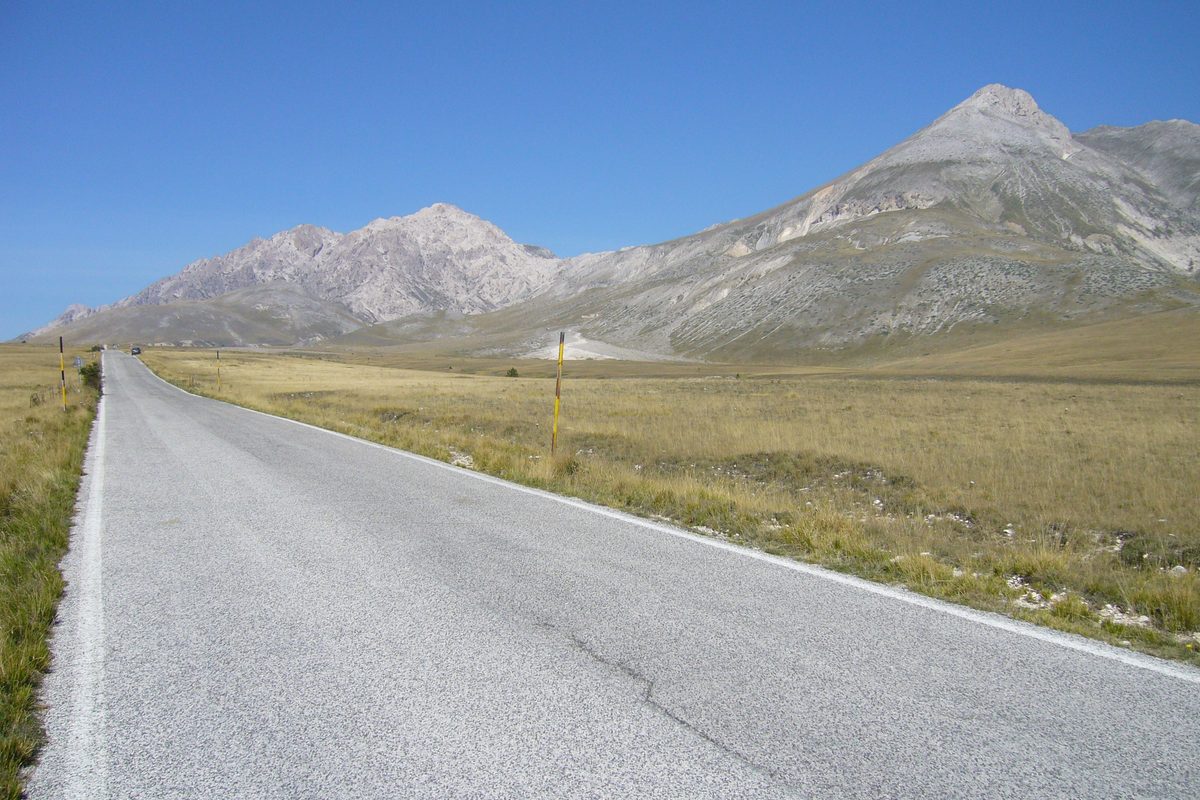
The Giro's Gran Sasso finish: a long climb from Assergi onto Italy's 'Little Tibet', with a dip on the plateau and a steep last ramp to 2,100 m — 29.6 km (from Assergi) · 4.0% (about 5.5% on the climbing parts) avg
Monte Zoncolan
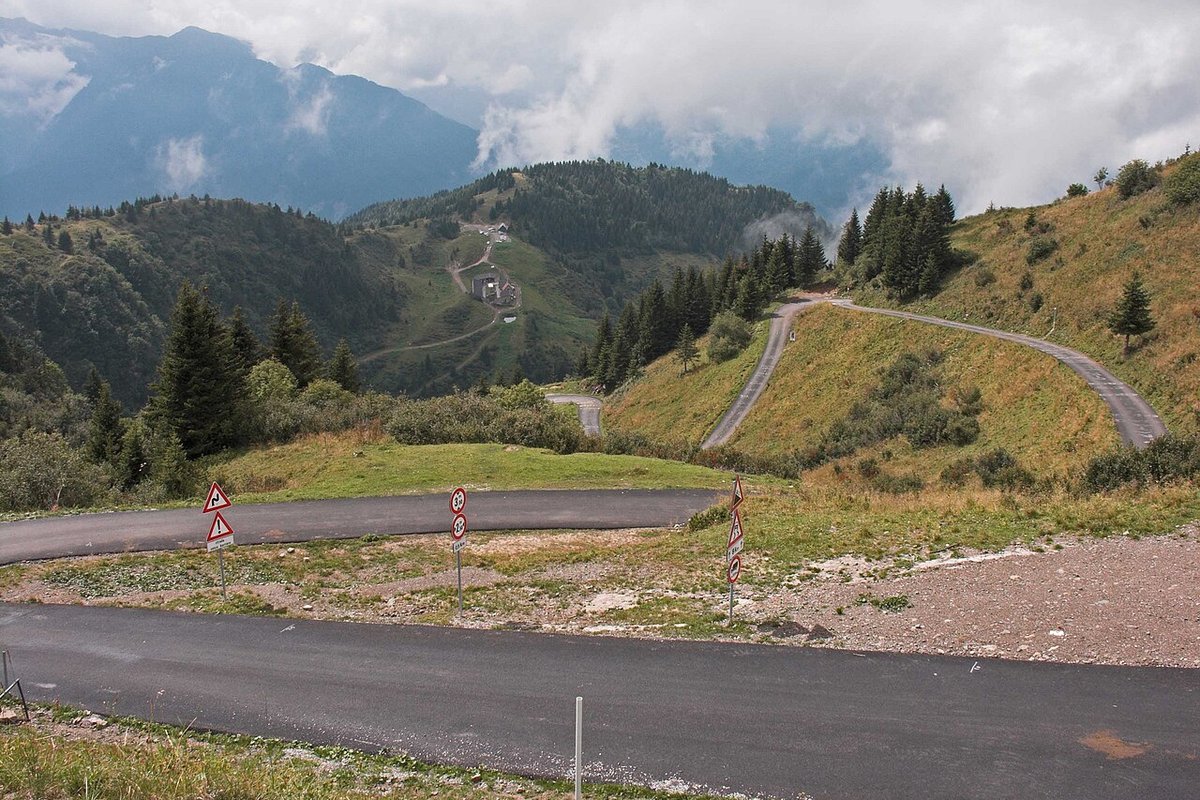
The Giro's steepest monster — 10.1 km · 11.9% avg
Passo del Mortirolo
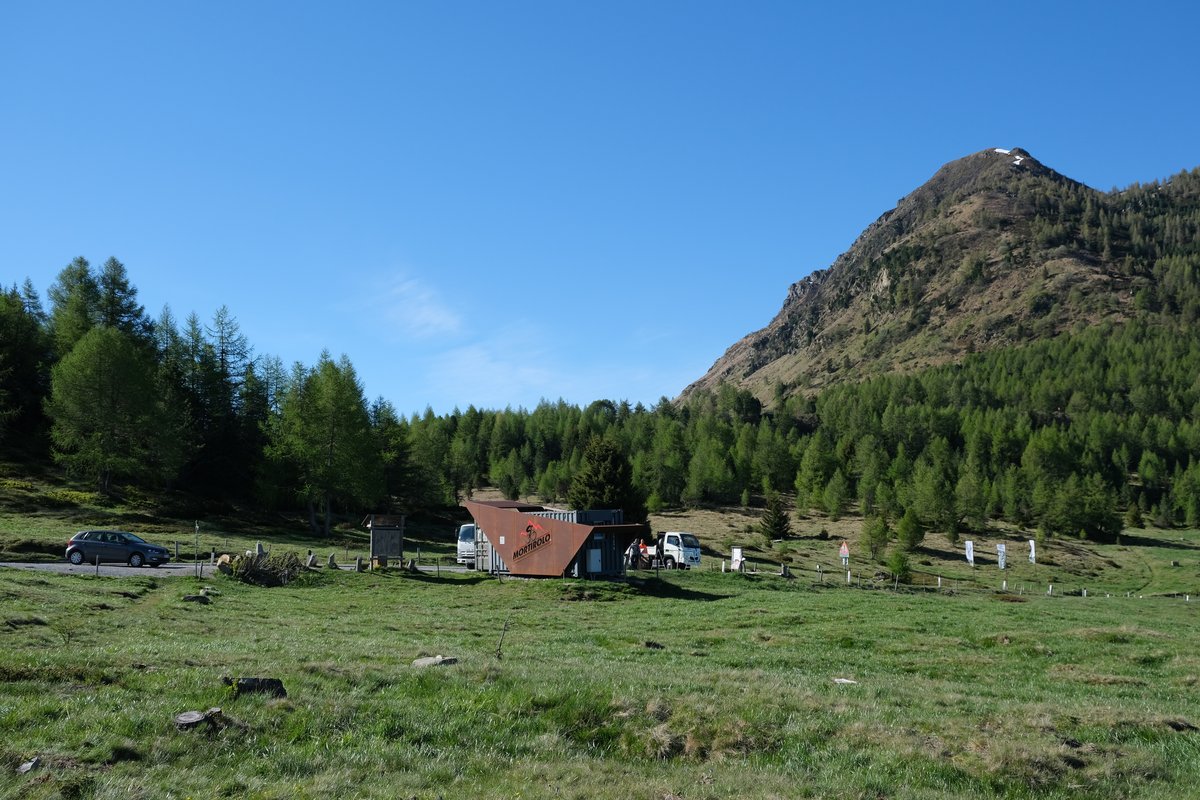
The Giro's steepest classic — 12.4 km · 10.5% avg
Also useful: Gearing for Mountain Climbs: Chainrings, Cassettes and Bike Setup for Alpe d'Huez, the Galibier and the Angliru
Also useful: How to Climb Long Mountain Climbs: Pacing, Effort and Fueling for Alpe d'Huez, Ventoux and the Galibier